
NASA Seeks Private Companies to Build Space Stations
NASA has released its final Request for Proposal (RFP) to solicit plans from U.S. industry for the development and operation of commercial space stations. The move is a key step in transitioning from the International Space Station (ISS) to private platforms.

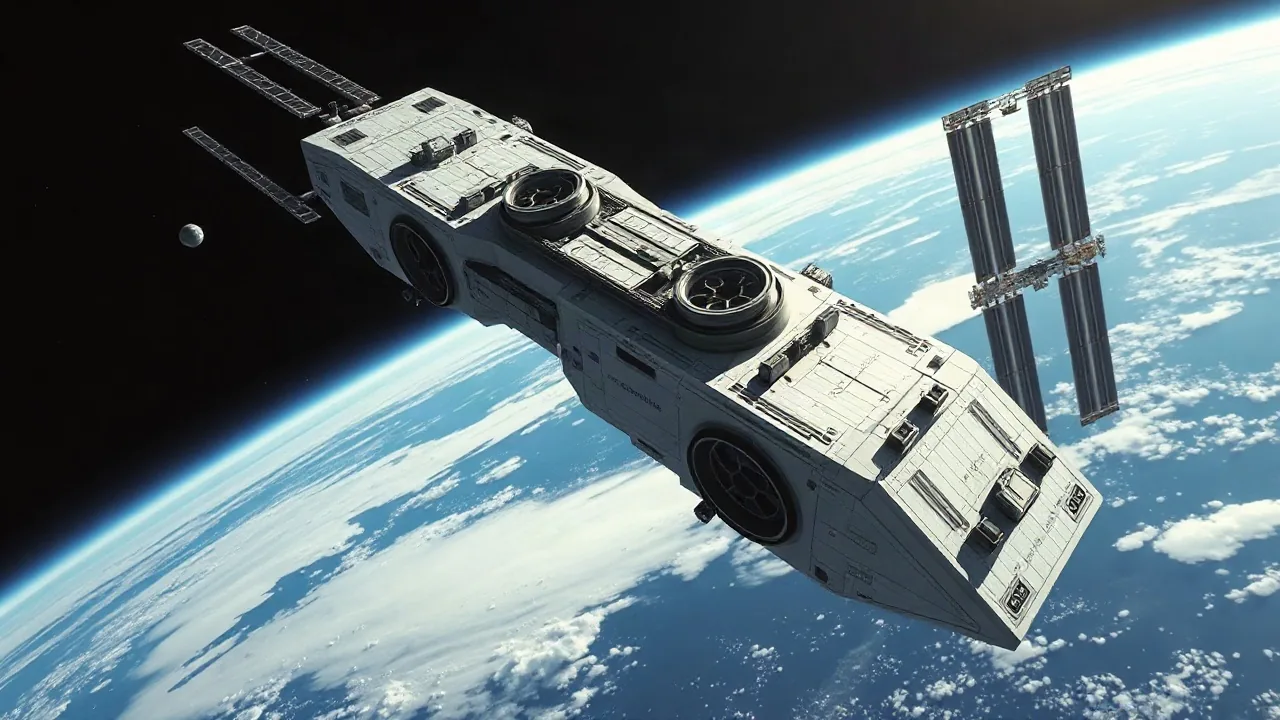
NASA has issued its final Request for Proposal (RFP), formally inviting U.S. companies to submit detailed plans for developing and operating commercial space stations. This pivotal announcement marks a significant step in the space agency's strategy to establish a private presence in low-Earth orbit, potentially succeeding the aging International Space Station (ISS).
The RFP outlines NASA's requirements for these future orbital destinations, emphasizing the need for platforms that can support both government and commercial activities. Companies like Axiom Space, Blue Origin's Orbital Reef venture, and Northrop Grumman's concept are expected to be among the leading contenders vying for these contracts. NASA aims to facilitate a smooth transition from government-led operations on the ISS to commercially owned and operated facilities by the time the ISS is decommissioned, projected around 2030.
The agency has been actively engaging with industry partners for several years, providing initial funding and guidance through earlier solicitations. This final RFP represents the culmination of those efforts, providing a clear framework for companies to present their architectural designs, operational concepts, and financial projections. NASA is looking for proposals that demonstrate robust technical capabilities, sustainable business models, and a clear path toward operational readiness.
Transitioning to a Commercial Low-Earth Orbit Economy
The push towards commercial space stations is a cornerstone of NASA's broader strategy to foster a thriving low-Earth orbit economy. By outsourcing the operation of space stations to the private sector, NASA aims to free up its resources to focus on deep-space exploration, such as missions to the Moon and Mars. This public-private partnership model is intended to reduce costs for the agency while stimulating innovation and creating new markets in space.
Officials have stressed that the success of this initiative hinges on strong collaboration between government and industry. NASA's role will evolve from direct operator to a key customer, purchasing services and resources from these commercial platforms. This includes docking capabilities, life support, and laboratory facilities for its astronauts and research payloads. The agency has also indicated that it seeks to ensure continuity of U.S. presence in orbit and support a diverse range of activities, from scientific research and technology development to space tourism and in-space manufacturing.
The decommissioning of the ISS, a project that has been continuously inhabited since November 2000, presents a unique challenge and opportunity. While the ISS has served as an invaluable testbed for microgravity research and international cooperation, its operational lifespan is finite. The development of commercial alternatives must be well underway and proven before the ISS can be safely retired. This timeline necessitates aggressive development and rigorous testing of the new commercial facilities.
NASA's procurement process will involve detailed technical and financial evaluations of the submitted proposals. The agency anticipates awarding multiple contracts to ensure redundancy and foster a competitive environment among the commercial space station providers. This strategic approach aims to guarantee a sustained human presence in orbit and a robust market for space-based services well into the future, supporting American leadership in space exploration and commerce.