
Aurora Borealis Visible: 10 US States See Northern Lights Monday
The Northern Lights could be visible in at least 10 US states on Monday night. A geomagnetic storm is forecast to bring the aurora borealis further south than usual.

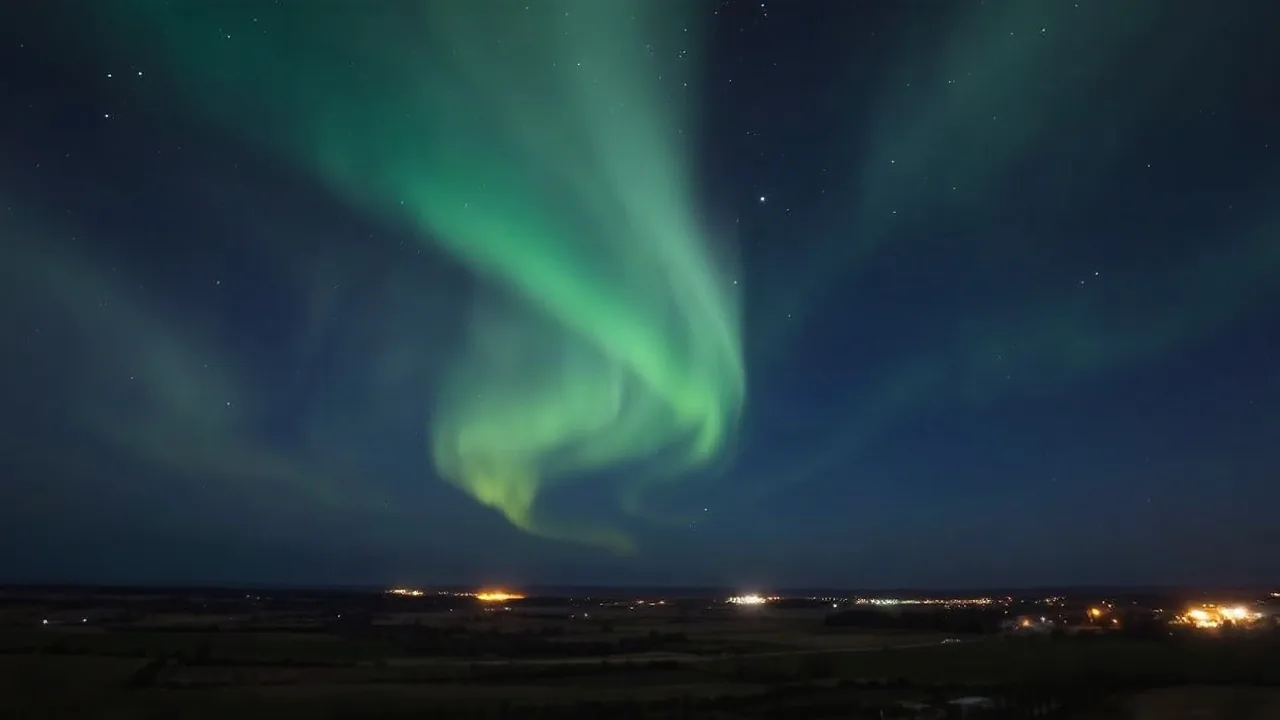
Stunning celestial displays of the aurora borealis, commonly known as the Northern Lights, are expected to be visible across a significant portion of the United States on Monday, October 12, 2026. The National Oceanic and Atmospheric Administration's (NOAA) Space Weather Prediction Center has forecasted strong (G3) geomagnetic storms, which could push the vibrant lights further south than typically observed, potentially reaching as far as 10 states.
Residents in areas accustomed to clear night skies might have a chance to witness the ethereal glow of the aurora, typically confined to higher latitudes. The geomagnetic storm activity is driven by several coronal mass ejections (CMEs) from the sun that are currently heading towards Earth. These solar events release charged particles that interact with Earth's magnetic field and atmosphere, creating the spectacular light shows.
Geomagnetic Storms Enhance Aurora Visibility
The G3 geomagnetic storm level indicates a strong event, capable of causing widespread auroral visibility. While the primary viewing areas will likely remain in northern states like Maine, Vermont, and North Dakota, the enhanced solar activity means the aurora could be visible as far south as states like Illinois, Oregon, and even potentially in parts of Pennsylvania and Iowa, weather permitting. Clear skies will be crucial for optimal viewing conditions in these anticipated regions.
This increased potential for auroral sightings offers a rare opportunity for many Americans to experience a phenomenon usually reserved for those in Arctic and sub-Arctic regions. The aurora borealis occurs when charged particles from the sun collide with gases in Earth's upper atmosphere. Different gases produce different colors; oxygen typically emits green and red light, while nitrogen can produce blue and purple hues.
Experts advise that the best viewing times will be during the darkest hours of the night, away from city lights and light pollution. Skywatchers are encouraged to check local weather forecasts and aurora-specific prediction apps for real-time updates. The intensity and visibility can vary rapidly due to the dynamic nature of space weather.
The NOAA Space Weather Prediction Center continuously monitors solar activity and its potential impact on Earth. Their forecasts are vital for not only anticipating phenomena like the Northern Lights but also for understanding and mitigating potential disruptions to satellite communications, GPS services, and power grids, which can be affected by strong geomagnetic storms.