
NASA Defends All-Male Artemis 3 Crew Amid Diversity Concerns
NASA's Artemis 3 astronaut crew, announced as all-male, has sparked criticism. Agency officials maintain selection was based solely on qualifications, not gender, emphasizing broader diversity within the astronaut corps.

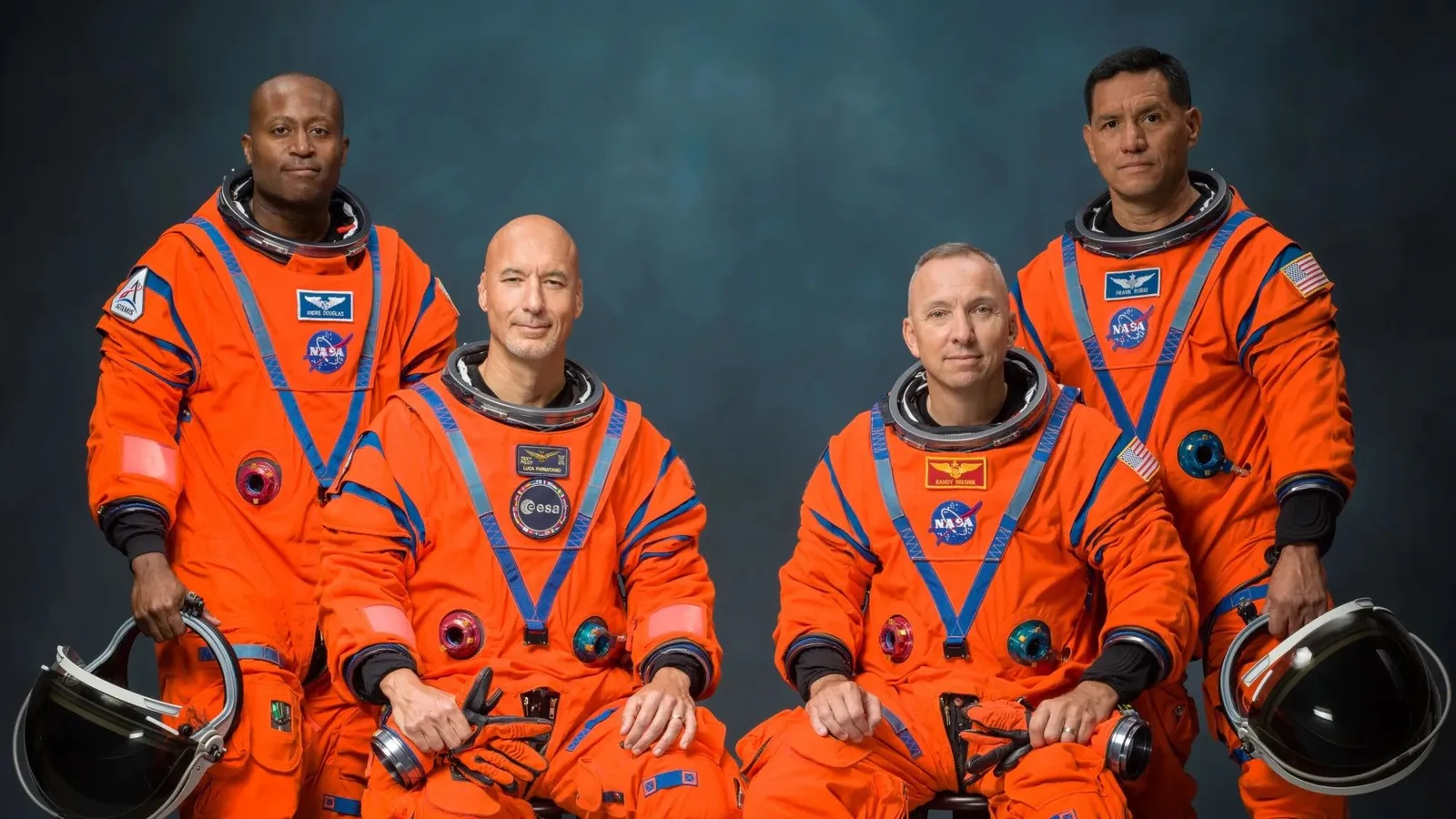
NASA has defended the selection of an all-male crew for the upcoming Artemis 3 mission, a decision that has drawn criticism from some science communicators and the public. Officials from the space agency stated on June 9 that the four astronauts chosen were based on their qualifications and expertise, not gender. The selected crew includes NASA's Randy Bresnik as commander, European Space Agency astronaut Luca Parmitano as pilot, and NASA mission specialists Andre Douglas and Frank Rubio. Bob Hines will serve as backup.
The announcement comes at a time when gender diversity within NASA's astronaut corps has been increasing. Currently, 15 of the 37 active NASA astronauts are women, representing nearly 40% of the total. Since SpaceX began ferrying crews to the International Space Station (ISS) in 2021, most missions have included at least one female astronaut, with the exception of the SpaceX Crew-6 mission in 2023 and a partial Crew-9 mission in 2024. Data analysis indicates that 11 of the 15 active female NASA astronauts have journeyed to space in the past five years.
Following the Artemis 3 crew reveal, several prominent figures in science communication, including Emily Calandrelli and Camille Bergin, voiced their disappointment online, highlighting the absence of women on the lunar mission. Sian Proctor, who participated in the Inspiration4 mission, offered a more optimistic view, posting on Instagram, "Your success will pave the way for the all-women Artemis 4 crew!"
Context and NASA's Response
Jared Isaacman, a billionaire who has funded and commanded spaceflights, including the Inspiration4 and Polaris Dawn missions, where he noted a 50% female crew composition, addressed the reactions. "I don't think anyone should be reading into this," Isaacman told reporters following the announcement. He elaborated in a post on X (formerly Twitter) on June 10, stating that the selection process prioritizes the best astronauts for mission success, considering numerous factors like test pilot experience and program development work. Isaacman pointed out that the latest astronaut candidate class was over 50% female and that NASA leadership is also nearly 50% female.
According to Isaacman, the Astronaut Office assigns crews based on who offers the mission the highest probability of achieving its objectives. He suggested that those concerned might not be aware of the extensive pipeline of astronauts currently preparing for ISS missions or undergoing lunar-specific training essential for future surface operations. The Artemis 3 prime crew possesses substantial spaceflight experience: Bresnik is a veteran shuttle and ISS astronaut and former manager; Parmitano and Bresnik previously commanded the ISS; Rubio holds the U.S. record for the longest single ISS spaceflight at 371 days; and Douglas, on his inaugural mission, served as backup for Artemis 2.
The mission's demanding nature, particularly its role as a test-piloting mission for potential rendezvous with SpaceX and Blue Origin lunar landers, may explain the emphasis on extensive flying backgrounds. Hines stated that while capabilities are the primary selection criterion, diversity is also important. He noted that this crew, despite the gender composition, represents diversity in other forms, including Bresnik's Slovenian heritage, Parmitano's Italian nationality, Rubio's Salvadoran parents, and Douglas's African-American background. "You know, diversity comes in a lot of forms," Hines said. "If you look at this crew, it's a pretty diverse crew, and if you look at the Astronaut Office, it is an incredibly diverse astronaut office that absolutely represents the diversity of America, and that's just the way it fell out on this one."
Historically, NASA's early astronaut selections in the 1960s and 1970s were limited by military security requirements. The subsequent inclusion of scientists and the deliberate recruitment of women and Black astronauts in the following decades marked significant steps toward broader diversity. The agency has since expanded international participation and welcomed astronauts from various global partners. Crew selection is a rigorous and multi-faceted process, involving not only the astronauts' skills and availability but also their medical history, conduct, and ability to communicate in necessary languages. International partners contribute astronauts based on their investment in programs like the ISS and the Artemis initiative, with countries like Canada already having selected astronauts, such as Jeremy Hansen for Artemis 2.