
US-Russian ISS Crew Lands Safely in Kazakhstan After 8-Month Mission
A NASA astronaut and two Russian cosmonauts returned safely to Earth on Sunday, concluding an eight-month mission aboard the International Space Station. The crew landed in Kazakhstan.

A U.S. astronaut and two Russian cosmonauts safely touched down in the steppes of Kazakhstan on Sunday, marking the end of an eight-month expedition aboard the International Space Station. NASA astronaut Chris Williams, alongside Russian crewmates Sergei Kud-Sverchkov and Sergei Mikaev, landed smoothly via parachute in their Soyuz MS-28 capsule in a designated zone southeast of the city of Dzhezkazgan. This 241-day mission was the first spaceflight for Williams and Mikaev, while Kud-Sverchkov completed his second mission to the orbiting laboratory.
Following their descent, the crew was airlifted by helicopter to Karaganda. From there, Williams will board a flight back to NASA’s Johnson Space Center in Houston, Texas. Kud-Sverchkov and Mikaev are en route to their training center in Star City, near Moscow. This successful landing underscores the continued cooperation in space, even amidst broader geopolitical tensions.
Sustained International Collaboration in Orbit
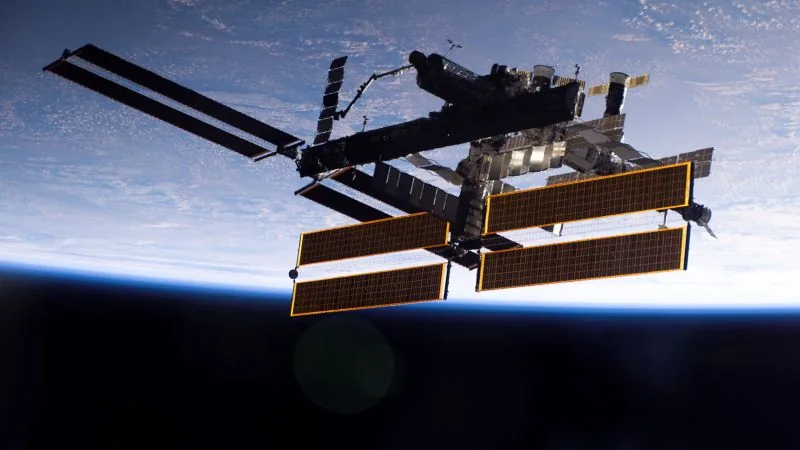
Historically, the United States and Russia were fierce rivals during the Cold War space race. However, the International Space Station (ISS) has become a symbol of sustained collaboration. Despite significant tensions following Moscow’s 2022 troop deployment into Ukraine, the two nations have maintained their partnership in space, with astronauts and cosmonauts regularly flying to the ISS on each other's spacecraft. This ongoing cooperation is vital for the maintenance and scientific operations of the ISS, a complex orbital outpost that requires international contributions for its continued success. The ability to share resources and expertise across national boundaries remains a cornerstone of human space exploration.
The recent mission saw Williams, Kud-Sverchkov, and Mikaev join a larger international crew. They are part of the Expedition 75 crew, which also includes NASA astronauts Jessica Meir and Jack Hathaway, European Space Agency astronaut Sophie Adenot, and Roscosmos cosmonaut Andrei Fedyaev. Their arrival on July 14, aboard a Soyuz spacecraft launched from the Russia-leased Baikonur cosmodrome in Kazakhstan, marked a significant event. NASA Administrator Bill Nelson attended the launch, signaling the importance of the mission and the enduring U.S.-Russia space partnership. Nelson’s visit was the first by a NASA chief to Baikonur in eight years, highlighting a renewed focus on collaboration.
The ISS, a collaborative project involving five space agencies—NASA (United States), Roscosmos (Russia), JAXA (Japan), ESA (Europe), and CSA (Canada)—serves as a unique microgravity laboratory. Scientists aboard the station conduct research across various fields, including biology, human physiology, physics, and materials science, pushing the boundaries of scientific understanding and technological innovation. The data gathered from these experiments has far-reaching implications for future space missions and advancements here on Earth. The safe return of the latest ISS crew is a testament to the meticulous planning and execution involved in human spaceflight operations.