
Robotic Mission Aims to Extend Satellite Lifespans With Jetpacks
A new robotic mission is launching jetpacks to refuel aging satellites in orbit, aiming to significantly extend their operational life and save operators millions in replacement costs.

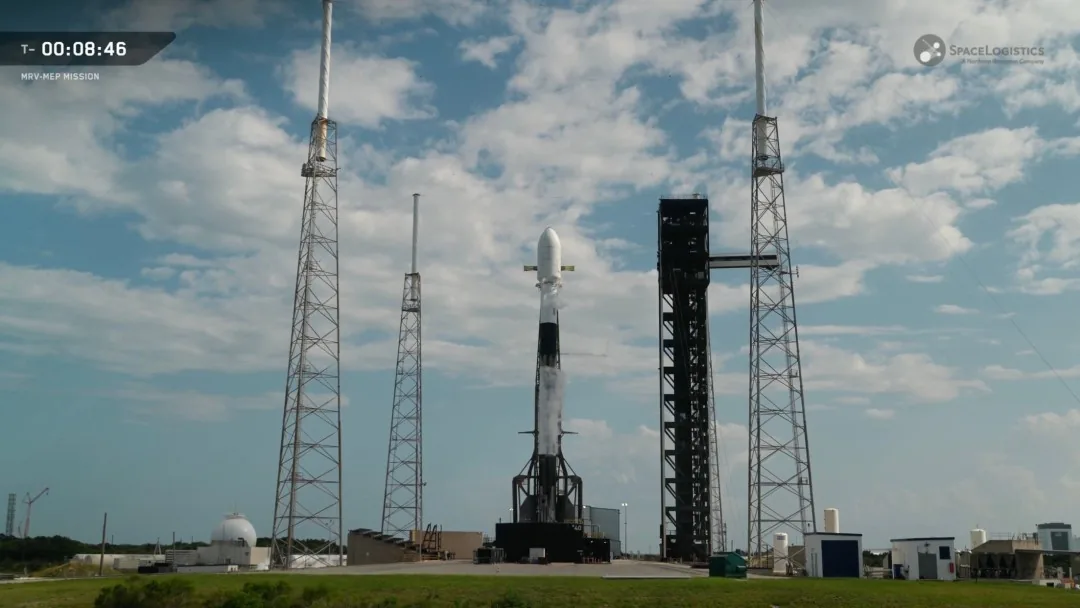
Northrop Grumman's Mission Robotic Vehicle (MRV), a spacecraft designed to service satellites in orbit, launched via SpaceX on Tuesday. The vehicle and its accompanying jetpacks will spend the next year maneuvering into a geostationary orbit approximately 22,300 miles above Earth. By mid-2027, the minivan-sized MRV is expected to reach its operational altitude, where it will use its robotic arms to attach propulsion units, akin to jetpacks, to aging communication satellites. This innovative approach aims to keep vital spacecraft functioning for several additional years, preventing premature retirement.
For its inaugural mission, the MRV is carrying three electric-propelled jetpacks. These units detached shortly after liftoff and, like the MRV itself, are utilizing xenon gas thrusters to reach the designated orbit. Once in position, the jetpacks will await retrieval by the MRV's robotic arms, which will then connect them to their assigned satellites. Each jetpack, roughly the size of a washing machine, is engineered to provide the necessary thrust to extend the life of a satellite that has run out of onboard fuel.
Extending the Lifespan of Space Assets
The success of this mission could represent a significant financial boon for satellite operators such as SES of Luxembourg and Optus of Australia. By enabling older satellites to continue operating, these companies could avoid the substantial costs associated with launching and deploying new, expensive replacements. The technology addresses a growing challenge in the space industry: the increasing number of aging satellites in orbit, many of which still possess functional payloads but lack the fuel to maintain their orbits or perform necessary maneuvers.
This endeavor is part of a broader trend in the space-aerospace industry focused on in-orbit servicing, assembly, and manufacturing (ISAM). ISAM technologies are crucial for the sustainability of space operations, offering solutions for debris mitigation, satellite repair, and extending the functional lifespan of valuable assets. The MRV's jetpack system is a prime example of how sophisticated robotics and advanced propulsion are being deployed to tackle these complex challenges.
The MRV is designed to be a versatile platform. Beyond attaching jetpacks, its capabilities are envisioned to include tasks such as satellite refueling, de-orbiting defunct satellites, and potentially even performing minor repairs. The development of such servicing vehicles signifies a maturation of the space economy, moving from purely deployment to a more comprehensive lifecycle management approach for spacecraft. This shift is critical as the number of satellites in orbit continues to grow exponentially, driven by commercial interests in broadband internet, Earth observation, and scientific research.
The MRV's journey to its operational orbit highlights the complex orbital mechanics and precise engineering required for modern space missions. Geostationary orbit, where many communication and weather satellites reside, is a highly sought-after position due to its stable vantage point. Reaching and maintaining this altitude requires significant energy and sophisticated navigation systems. The mission’s timeline, extending into mid-2027, underscores the careful planning and execution involved in long-duration space operations. The collaboration between companies like Northrop Grumman, SpaceX, SES, and Optus demonstrates the international and commercial partnerships that are increasingly shaping the future of space exploration and utilization.