
NASA ETF: How to Invest in Space Exploration Funds
NASA-linked ETFs give retail investors exposure to the booming space sector, including aerospace giants and private companies like SpaceX. Learn how these funds work and whether they fit your portfolio.

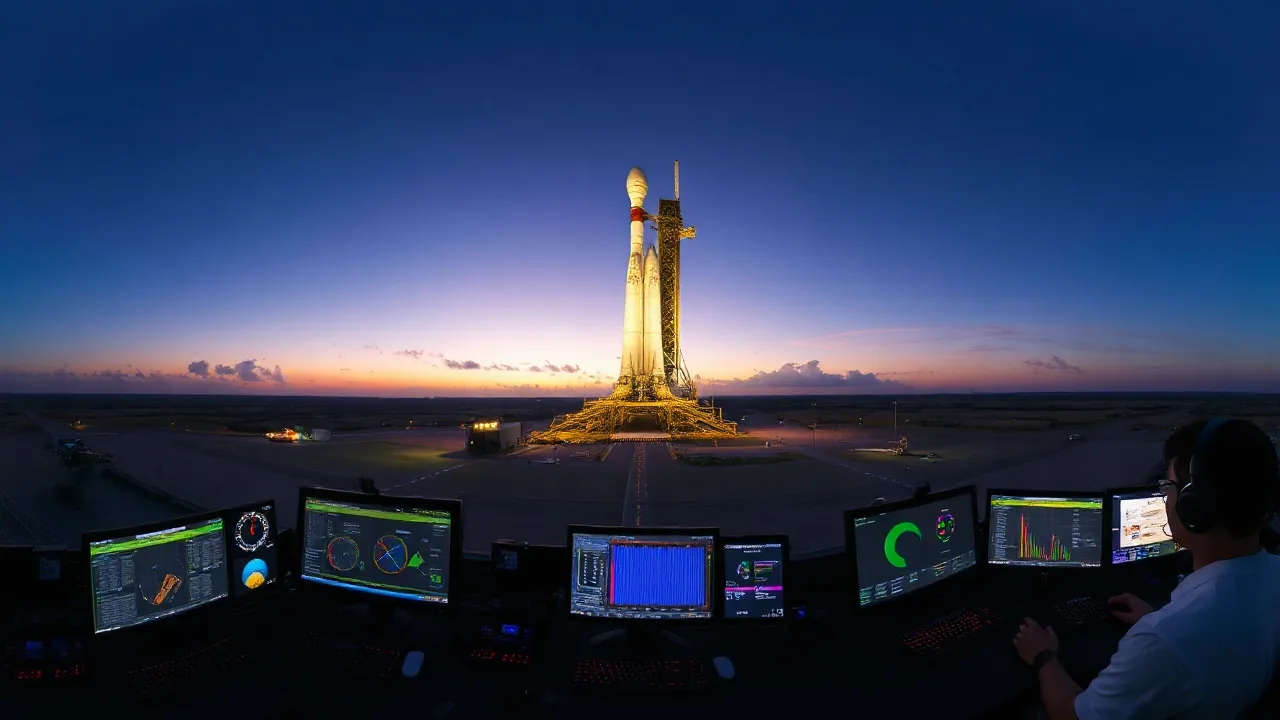
The space economy reached $469 billion in 2024, and investment dollars are flowing into funds designed to capture that growth. A surge in retail investor interest in NASA ETF options reflects a broader appetite for exposure to space exploration, satellite communications, and rocket manufacturing. Unlike buying individual aerospace stocks, ETFs allow investors to hold a diversified basket of companies in a single trade.
Several funds now market themselves explicitly around space and aerospace themes. The most prominent include the Procure Space ETF (UFO), the Aerospace & Defense Select Sector SPDR Fund (XLI subset), and emerging dedicated space-focused vehicles launched in 2024 and 2025. These funds hold a mix of established defense contractors, satellite operators, and private space firms.
"The space industry is transitioning from a government-only domain to one where private capital plays an enormous role," said Dr. Sarah Chen, senior analyst at Orbital Research Partners, in a June 2026 interview. "ETFs give individual investors a way to participate in that shift without picking individual winners."
What's Inside a Space ETF
Holdings in space-themed ETFs typically fall into three categories:
- Established aerospace and defense contractors (Boeing, Northrop Grumman, Lockheed Martin, General Dynamics)
- Satellite and communications operators (Viasat, Iridium, Intelsat)
- Private space companies and their publicly traded peers (Virgin Galactic, Axiom Space suppliers, launch service providers)
The Procure Space ETF (UFO), which trades on the NYSE, holds 50 companies with significant revenue or business tied to space activities. Its top holdings include established names like L3Harris Technologies and Raytheon Technologies, alongside smaller specialized firms. The fund charges a 0.75% expense ratio and has attracted over $500 million in assets under management as of June 2026.
While SpaceX remains privately held and cannot be owned directly through most consumer ETFs, some funds gain indirect exposure through suppliers, launch customers, or companies using SpaceX services. For instance, satellite operators that contract SpaceX for launches show up in space ETF portfolios. This indirect approach matters for investors seeking SpaceX holdings or related bets on commercial spaceflight.
Why Space Investing Matters Now
Government spending on space remains substantial. NASA's fiscal 2026 budget request totaled $27.2 billion, up 4 percent from 2025. The Artemis program to return humans to the Moon, the James Webb Space Telescope, and the International Space Station's operations all require contractors and suppliers that show up in ETF portfolios.
Commercial activity is accelerating too. Space launch companies completed over 190 orbital launches globally in 2025, compared to 144 in 2020. Satellite internet providers like Starlink continue expanding coverage, creating demand for launch services and ground equipment.
Dr. Marcus Webb, principal at Constellation Capital Advisors, noted: "We're seeing institutional money flow into space ETF products because they now have sufficient assets and liquidity. In 2023, these funds were niche. In 2026, they're becoming mainstream allocation options for growth-oriented portfolios."
Climate and Earth observation missions also drive growth. Companies providing remote sensing, weather data, and climate monitoring services serve governments and corporations alike. Several ETF holdings generate revenue from these applications.
How to Evaluate a Space ETF
Before investing, review these key metrics and questions:
- Expense ratio: Space ETFs typically charge 0.50% to 0.95% annually. Compare to broad sector funds.
- Holdings concentration: Does the fund own 20 mega-cap contractors or 50 diverse names? Concentration amplifies both upside and downside risk.
- Turnover: High turnover increases trading costs and tax drag in taxable accounts.
- Asset size: Funds with less than $100 million may lack liquidity or face closure risk.
- Rebalance frequency: Annual or quarterly rebalancing can matter for tax efficiency.
Investors should also distinguish between pure-play space exposure and funds that bundle space with defense, advanced manufacturing, or technology. The aerospace stocks in a general defense ETF may be less concentrated on space than a dedicated space fund.
Tax considerations matter too. In tax-deferred retirement accounts, higher turnover fees matter less. In taxable brokerage accounts, ETFs with lower turnover and capital gains distributions can save money over years.
The space sector carries sector-specific risks. Government budgets can shift. Commercial ventures may fail. Regulatory approval for launches, satellite deployment, and human spaceflight can face delays. These funds are not appropriate for risk-averse or short-term investors.
Yet for investors with a 10-year or longer horizon and appetite for growth-stage industries, a position in space-themed ETFs offers exposure to one of the fastest-growing economic sectors. Diversification within the fund reduces the risk of any single aerospace company stumbling, while the broader space economy bet remains intact.