
NASA's Fire Cloud Project Studies Wildfire Weather Patterns
NASA is launching a new project, known as FireChem, to fly research aircraft through wildfire smoke plumes, or "fire clouds." The initiative aims to improve understanding of atmospheric conditions and their impact on weather.

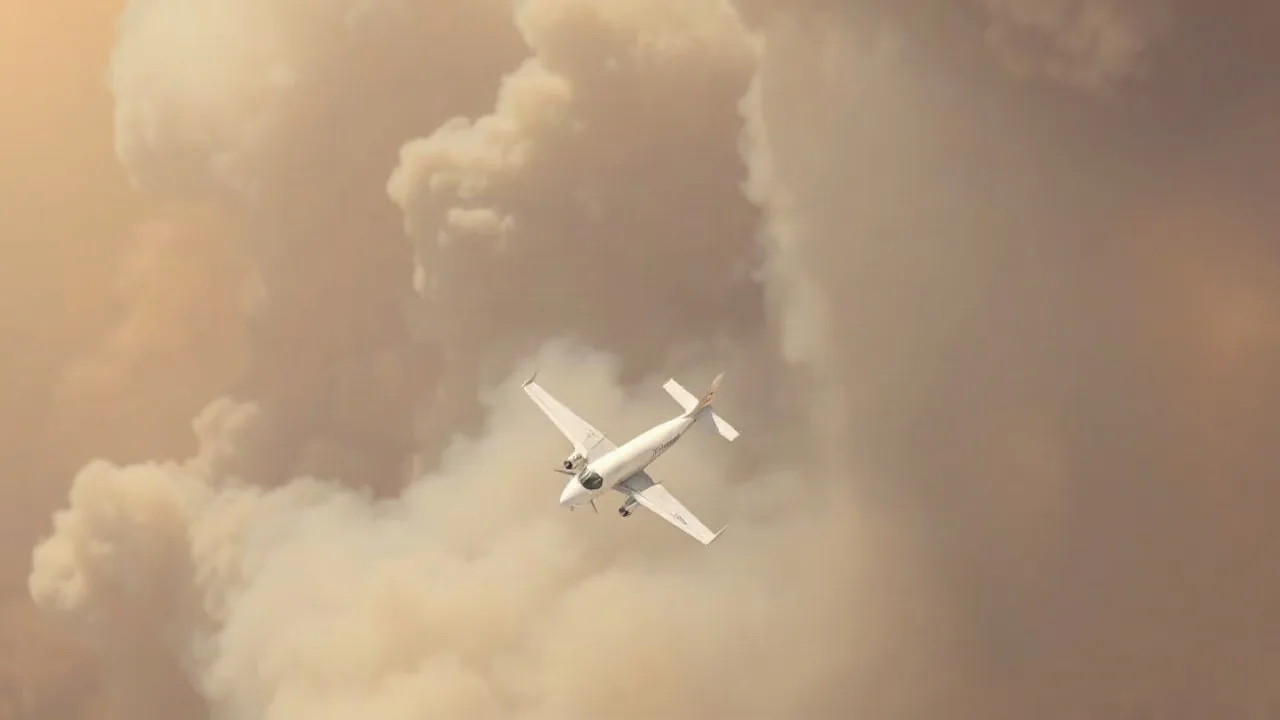
NASA scientists are embarking on an ambitious project to fly research aircraft directly into the heart of massive wildfire smoke plumes, often referred to as "fire clouds." This initiative, called the FireChem experiment, will deploy specialized planes to study the complex atmospheric chemistry and weather patterns generated by large-scale blazes. The goal is to gather crucial data that can help improve forecasting models and our understanding of how these intense fires influence regional and potentially global weather systems. The first field campaign is slated to begin in the fall of 2026, targeting major wildfire regions in the Western United States.
Wildfire smoke is a complex mixture of gases and particles that can rise miles into the atmosphere. These smoke plumes can act as powerful weather modifiers, affecting cloud formation, precipitation, and temperature. Understanding these interactions is critical for predicting fire behavior, air quality, and the broader climate implications of increasing wildfire frequency and intensity.
Investigating atmospheric chemistry above fires
The NASA DC-8 flying laboratory and the smaller drone aircraft will be equipped with an array of advanced instruments to measure the composition of the smoke, its altitude, and its interaction with sunlight. Researchers will analyze how aerosols and gases within the smoke plumes affect atmospheric radiation and cloud microphysics. This detailed chemical analysis is key to understanding the cascade of effects that begin with the burning of vegetation. Early research suggests that smoke particles can either enhance or suppress cloud formation, a significant variable in climate modeling.
Dr. Sarah Chen, a lead atmospheric scientist on the FireChem project, explained the significance of the direct measurements. "We've relied on satellite data and ground-based observations for years, but flying directly into these plumes allows us to capture the fine-scale chemical and physical processes in unprecedented detail," Chen stated. "This data is essential for validating our computer models and making them more accurate in predicting wildfire impacts."
The FireChem project is building upon previous NASA research, including the Smoke, Clouds, and Radiation – California (SCORCH) campaign conducted in 2021. That earlier effort provided foundational insights into the radiative properties of smoke from prescribed burns and wildfires in California. FireChem aims to expand this knowledge by investigating a wider range of fuel types and atmospheric conditions across different geographical areas. The project will also explore the potential for these smoke plumes to transport pollutants over long distances, affecting air quality far from the original fire source.
The increased frequency and intensity of wildfires in recent years, exacerbated by climate change and land management practices, make this research particularly timely. The findings from FireChem are expected to have practical applications for emergency management agencies, public health officials, and climate scientists. Better predictions of smoke dispersion and its impact on weather could lead to more effective evacuation strategies and air quality advisories. Furthermore, a clearer understanding of the feedback loops between wildfires and the atmosphere is vital for informing long-term climate mitigation and adaptation policies.