
NASA Maps Reveal Dynamic Shifts in Earth's Nighttime Brightness
New NASA maps using a decade of satellite data show dynamic changes in Earth's nighttime illumination, revealing complex patterns of both increasing brightness and dimming across the globe.

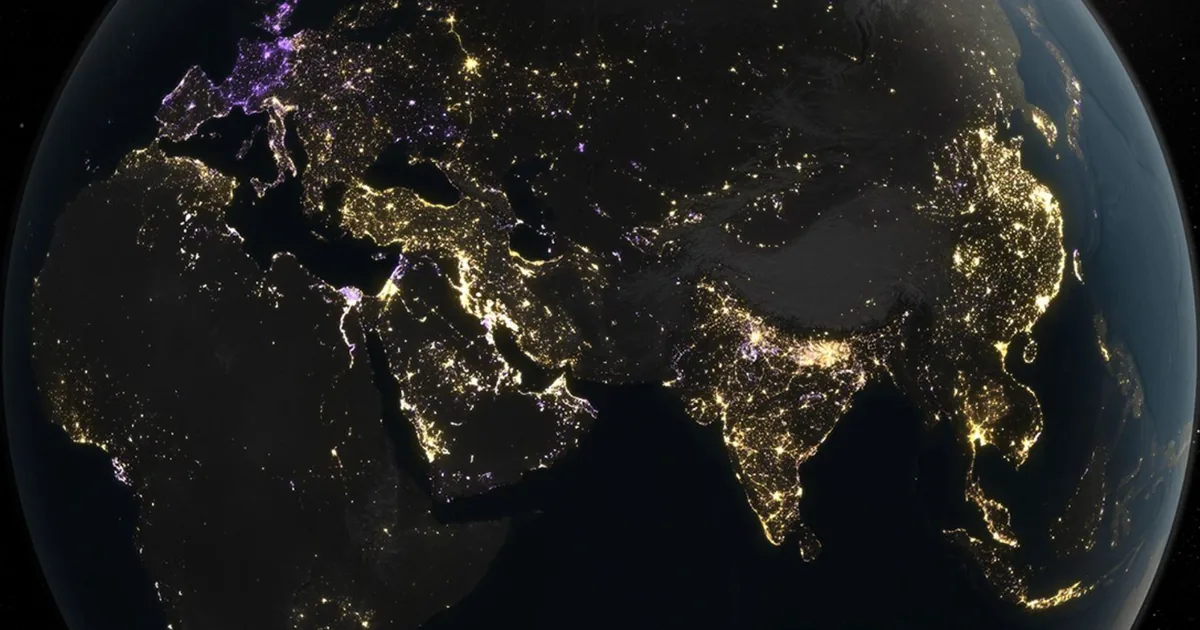
NASA scientists have released new, detailed maps that illustrate the shifting patterns of artificial light across the Earth's surface at night, utilizing nearly a decade of observational data. The "Black Marble" program, a specialized initiative by the space agency, compiled low-light imagery from three satellites between 2014 and 2022, painting a complex picture of human activity's impact on the night environment. Researchers had anticipated a steady rise in nighttime artificial light, but instead discovered far more intricate dynamics.
The analysis revealed that individual locations experienced multiple distinct changes in light radiance over the nine-year period. Globally, artificial light at night saw an overall increase of 34%, but this was partially offset by an 18% decrease in illumination in other areas. Both the brightening and dimming trends became markedly more pronounced over the past decade, according to a study published in the journal Nature. These shifts offer critical insights into urban development, energy consumption patterns, the effects of policy changes, and the ecological consequences of altering natural light cycles.
Global Patterns of Illumination Change
In the United States, cities on the West Coast generally grew brighter, a trend attributed to population increases. Conversely, East Coast cities exhibited more dimming, which the researchers linked to the wider adoption of energy-efficient lighting technologies and broader economic restructuring. Beyond the U.S., significant changes were observed worldwide. Nights in China and northern India became noticeably brighter, reflecting rapid urban expansion in those regions. Europe, however, presented a pattern of dimming, likely due to energy conservation efforts. A sharp reduction in light use was particularly evident across Europe in 2022, following the energy crisis triggered by the conflict in Ukraine.
The study emphasizes that humanity's light footprint is not a uniform expansion but a dynamic system. The data highlights the widespread coexistence of both increasing and decreasing artificial light, demonstrating a complex interplay of human activities. "This global, high-resolution analysis ... refines and expands our understanding of how humanity is altering the night environment," the researchers stated in their paper. "Our findings show that the human light footprint is not a universally expanding entity but a dynamic system, characterized by the pervasive coexistence of brightening and dimming." This nuanced understanding is crucial for future urban planning and environmental studies.
The implications of these findings are far-reaching. Understanding the artificial light patterns at night can inform strategies for energy conservation, wildlife protection, and even public health initiatives, as artificial light at night can disrupt natural ecosystems and human sleep patterns. The ability to track these changes dynamically also provides valuable data for assessing the impact of specific events, such as natural disasters causing blackouts or policy interventions aimed at reducing light pollution. The research team plans to continue monitoring these trends to better understand the long-term effects on both human societies and the planet's ecosystems.
The NASA "Black Marble" data set provides an unprecedented view into the Earth's changing nighttime landscape. By analyzing these intricate patterns, scientists can gain deeper insights into global urbanization, energy usage, and the environmental consequences. Future research will likely build upon this foundation, potentially incorporating real-time data to provide even more immediate feedback on how human activities are reshaping the planet after sunset. The satellite data offers a unique perspective on planetary change, invisible to the naked eye.