
NASA's MAVEN Spacecraft Lost Contact After 11 Years Studying Mars
NASA has officially ceased efforts to reestablish contact with its MAVEN spacecraft, which went silent during a routine orbital maneuver on December 6, 2025. After over a decade of groundbreaking research on Mars' atmosphere, the mission is being decommissioned.

NASA has officially declared the Mars Atmosphere and Volatile Evolution (MAVEN) mission over, after a 11-year long investigation into the Martian atmosphere. The spacecraft lost contact with ground control on December 6, 2025, during a routine passage behind Mars known as an occultation. Hopes of reestablishing communication faded after engineers attempted to locate the spacecraft and uplink commands without success. NASA announced Wednesday that all efforts to recover MAVEN, which orbits Mars more than 200 million miles from Earth, have been terminated.
“NASA has ceased efforts to search for the MAVEN spacecraft and are beginning activities to decommission the mission,” stated Mike Moreau, MAVEN’s project manager at NASA’s Goddard Space Flight Center. Engineers are now working to understand the precise cause of the communication loss, sifting through data transmitted before the spacecraft disappeared behind the Red Planet. While MAVEN launched in 2013 and arrived in Martian orbit in 2014, its operational life far exceeded its initial prime mission duration, making its sudden failure a surprise to mission scientists.
“As part of this investigation, the team members at the Jet Propulsion Laboratory were successful in recovering some fragments of telemetry and Doppler shift data from the spacecraft,” Moreau explained. These recovered data fragments, initially part of a separate science campaign monitoring the upper Martian atmosphere's density, provided crucial clues. Analysis revealed the spacecraft was spinning at approximately 2.7 revolutions per minute, a rate faster than expected and indicative of a significant problem. This uncontrolled tumble likely led to a rapid depletion of the spacecraft's batteries, rendering it unable to maintain operations or orient its solar arrays toward the sun.
A Legacy of Discovery on the Red Planet
MAVEN's primary objective was to study the interaction between Mars' atmosphere and the solar wind, shedding light on how the planet lost much of its early atmosphere, which scientists believe was once much thicker and warmer. The spacecraft's decade-long tenure provided invaluable insights into atmospheric escape, the process by which gases are stripped from a planet's upper atmosphere into space. One of MAVEN's most significant discoveries, detailed by Dr. Shannon Curry, MAVEN’s principal investigator at the University of Colorado Boulder, was observing atmospheric sputtering. “This is where charged particles crash into the upper atmosphere and splash out the neutral atmosphere, much like doing a cannonball in a pool,” Curry said. Using noble gas isotopes, the team confirmed sputtering has been a dominant escape mechanism on Mars for billions of years.
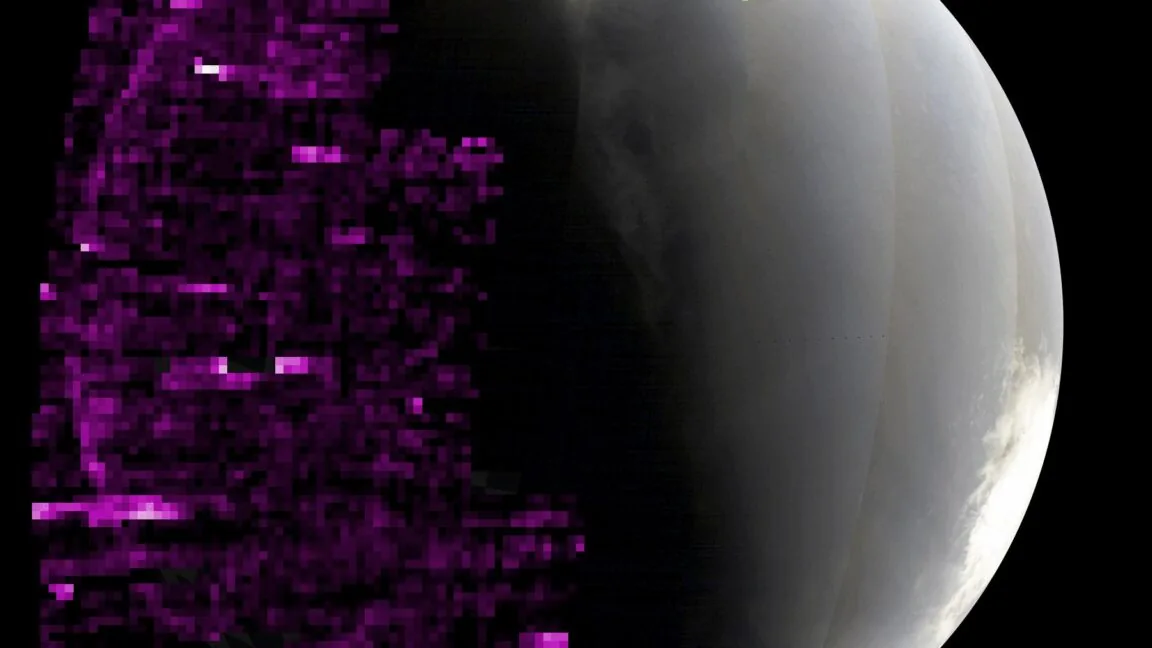
The mission also captured significant events, such as a powerful solar storm in 2024 that caused unprecedented atmospheric escape and generated planet-wide auroras. MAVEN's comprehensive data archive ensures its scientific legacy is secure, despite the poignant end to its operational life. Curry added, “MAVEN was the best observer of atmospheric escape anywhere in the Solar System. We now have a better understanding of atmospheric escape at Mars than at any other planet, including Earth.”
Beyond its core scientific mission, MAVEN played a crucial role as a data relay for NASA's rovers and landers on the Martian surface. Its higher orbit allowed for the transmission of significantly more data than direct-to-Earth connections. Tiffany Morgan, director of NASA’s Mars Exploration Program, noted that MAVEN supported over 8 percent of all planned relay sessions but accounted for nearly 18 percent of returned data. While NASA possesses four other orbiters to fill this communication gap, three of them are older than MAVEN. Morgan acknowledged potential minor adjustments and occasional delays in data return but emphasized the resilience of the Mars Relay Network. NASA is actively seeking commercial partners to develop a new Mars Telecommunications Network, aiming for higher throughput and broader coverage, incorporating lessons learned from MAVEN and other missions.