
NASA Roman Space Telescope Departs Maryland for Florida Launch Site
NASA's $4 billion Roman Space Telescope is en route to Florida for final launch preparations. The observatory, designed to scan the universe 100 times wider than Hubble, aims to revolutionize exoplanet discovery and the study of dark energy.

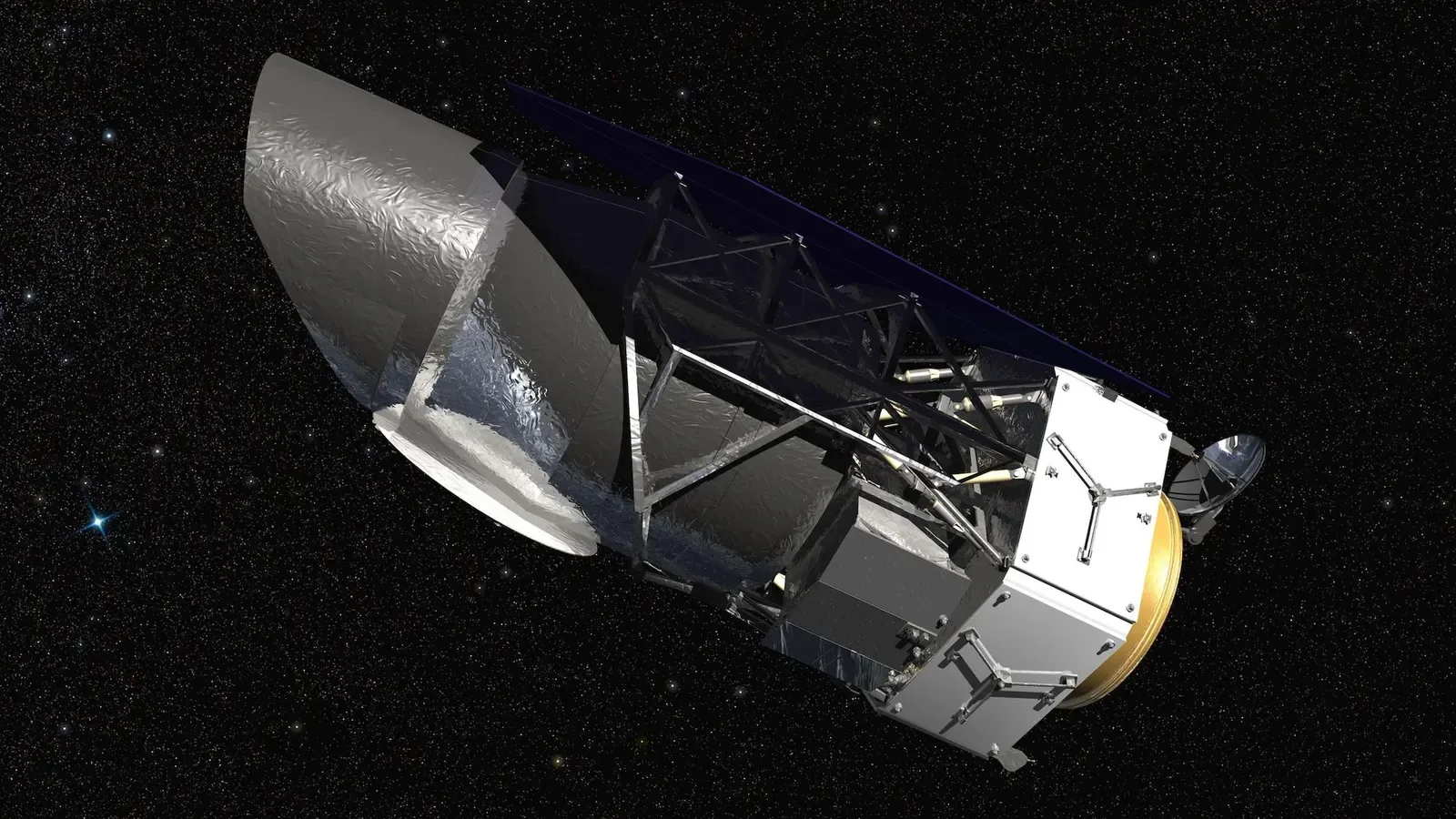
NASA's highly anticipated Roman Space Telescope has embarked on its journey from NASA's Goddard Space Flight Center in Maryland to Florida's Kennedy Space Center. This pivotal move marks the final phase of preparations for the observatory's launch, slated for September aboard a SpaceX Falcon Heavy rocket from Launch Complex 39A. The mission, often hailed as a successor to the iconic Hubble Space Telescope, promises to deepen humanity's understanding of the cosmos, from the nature of dark energy to the diversity of planets beyond our solar system.
Named in honor of NASA's first chief astronomer, Nancy Grace Roman, the telescope boasts a 2.4-meter mirror—comparable in size to Hubble's—but features a field of view approximately 100 times larger. This expansive view allows Roman to capture sweeping panoramic images of the universe, a capability that will enable scientists to investigate the mysterious force of dark energy, trace the evolution of cosmic structures, and significantly boost the search for exoplanets. Unlike Hubble's focused observations, Roman will survey vast swathes of the sky, potentially revealing millions of previously unknown celestial objects.
A New Frontier in Exoplanet Discovery
A primary objective for the Roman Space Telescope is the identification of novel types of exoplanets. Scientists anticipate the mission will discover around 100,000 new planets, a substantial leap from the approximately 6,300 confirmed exoplanets found to date. A key focus will be on detecting small worlds with wide orbits—planets that have proven challenging for current detection methods—particularly in unexplored regions of the Milky Way galaxy. Elisa Quintana, an exoplanet researcher at NASA's Goddard Space Flight Center, highlighted the significance of this expanded search. "Our galaxy is home to a variety of different environments, but when it comes to hunting for exoplanets, we’ve really only explored one: our own neighborhood," Quintana stated. "Roman will extend the search far enough to encompass other galactic habitats, which could help us learn how planet formation varies across different regions of the Milky Way." The telescope will employ both transit photometry and gravitational microlensing techniques, the latter being crucial for spotting planets that are otherwise difficult or impossible to detect. Scientists expect to find a wide array of planets, from gas giants to rocky worlds similar in size to Earth and Mars.
Once operational, Roman is poised to become one of the most powerful astronomical survey instruments ever constructed. It builds upon the legacy of NASA's Kepler mission, which identified thousands of exoplanets between 2009 and 2018. "Roman's galactic bulge survey will observe around 100 million stars and probe underexplored areas of our galaxy, which will provide a foundational dataset that will likewise revolutionize what we know about other worlds and our place in the universe," explained Jorge Martínez-Palomera, an astronomer at NASA Goddard. Furthermore, Roman will complement the work of the European Space Agency's Gaia spacecraft, which has meticulously mapped billions of stars. While Gaia primarily observes in visible light, Roman will focus on infrared wavelengths, allowing it to penetrate the dense dust clouds at the galactic center, offering unprecedented views of regions previously hidden from view.
The journey to this launch readiness has been a long one for the mission, initially known as the Wide Field Infrared Survey Telescope (WFIRST). The project faced significant challenges, including proposed cancellations in the Trump administration's 2019 and 2020 budget requests, which cited cost concerns and NASA's prioritization of the James Webb Space Telescope. However, Congress ultimately intervened, ensuring continued funding and preserving what many astronomers consider a vital component of NASA's future scientific endeavors. The successful launch of the James Webb Space Telescope in December 2021 demonstrated NASA's continued commitment to groundbreaking space observatories. The Roman Space Telescope, with its ambitious goals, is expected to be equally transformative, potentially offering insights as profound as those provided by Hubble and Webb.