
NASA's Roman Telescope: A New Eye on the Cosmos
NASA's Nancy Grace Roman Space Telescope is poised to revolutionize astronomy by rapidly surveying vast areas of the sky, complementing Hubble and Webb's focused observations. It aims to answer fundamental questions about dark matter and dark energy.

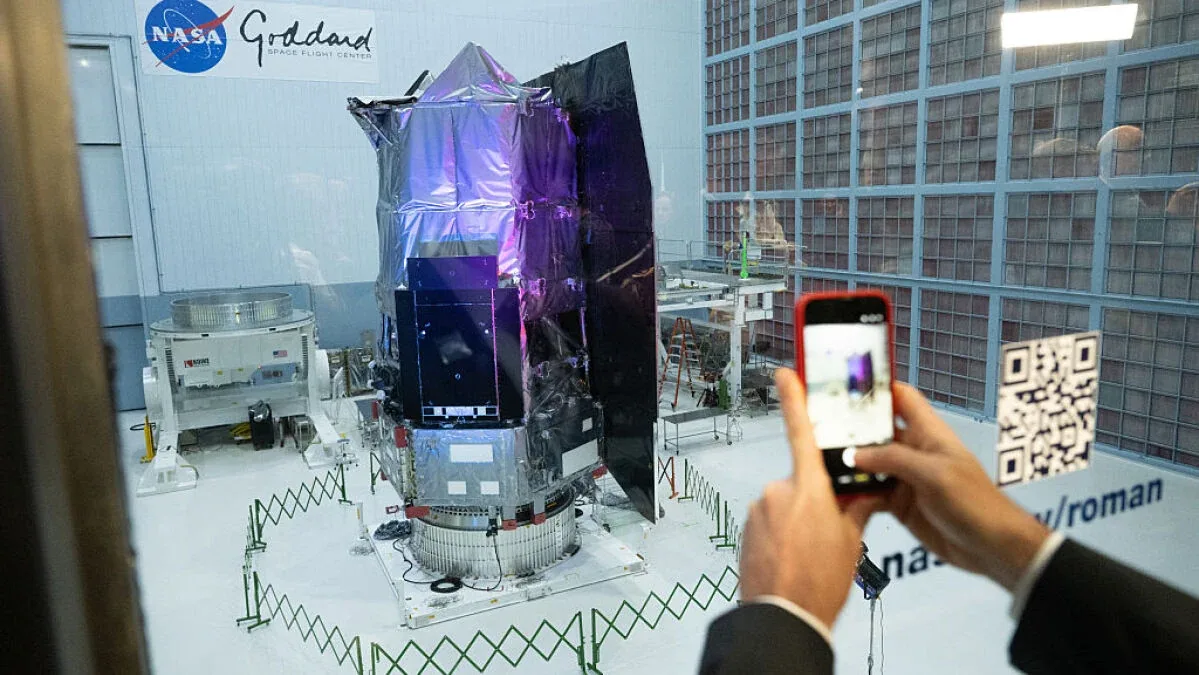
NASA is preparing to deploy its next-generation flagship observatory, the Nancy Grace Roman Space Telescope, potentially by August 30, 2026. This powerful instrument is designed to dramatically expand humanity's view of the universe by rapidly mapping enormous swathes of the cosmos, a capability that promises to uncover rare celestial phenomena and address some of cosmology's most profound mysteries.
Unlike its predecessors that focus on deep, narrow views of the sky, Roman will act as a cosmic scout, surveying large areas quickly. "Roman would be able to find some things like that in space, because we're surveying such a large part of the sky, and then we can follow up with detailed measurements — with James Webb Space Telescope — now that we know where to look," explained senior project scientist Julie McEnery. Roman's primary mission objective is to map the distribution and evolution of galaxies and galaxy clusters, providing crucial data to test prevailing theories of the universe's expansion, particularly concerning the roles of dark matter and dark energy.
A Wider Lens for Cosmic Discovery
Roman's expansive field of view is its key advantage. While maintaining Hubble-like resolution in infrared light, each of its images will cover at least 100 times more sky. Over its initial five years, the telescope is projected to image more than 50 times the sky area observed by Hubble in its three-decade-long mission. This broad survey capability is essential for identifying elusive objects and phenomena that might be missed by more targeted observations.
The data generated by Roman will be immense, with estimates suggesting it will transmit approximately 1.4 terabytes of science data daily. For scale, a single image from its main survey would require over 500,000 4K televisions to display, covering an area equivalent to 45 city blocks. This vast dataset will be instrumental in constructing detailed 3D maps of the universe, offering unprecedented insights into cosmic structures and their changes over time.
The synergy between Roman, the Hubble Space Telescope, and the James Webb Space Telescope (JWST) is a cornerstone of NASA's observational strategy. Hubble, operational since 1990, observes in visible, ultraviolet, and infrared light, excelling at detailed studies of single galaxies and star-forming regions. JWST, launched in 2021, specializes in infrared observations, allowing it to peer through cosmic dust, study the earliest galaxies, and analyze exoplanet atmospheres. Roman, in this collaborative framework, will serve as a wide-field imager, identifying targets of interest for Hubble and JWST's more specialized instruments. "You could consider one of Roman's roles to be something like a finding chart for the James Webb Space Telescope," McEnery added.
Nicky Fox, NASA's associate administrator for science, emphasized Roman's unique scientific contribution: "Roman isn't just doing Hubble and Webb science faster. It's doing fundamentally different science that could not be done with either observatory. The three missions will complement each other."
Beyond NASA's flagship observatories, Roman will also collaborate with ground-based facilities like the Vera C. Rubin Observatory in Chile. Rubin Observatory repeatedly scans the sky in visible light, tracking temporal changes. However, its images can sometimes be too blurred to resolve closely packed objects. By comparing Rubin's data with Roman's sharper infrared views, astronomers expect to disentangle crowded scenes and refine cosmological measurements, including calculations of the universe's expansion rate by studying exploding stars, or supernovae.
Furthermore, Roman is equipped with an advanced coronagraph designed to block starlight, enabling the direct imaging of planets orbiting other stars. This instrument represents a significant technological leap, potentially capturing planets that are 10 to 100 million times fainter than their host stars. This capability is crucial for advancing the search for exoplanets and holds promise for future missions like the proposed Habitable Worlds Observatory, which aims to directly photograph Earth-like planets and search for biosignatures in their atmospheres.
Ultimately, the Nancy Grace Roman Space Telescope is poised to usher in a new era of astronomical discovery. "We're going to be surveying patches of the sky, going back over and over again to find new things that go bump in the night," McEnery stated. "I very much hope, and in fact expect, that the most exciting science from Roman is going to be the things that we didn't expect — that we couldn't predict."