
NASA's Roman Space Telescope Faces Launch After Funding Battles
NASA's groundbreaking Nancy Grace Roman Space Telescope is set to launch Aug. 30, marking the culmination of two decades of development and a period of intense uncertainty due to proposed budget cuts.

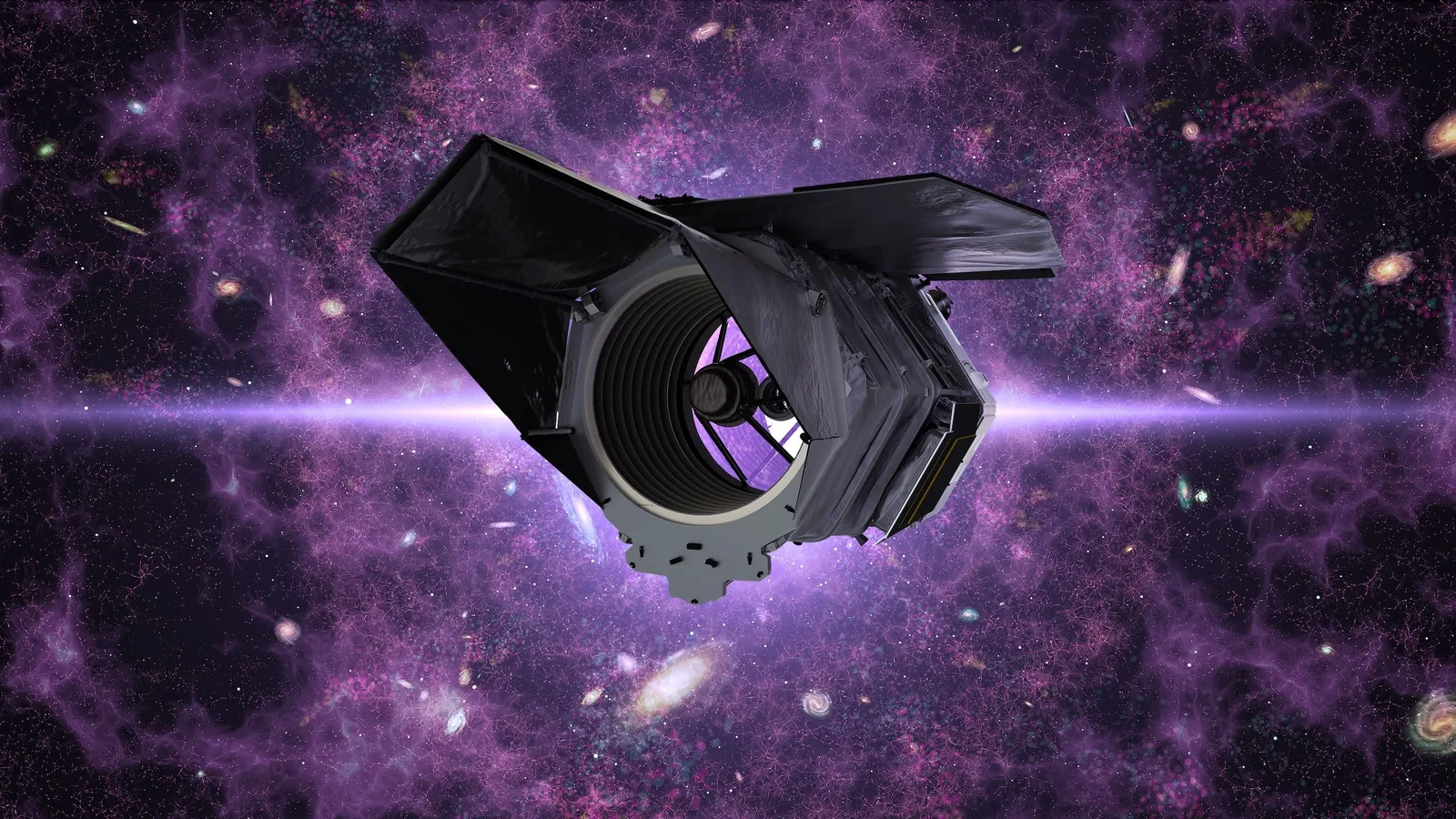
The Nancy Grace Roman Space Telescope, NASA's next-generation orbital observatory, is hours away from its scheduled launch on Sunday, August 30. The spacecraft recently completed encapsulation within its rocket's protective payload fairing, signaling its imminent departure from Earth. Set to lift off atop a SpaceX Falcon Heavy rocket at 7:27 a.m. EDT from NASA's Kennedy Space Center in Florida, Roman will embark on a journey to the sun-Earth Lagrange Point 2 (L2), an orbit approximately 930,000 miles away. This mission represents the culmination of nearly two decades of work and an investment of $4 billion, promising to revolutionize astronomical research into dark matter, dark energy, and exoplanets with a field of view 50 times wider than the James Webb Space Telescope.
However, the telescope's path to orbit was fraught with peril, most notably during fiscal year 2026 when leaked budget proposals suggested a drastic cut to NASA's funding, threatening the very existence of the Roman mission. The proposal, which emerged in April 2025, outlined a staggering 24% reduction in the agency's overall budget, with science programs facing a severe 50% loss. While existing missions like Hubble and JWST were slated for continued support, the proposal allocated "no funding … for other telescopes," sending shockwaves through the scientific community and creating immense uncertainty for those involved.
Engineers and scientists working on the Roman telescope faced the daunting prospect of their life's work being canceled just as it neared completion. Lisa, an engineer at NASA's Goddard Space Flight Center who requested anonymity, described the situation as confounding. "We're 95% there. If it gets canceled, it would be really ridiculous, and I don't know how I would handle it," she stated at the time. "This is basically my life's work." The proposed cuts ignited fears of significant job losses and the potential abandonment of cutting-edge research.
Navigating Political Storms and Funding Shortfalls
The initial shock from the leaked budget documents was tempered when the official FY26 presidential budget request was published. While not a complete cancellation, the proposal allocated only $156.6 million for Roman's continued development, less than half of its previous year's funding. This financial strain forced NASA agencies, including Goddard, to initiate workforce reductions and offer voluntary resignation packages. According to Lisa, two out of three skilled technicians in one department of the Roman team departed, further complicating the telescope's ongoing qualification testing. "We're pushing forward to get as far as we can while we have our current funding, and we'll see what happens," Lisa said last summer. "That amount of funding obviously will make it impossible, in my opinion, to keep schedule, because we can't keep running two shifts with half the people."
Despite the political uncertainty and staffing challenges, mission leadership urged teams to maintain focus on their work. Jamie Dunn, who served as Roman's project manager and is now director of Goddard, recounted to a committee of the National Academies of Sciences, Engineering, and Medicine that the team adopted a pragmatic approach. "Out of the eight years I [worked on Roman]," Dunn said, "we were zeroed out in the president's budget … in at least half of them. Not to be casual about it, but that happens." He advised his team to "keep coloring" and to focus on delivering on their commitments, stating, "And if delivering on our commitments isn't good enough, then what else can we do?" This mantra of continued effort helped mitigate panic, with mission leaders encouraging personnel to "focus on the work" and that "the best way to make sure we don't get cut is to continue delivering and continue to stay on schedule." Many engineers and technicians responded by doubling down, working weekends and maintaining a resolute focus despite the looming threat of cancellation.
The Roman mission team's dedication and the subsequent intervention by Congress, which ultimately rejected the steep proposed cuts and restored NASA's funding, allowed the project to not only survive but accelerate. Facing the possibility of renewed uncertainty for FY27, mission management strategically pushed the launch date forward. "They just kept pulling it earlier and earlier, because I think they were pushing to get it off the ground and in space before it could get cut," Lisa explained. The target launch date was moved successively to September and then to late August to ensure completion within the current fiscal year. To meet these accelerated timelines, Roman teams worked two shifts daily and most Saturdays, sometimes Sundays, a relentless pace that ultimately paid off. NASA announced the telescope's completion in April, a remarkable eight months ahead of schedule and under budget. "Lo and behold, it turns out delivering on your commitments means something," Dunn remarked.
With all political and developmental hurdles cleared, the final, critical phase for the Roman Space Telescope is its ascent into space. After years of battling budget proposals and schedule pressures, the greatest anxiety for Lisa and her colleagues now centers on the unpredictable nature of rocketry. "The launch vehicle … that's what we kind of don't have control over," she admitted, expressing nervousness over the culmination of so much effort and sacrifice resting on the launch's success. The telescope will take approximately 30 days to reach its L2 destination, requiring several trajectory adjustments, including a crucial mid-course correction maneuver about 24 hours post-launch. The successful operation of NASA's Roman Space Telescope at L2 is poised to usher in a new era of astronomical discovery, a testament to the resilience of its team and the enduring pursuit of scientific knowledge.