
NASA's Roman Telescope: Spy Satellite Origins to Cosmic Explorer
NASA's upcoming Nancy Grace Roman Space Telescope repurposes optical components from defunct spy satellites, a surprising move that could redefine astronomical observation. The telescope is set to launch in August 2026.

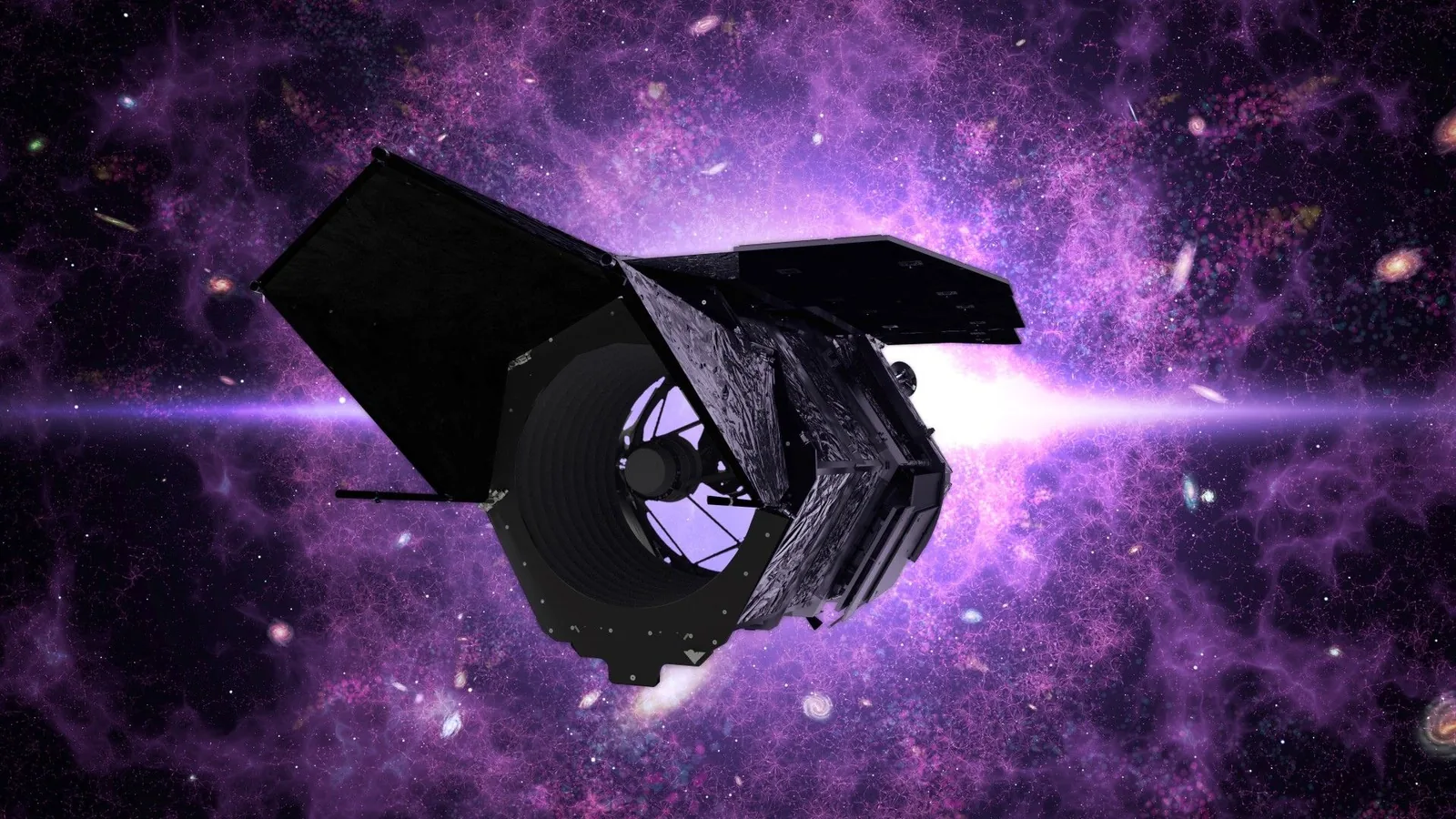
The National Aeronautics and Space Administration (NASA) is on the cusp of launching its next-generation observatory, the Nancy Grace Roman Space Telescope, an instrument poised to revolutionize astronomy. Set to lift off aboard a SpaceX Falcon Heavy rocket on Sunday, August 30, 2026, the Roman telescope will delve into the universe's deepest mysteries, from the nature of dark energy to the characteristics of exoplanets. However, the observatory's core technology has an unexpected origin: the discarded hardware of U.S. spy satellites.
At the heart of the Roman Space Telescope lies its sophisticated Optical Telescope Assembly (OTA). This critical component houses the primary mirror, nine auxiliary mirrors, supporting structures, and intricate electronics, all designed to capture light from distant cosmic phenomena. The origins of this advanced optics package can be traced back to the National Reconnaissance Office (NRO), the agency responsible for developing and operating U.S. intelligence-gathering satellites. In 1999, the NRO initiated the ambitious and costly "Future Imagery Architecture" (FIA) program, contracting Boeing to design a new generation of spy satellites. This program, intended to enhance national security capabilities, particularly in the post-9/11 era of 2001, encountered significant financial and technical challenges. By 2005, the FIA program was terminated, having reportedly incurred billions of dollars in cost overruns, with The New York Times famously characterizing it as "perhaps the most spectacular and expensive failure in the 50-year history of American spy satellite projects."
Repurposed Optics for a New Frontier
Despite the spectacular failure of the FIA program, its demise created an unexpected opportunity for scientific exploration. In 2012, the NRO donated two of the unused space telescopes developed under the FIA program to NASA. These optics, reportedly comparable in quality to those of the Hubble Space Telescope, presented a tantalizing prospect for the agency. This donation occurred shortly after the Roman telescope (then known by its preliminary name, WFIRST) was first proposed. While significant investment was still required to adapt the hardware and complete the telescope's construction, the gifted optics offered a substantial potential cost saving for the mission.
NASA's decision to integrate this repurposed technology was influenced by the 2010 Astronomy and Astrophysics Decadal Survey, which identified the Roman telescope as its highest priority. By 2011, even before the mission was formally designated by NASA, the agency had announced its intention to leverage the spy satellite technology. Although the NRO-donated telescopes came with state-of-the-art optics, they were provided at no direct acquisition cost. This starkly contrasted with the development of the James Webb Space Telescope (JWST), which was completed in 2018 after a prolonged development period starting in the mid-1990s. The JWST faced intense scrutiny for substantial delays and budget overruns, ultimately costing an estimated $10 billion.
The Roman Space Telescope team faced unique challenges with the donated hardware. While the primary optics were valuable, the associated electronics required replacement, and crucially, much of the technical documentation was redacted. As reported by The Washington Post, large sections of information regarding the telescope's specifications were blacked out when handed over to NASA. Despite these peculiar circumstances and the need for extensive rework, the Roman mission has largely stayed on schedule and within its projected budget, a notable achievement for a space telescope of its scale. NASA retains possession of the second NRO telescope, though its future use has not yet been disclosed.
The successful repurposing of components from a defunct spy satellite program into a cutting-edge astronomical observatory highlights NASA's ingenuity and resourcefulness. This unlikely marriage of intelligence-gathering technology and scientific discovery is set to provide unprecedented insights into the cosmos. The Nancy Grace Roman Space Telescope, built with this unexpected foundation, now stands ready to explore the universe's most profound questions.