
Northern Lights Visible Across Most of US This Weekend
Stunning auroras are expected to be visible across much of the United States this weekend due to a powerful geomagnetic storm. Residents from northern to central states may have a chance to witness the celestial display.

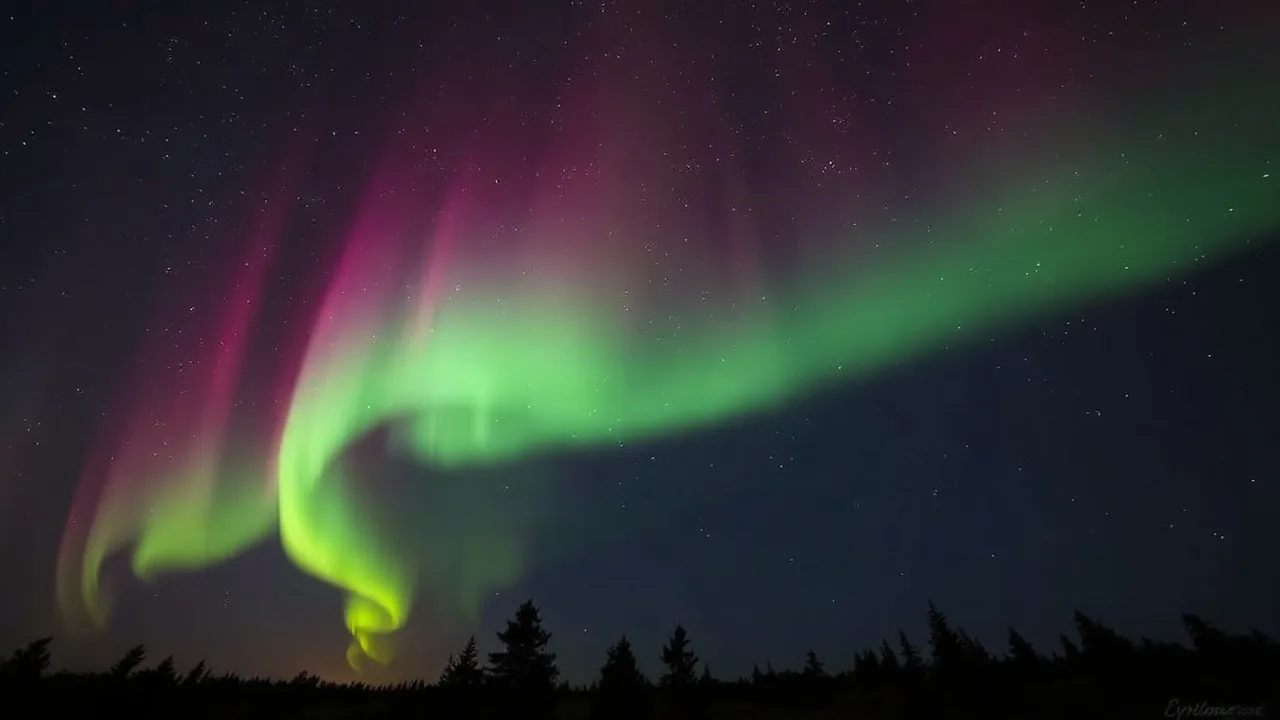
Residents across the United States may have a chance to witness the spectacular Northern Lights this weekend, with forecasts indicating visibility extending further south than usual. The aurora borealis, typically confined to higher latitudes, is expected to be visible in many parts of the country due to a significant geomagnetic storm.
The National Oceanic and Atmospheric Administration's (NOAA) Space Weather Prediction Center has issued alerts for a strong geomagnetic storm, potentially reaching G4 (Severe) levels. Such storms are driven by coronal mass ejections (CMEs) from the sun, which release massive amounts of plasma and magnetic field into space. When these CMEs interact with Earth's magnetosphere, they can trigger intense auroral displays.
Conditions for Visibility
While the intensity of the geomagnetic storm will play a crucial role, clear skies and minimal light pollution will be essential for optimal viewing. Experts advise that the best chances for visibility will be in rural areas, away from city lights. The peak viewing times are generally expected to be between 10 p.m. and 2 a.m. local time, though the aurora can be seen at other hours.
The geographic reach of the aurora depends on the storm's strength. A G4 storm has the potential to push the auroral oval, the region where the lights are most commonly seen, down into areas like the northern contiguous United States. Even in mid-latitude regions, observers might see a greenish or reddish glow on the northern horizon.
This event is a timely reminder of the dynamic nature of space weather and its potential impact on Earth. While auroras are a beautiful phenomenon, severe geomagnetic storms can also disrupt satellite operations, power grids, and radio communications. The current forecast suggests a heightened chance for these disruptions alongside the increased aurora activity.
Scientists at NOAA are closely monitoring the solar activity that is causing this geomagnetic storm. The charged particles streaming from the sun, following a recent solar flare, are interacting with Earth's magnetic field, causing the vibrant light shows. This particular storm is anticipated to be one of the more significant events of the year, offering a rare opportunity for many Americans to experience the aurora borealis firsthand.
For those hoping to catch a glimpse of the lights, checking local weather forecasts for cloud cover and consulting aurora forecast maps from organizations like NOAA is recommended. Patience and a clear view of the northern sky will be key to experiencing this breathtaking natural spectacle.