
Northern Lights Visible Across US Tonight Due to Geomagnetic Storm
A strong geomagnetic storm is expected to enhance aurora visibility across the United States tonight, October 11, 2026. Residents in many northern states may have a chance to witness the spectacular display.

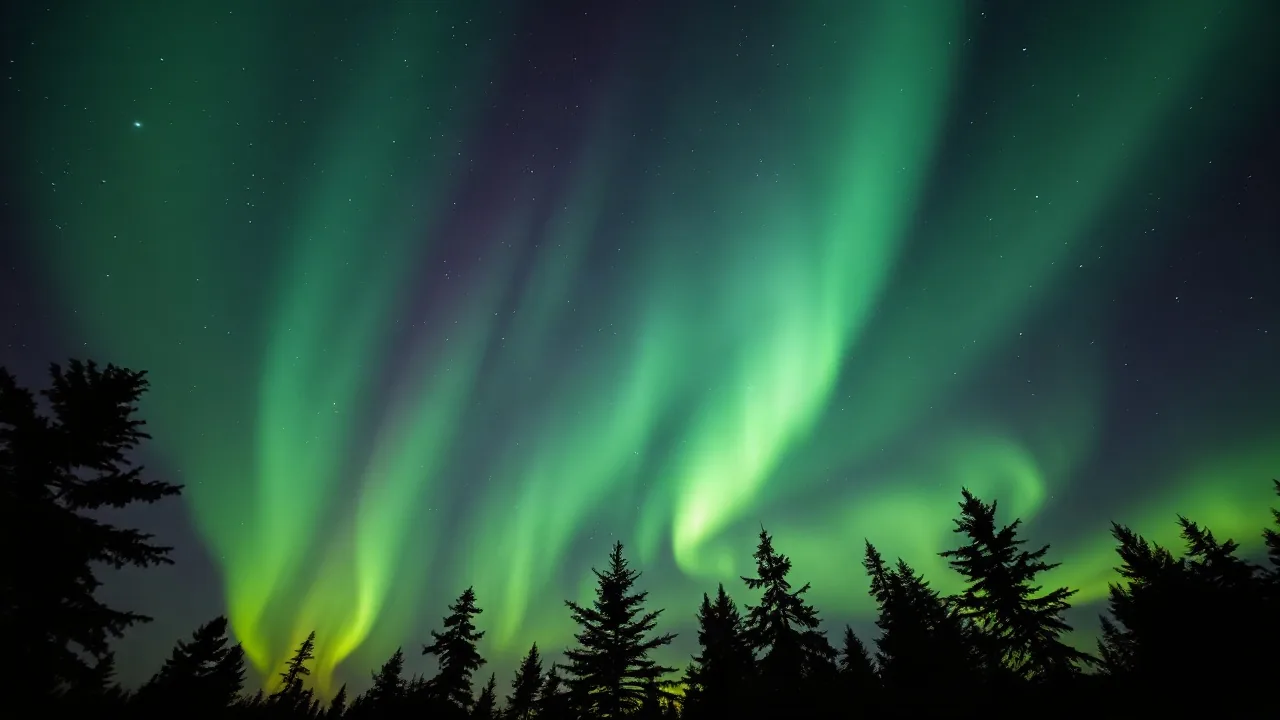
Residents across much of the United States may have a chance to witness the spectacular Northern Lights tonight, October 11, 2026, as a significant geomagnetic storm is underway. The National Oceanic and Atmospheric Administration (NOAA) Space Weather Prediction Center forecasts a Moderate (G2) geomagnetic storm, increasing the likelihood of aurora visibility further south than typically observed.
The event is triggered by increased solar activity, which releases charged particles into space. When these particles interact with Earth's magnetic field and atmosphere, they create the mesmerizing light displays known as aurora borealis. This particular storm is anticipated to be strong enough to push the aurora's visibility into lower latitudes, potentially offering a rare viewing opportunity for millions of Americans.
Aurora Viewing Tips and Expectations
While the aurora is most commonly seen in regions closer to the Arctic Circle, such as Alaska and Canada, the current geomagnetic conditions could allow sightings in states like Montana, North Dakota, Minnesota, Wisconsin, Michigan, and even further south on clear nights. Optimal viewing conditions require dark skies, away from city lights. Experts advise looking towards the northern horizon after sunset.
"We are expecting increased aurora activity due to the ongoing geomagnetic storm," said a spokesperson for the NOAA Space Weather Prediction Center. "While it's not a guaranteed spectacle everywhere, there's a heightened possibility for people in the northern tier of states to see the lights." The intensity and duration of the aurora depend on the strength of the solar wind and the interaction with Earth's magnetosphere.
The last significant aurora displays visible across broad swaths of the US occurred during intense solar storms. Such events are a powerful reminder of the dynamic relationship between the Sun and our planet. Understanding space weather is crucial not only for predicting aurora displays but also for protecting critical infrastructure like satellites and power grids, which can be affected by severe geomagnetic disturbances. This particular storm, classified as G2, is considered moderate but significant enough to produce visible auroral activity at lower latitudes.
For those hoping to catch a glimpse of the lights, NOAA recommends checking their space weather forecasts regularly. Conditions can change rapidly, and predicting the exact timing and intensity of auroral displays remains a challenge. Patience and a bit of luck, combined with clear skies, will be key for anyone venturing out to witness this natural phenomenon this October 2026. The Northern Lights are a breathtaking display, and this geomagnetic storm provides a favorable scenario for many to experience them.