
Physics Nobel Awarded for Detecting Elusive Cosmic Particles
Francis Halzen has been awarded the 2026 Nobel Prize in Physics for his pioneering work in detecting neutrinos, "ghostly" subatomic particles that travel the cosmos. His research led to the development of the IceCube Neutrino Observatory.

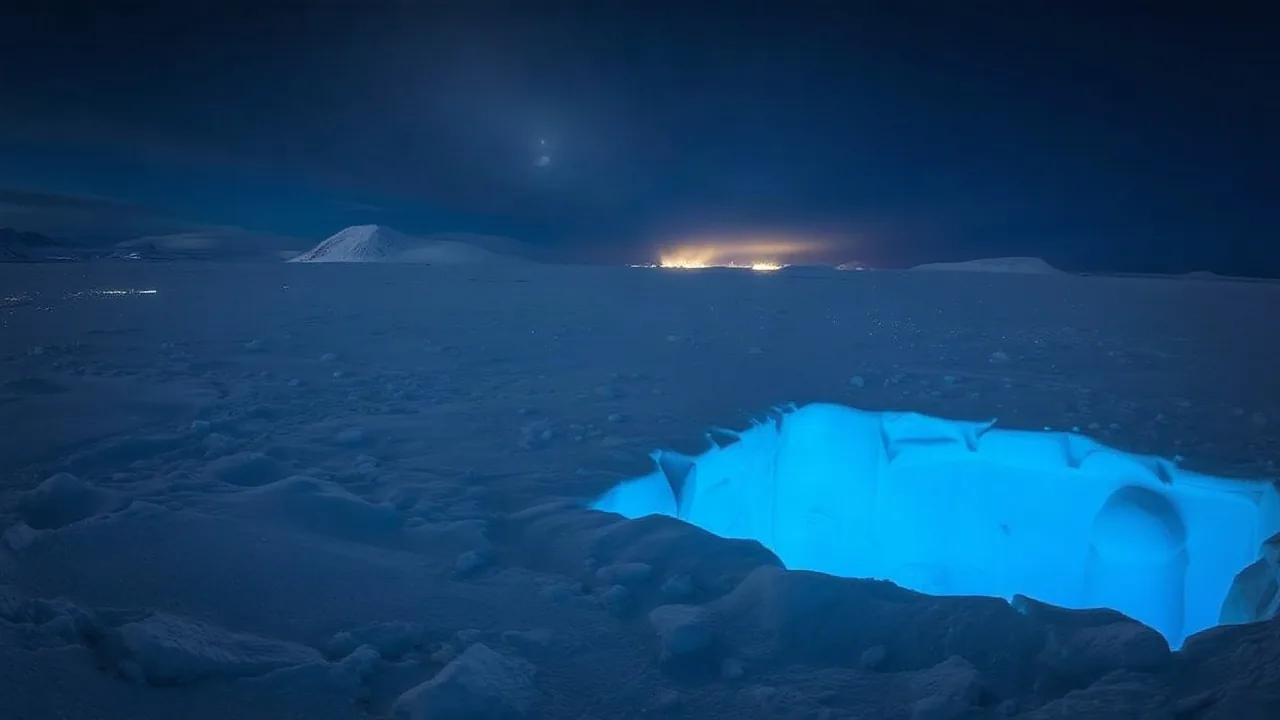
STOCKHOLM, Sweden – The 2026 Nobel Prize in Physics has been awarded to Professor Francis Halzen of the University of Wisconsin-Madison for his leadership in developing the IceCube Neutrino Observatory and its success in detecting elusive cosmic particles known as neutrinos. The announcement was made Tuesday by the Royal Swedish Academy of Sciences.
Halzen, a prominent theoretical physicist, spearheaded the international collaboration that transformed a cubic kilometer of pristine Antarctic ice into a massive detector capable of observing neutrinos. These nearly massless subatomic particles, often called "ghostly" due to their ability to pass through matter unimpeded, originate from powerful cosmic events such as supernovae, active galactic nuclei, and gamma-ray bursts. Detecting them provides a unique window into the most energetic processes in the universe.
The IceCube Neutrino Observatory, located at the South Pole, uses sensors embedded deep within the ice to detect the faint blue light emitted when a neutrino occasionally interacts with an ice molecule. This groundbreaking work has allowed scientists to confirm the astrophysical origin of high-energy neutrinos, a long-standing puzzle in particle physics and astronomy. The ability to capture these cosmic messengers represents a significant leap forward in our understanding of the universe.
Unveiling the Universe's High-Energy Secrets
For decades, physicists like Francis Halzen theorized about the existence and sources of high-energy neutrinos. However, capturing these particles proved exceedingly difficult due to their weak interaction with matter. Halzen's vision for IceCube provided the necessary scale and sensitivity to overcome these challenges. The project, a collaboration involving institutions from numerous countries, including significant contributions from the University of California, Berkeley, and the National Science Foundation, finally made it possible to detect neutrinos originating from beyond our solar system.
"This award is a testament to the power of international collaboration and decades of persistent scientific inquiry," said a spokesperson for the IceCube collaboration. "Professor Halzen's theoretical insights combined with the engineering marvel of IceCube have opened a new era of astroparticle physics."
The implications of Halzen's work extend beyond fundamental physics. By studying these cosmic particles, scientists can gain insights into the extreme environments where they are produced, such as the hearts of galaxies billions of light-years away. This opens up possibilities for understanding dark matter, the nature of black holes, and the evolution of the cosmos itself. The IceCube detector has already recorded thousands of high-energy neutrino events since its completion in 2010, providing invaluable data for researchers worldwide.
The Nobel Prize in Physics is one of the most prestigious awards in science, recognizing exceptional achievements that advance human knowledge. Halzen's recognition underscores the significance of neutrino astronomy as a burgeoning field that promises to unravel some of the universe's deepest mysteries.