
NASA's Roman Telescope Set to Unveil Universe's Secrets Aug. 30
NASA's Nancy Grace Roman Space Telescope, launching August 30, is poised to revolutionize our understanding of the universe, from dark energy to exoplanets.

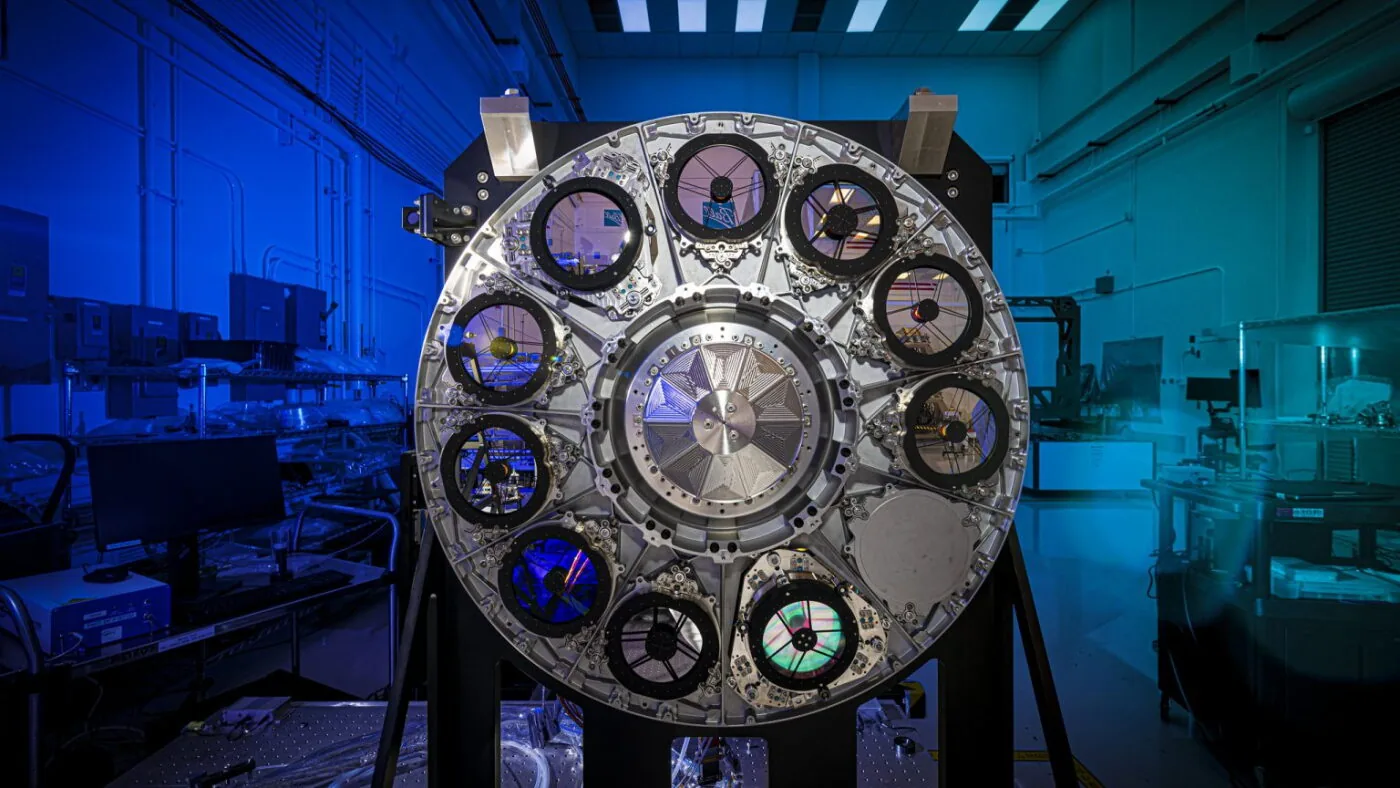
The $4.3-billion Nancy Grace Roman Space Telescope is scheduled for launch on August 30, promising to equip astronomers with a powerful new instrument to probe cosmic mysteries. Named for NASA's first chief astronomer, the observatory is expected to provide critical insights into the universe's expansion and discover vast numbers of planets orbiting distant stars.
The Roman telescope, also known by its acronym, has a unique origin story. Approximately 15 years ago, NASA was developing plans for a space telescope capable of searching for Type 1A supernovas. These celestial explosions serve as crucial cosmic measuring sticks, instrumental in the discovery of dark energy—a mysterious force driving the universe's accelerating expansion, a finding recognized with the 2011 Nobel Prize in Physics. Cosmologist Daniel Scolnic of Duke University emphasized the importance of identifying more supernovas for a deeper comprehension of this expansion.
"The National Reconnaissance Office reached out to NASA," Scolnic recounted, "saying, 'We have this amazing satellite sitting in a hangar that we're not using. And what do you guys think about instead of pointing downwards, we point upwards, and you guys use it?'" NASA accepted the offer, and after substantial modifications, the repurposed satellite is now set to become the agency's next major space observatory. Scolnic believes this new observatory has the potential to fundamentally reshape the scientific models astronomers employ to understand the cosmos.
Revolutionizing Cosmic Understanding
"In the last few years, there have been measurements saying that model might be wrong — and that's something that Roman will absolutely nail, whether the model's right or wrong," Scolnic stated. Beyond its role in studying dark energy, the telescope will dedicate a month to surveying all the stars within the Milky Way galaxy. Julie McEnery, Roman's project scientist, explained that despite possessing similar sensitivity and resolution to the Hubble Space Telescope, Roman's design enables significantly faster observations.
"That one month of observations to survey our Milky Way galaxy would take about a century with Hubble," McEnery noted. Unlike telescopes that focus on single objects, Roman is engineered to create extensive sky surveys, cataloging large areas of the sky. These comprehensive catalogs will be made accessible to the public, not exclusively to academic researchers. "You can be a teacher in a high school in Kentucky and your students have the opportunity to see Roman data at the same time as a professor in Princeton," McEnery added.
One academic eagerly anticipating access to Roman's data is Scott Gauti from The Ohio State University. Gauti and his colleagues have pioneered a technique for detecting planets around distant stars known as gravitational microlensing. This method measures the subtle bending of starlight as it passes celestial bodies, a phenomenon first theorized by Albert Einstein in 1936. Advancements in technology have made this previously impractical concept viable, and Gauti anticipates Roman will discover numerous planets using this technique. "We're looking for planets that are just completely undetectable by any other method," Gauti said.
This includes planets located in the dense galactic center, potentially similar to gas giants like Jupiter and Saturn in our own solar system. In addition to new exoplanets, the Roman telescope is expected to identify new galaxies, thereby enhancing astronomers' understanding of the large-scale structure of the universe. Predicting the most significant discoveries of Roman's initial five-year mission remains challenging, but its advanced capabilities promise unprecedented insights into the cosmos.