
NASA Stock: Aerospace Investments Tied to Space Exploration
Investors seeking exposure to NASA's growing space ambitions can target aerospace contractors directly involved in lunar missions, satellite programs, and commercial partnerships. Key players show strong fundamentals as federal spending accelerates.

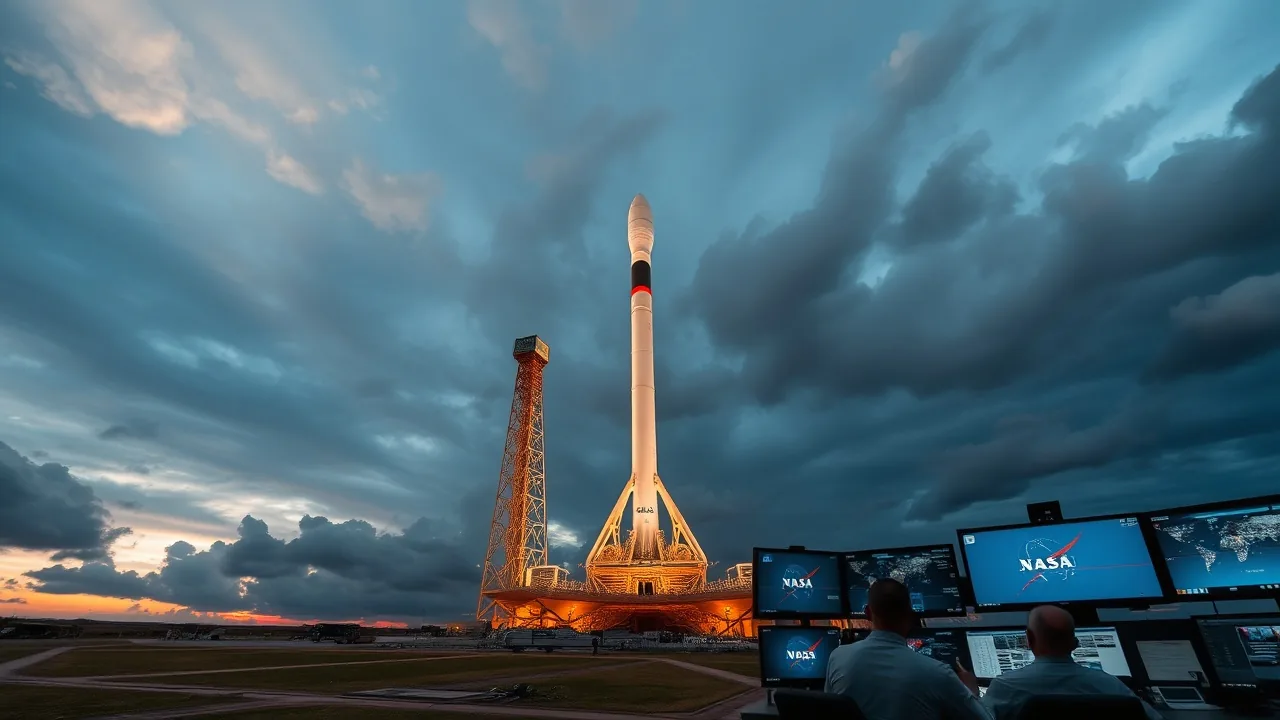
On December 13, 2024, Axiom Space announced a $325 million Series C funding round to expand its commercial space station modules, signaling renewed investor confidence in companies executing NASA's long-term vision. While NASA itself remains a government agency without publicly traded shares, NASA stock investors typically gain exposure through established aerospace contractors and emerging space technology firms directly involved in agency contracts and missions.
The distinction matters: NASA operates as a federal agency funded by congressional appropriations, not equity markets. Investors pursuing space sector gains should focus on companies with substantial NASA contract portfolios, including SpaceX, Boeing Defense & Space Security, Lockheed Martin Space, and Northrop Grumman. Each of these firms derives meaningful revenue from agency programs ranging from cargo resupply to deep space exploration hardware.
SpaceX, still privately held, remains the most visible NASA partner after winning the Commercial Crew Program contract worth $2.6 billion to transport astronauts to the International Space Station. The company's Falcon 9 rocket and Crew Dragon capsule have completed seven human missions since 2020, establishing operational reliability that underpins future lunar and Mars-focused contracts.
Market Drivers in Aerospace and Space Investment
Publicly traded aerospace companies benefit directly from NASA's fiscal 2024 budget of $25.4 billion, a 4 percent increase from the prior year. The agency's focus on NASA projects includes the Artemis program targeting the Moon, the James Webb Space Telescope operations, and expanded Earth observation satellites.
Boeing (BA) holds primary responsibility for the Space Launch System (SLS) heavy-lift rocket, though the program has experienced technical delays and cost overruns. The company's aeronautics and space security segment generated $9.1 billion in revenue during 2023, with NASA contracts representing a significant portion of that total.
Lockheed Martin (LMT) manufactures the Orion spacecraft, the crewed capsule designed to carry astronauts beyond low Earth orbit. According to analyst David Baker at aerospace consulting firm Orbital Insight, "Orion represents the most advanced human spacecraft ever developed, and its production timeline through the 2030s creates a multi-billion-dollar revenue stream for Lockheed." The company's space segment generated $5.8 billion in 2023 revenue.
Northrop Grumman (NOC) operates the Cygnus cargo vehicle and supplies components for numerous NASA systems. The company reported space technology revenue of $3.2 billion in 2023, with planned increases as mission cadence accelerates.
Emerging Opportunities in Commercial Space
Beyond traditional prime contractors, space investment opportunities extend to smaller publicly traded firms and private companies approaching public markets. Relativity Space (RLTY), which went public via SPAC merger in January 2023, develops 3D-printed rockets aimed partly at NASA payloads. The company trades with a market cap near $350 million as of late 2024.
Axiom Space's December funding round highlights investor appetite for commercial space infrastructure. The company manufactures replacement modules for the International Space Station and is building the first commercial space station segment scheduled to dock in 2028. While Axiom remains private, its valuation trajectory reflects market confidence in commercial station economics.
Rocket Lab (RKLB), a publicly traded small-lift launch provider, earned $161 million in revenue during 2023 and maintains contracts with defense and intelligence agencies alongside NASA work. The company's Electron rocket serves smallsat missions, a growing segment as commercial operators expand constellation deployment.
Evaluating stock analysis in this sector requires attention to contract backlog, mission success rates, and program funding stability. Government budgets shift with political priorities, making revenue visibility a key risk factor for aerospace investors.
The aerospace industry faces supply chain pressures and skilled labor shortages that could impact margin expansion. Rising labor costs and raw material expenses have compressed profitability for some contractors despite growing top-line revenue. Investors should examine operating margins and cash flow generation rather than relying on revenue growth alone.
Federal spending on space exploration typically remains bipartisan, reducing short-term political risk. Both Democratic and Republican administrations have sustained funding for Artemis, Earth science missions, and ISS operations. Long-term structural support for space programs—including planned lunar bases and Mars preparation—provides confidence to institutional investors considering aerospace sector allocation.
Tax implications and portfolio weighting deserve consideration. Aerospace stocks tend to correlate with broader defense sector cycles and geopolitical tension. During periods of international stability, space-focused companies may underperform; during security-driven increases in defense budgets, they typically benefit.
The future of space exploration depends on sustained federal investment, private sector innovation, and international partnerships. NASA's commitment to lunar gateway stations, rover missions, and eventual human Mars landings suggests multi-decade revenue visibility for qualified contractors. Investors with a 5-to-10-year horizon may find aerospace valuations attractive relative to long-term program certainty and inflation-protected government contract pricing.