
NASA Stock and Aerospace Investments: Current Market Guide
Investment interest in NASA-related stocks has surged as private aerospace companies scale up. Here's what investors need to know about the space industry's financial landscape.

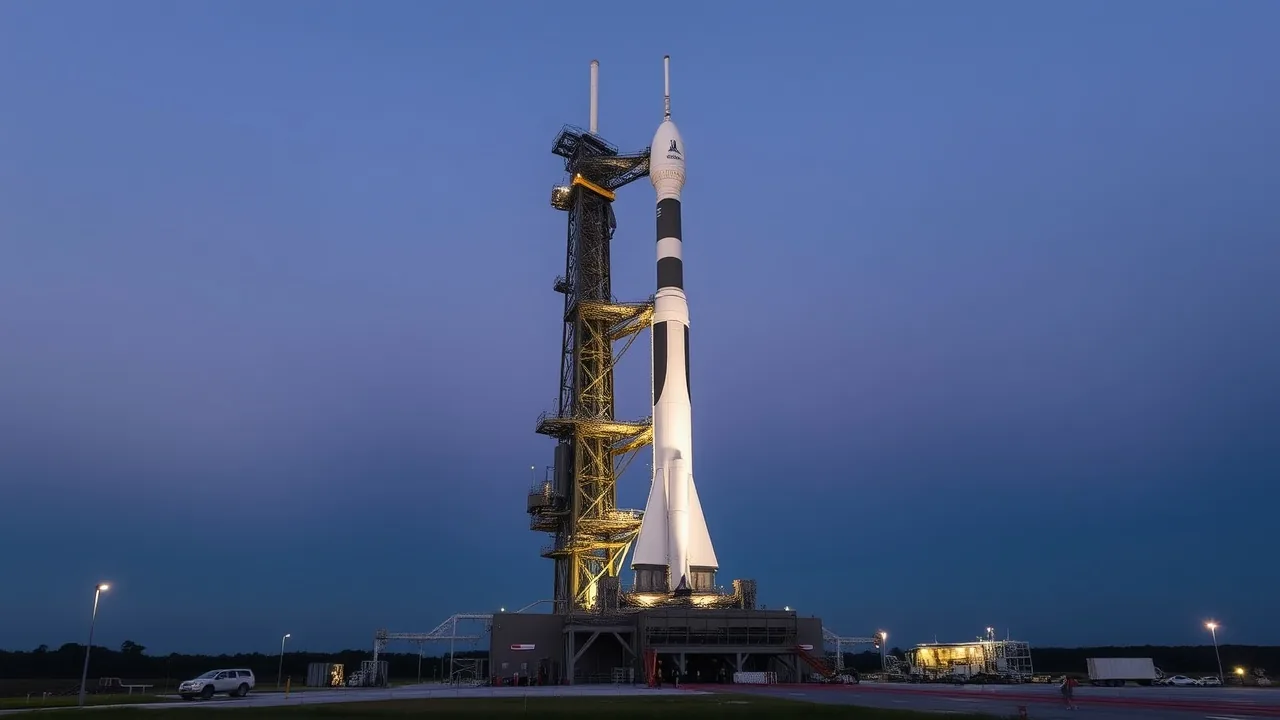
Alphabet Inc. subsidiary Verily Life Sciences announced a partnership with NASA in early 2024 to develop remote health monitoring systems for astronauts, signaling renewed corporate appetite for space-economy opportunities. This move reflects a broader trend: retail and institutional investors are actively searching for exposure to the aerospace sector, particularly companies with NASA contracts or partnerships.
NASA itself is not a publicly traded company, but the space industry ecosystem includes dozens of publicly listed firms that derive revenue from NASA contracts, launch services, satellite manufacturing, and ground support. Understanding which companies benefit most from NASA spending requires looking beyond the headline.
The U.S. federal government allocated $27.2 billion to NASA in fiscal year 2024, with significant portions flowing to aerospace investments in launch vehicles, lunar exploration, and deep-space infrastructure. Private contractors compete aggressively for these contracts, and winning a major NASA deal can move a company's stock price meaningfully.
Major Players in the NASA-Dependent Space Sector
Several large defense and aerospace firms hold substantial NASA contracts. Lockheed Martin Space, a division of Lockheed Martin Corporation (LMT), manufactures the Orion spacecraft and lunar modules under NASA's Artemis program. Boeing Space, Security and Intelligence (part of Boeing Co., BA) builds the Space Launch System core stage and conducts cargo resupply missions to the International Space Station.
Smaller, high-growth companies also capture investor attention. SpaceX, still private, dominates commercial crew and cargo transportation for NASA under existing contracts. Axiom Space, which is building the first commercial space station modules, also remains private but has secured significant NASA funding. Relativity Space, a California-based firm using 3D-printing technology to manufacture rockets, went public via SPAC merger in 2021 as RSD Acquisition Corp. before rebranding.
The publicly traded roster includes:
- Lockheed Martin (LMT) - Orion, lunar systems, defense integration
- Boeing (BA) - Space Launch System, ISS cargo, defense contracts
- Northrop Grumman (NOC) - Cygnus cargo vehicles, advanced technologies
- Axiom Space (AXIM) - Commercial space station modules; IPO in 2023
- Relativity Space (RLTY) - 3D-printed rockets; public since 2021
- Planet Labs (PL) - Earth imaging satellites; public since 2021
Chris Quilty, aerospace analyst at Quilty Analytics, stated in March 2024, "The Artemis program is creating a halo effect around the entire sector. Investors see sustained NASA spending, and that confidence flows into smaller contractors and satellite operators." Quilty's firm tracks over 40 publicly traded firms with material NASA exposure.
Artemis, Commercial Space Stations, and Long-Term Drivers
NASA's Artemis program aims to land astronauts on the Moon in 2026, then establish a sustained lunar presence. The program's budget runs into the tens of billions of dollars over the next decade, with contracts awarded to Lockheed Martin, Boeing, and dozens of suppliers. This multiyear spending window creates predictable revenue streams for large contractors and growth opportunities for specialized vendors.
Parallel to Artemis, NASA is funding commercial space station development. Companies including Axiom Space, Orbital Reef (a joint venture between Blue Origin and Sierra Space), and Northrop Grumman are building modules and habitats that will eventually replace or supplement the International Space Station. These programs represent entirely new revenue categories for aerospace firms.
The retirement of the Space Shuttle in 2011 catalyzed a shift toward private contractors. Today, SpaceX's Falcon 9 rocket and Dragon spacecraft handle most NASA crew and cargo launches, while Blue Origin and other firms compete for suborbital and orbital tourism, research, and manufacturing contracts. This privatization trend means smaller, publicly traded companies can now compete directly with legacy defense contractors.
Investment Risks and Market Volatility
Investing in aerospace stocks tied to NASA carries distinct risks. Government budget cycles are unpredictable; congressional debates over funding can delay or reduce allocations mid-year. The 2024 federal budget process saw delays, creating uncertainty for contractors dependent on timely appropriations.
Development risk is another factor. Large space projects like the Space Launch System have experienced cost overruns and schedule slips. Boeing's Starliner crewed spacecraft experienced technical delays that pushed its initial NASA mission into 2024, affecting investor confidence in Boeing's aerospace division.
Smaller, newer entrants like Relativity Space and Axiom Space remain unprofitable; they depend on continued investor funding and successful execution of technology demonstrations. Stock valuations in this cohort remain volatile, reflecting high growth expectations and execution risk.
Market analysts recommend a diversified approach within the sector. Large-cap defense and aerospace firms offer stability and dividend yields, while smaller stock market players offer growth potential paired with higher volatility. The ideal portfolio composition depends on individual risk tolerance and time horizon.
Federal policy changes also matter. A shift in administration priorities, changes to Moon landing timelines, or budget constraints could reshape contractor revenue forecasts. Investors should monitor congressional appropriations bills, NASA administrator statements, and quarterly earnings calls for guidance on future contracts.
The aerospace sector's relationship with NASA remains central to long-term value creation in investing in space. As NASA spending holds steady and private commercial opportunities expand, publicly traded aerospace firms stand to benefit. However, successful financial analysis in this space requires tracking government budgets, contract awards, and technical progress milestones alongside traditional equity metrics.