
NASA Stock and Space Investment Opportunities in 2026
Public companies tied to NASA contracts and the broader space industry are attracting investor attention in 2026. Explore which aerospace stocks and ETFs offer exposure to government space exploration and commercial launch ventures.

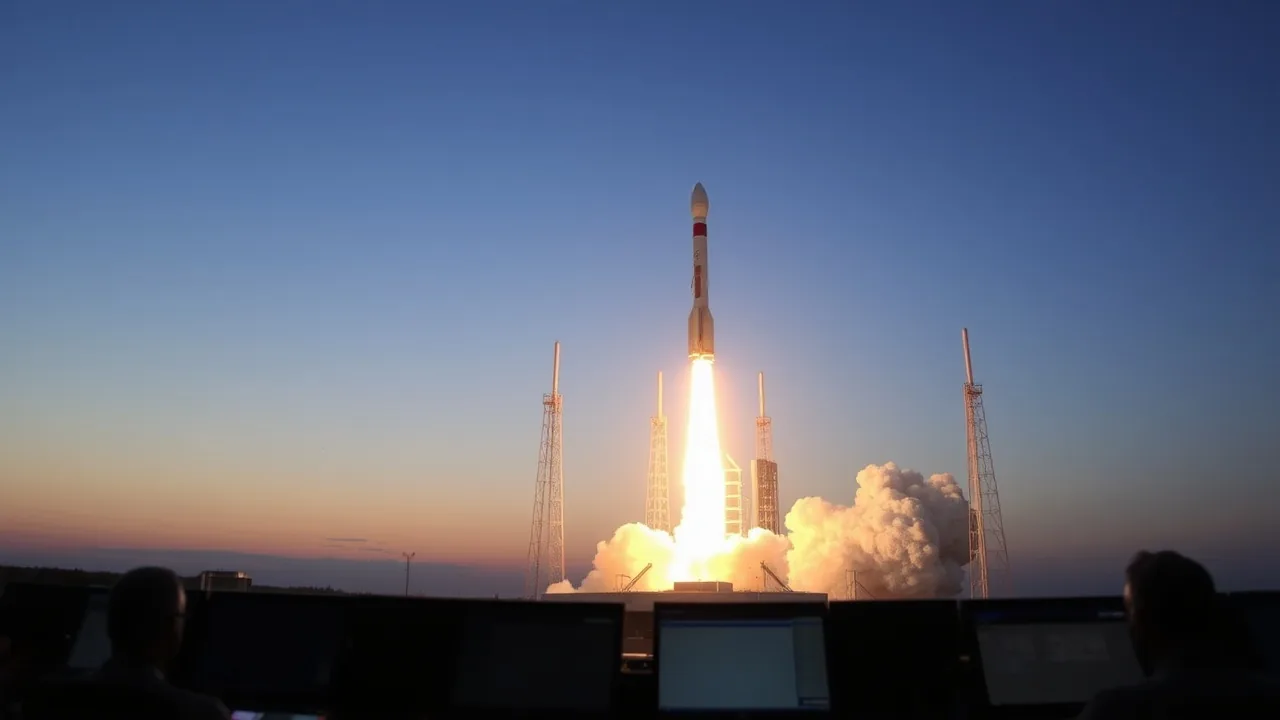
SpaceX's Starship completed its eighth test flight in early June 2026, drawing fresh attention from investors tracking the commercial space sector. While SpaceX remains private, its success reflects a broader boom in space investment that has institutional investors scouring public markets for exposure to NASA contracts, satellite services, and next-generation launch providers.
For retail and institutional investors seeking direct exposure to space exploration, the landscape has expanded well beyond traditional defense contractors. NASA stock itself does not exist as a ticker symbol, but dozens of publicly traded companies derive meaningful revenue from NASA contracts and the expanding commercial space economy.
Northrop Grumman Corporation (NOC) and Lockheed Martin Corporation (LMT) remain the largest publicly traded beneficiaries of NASA spending. In fiscal 2025, Northrop Grumman secured a $1.8 billion contract extension for Orion spacecraft life support systems ahead of the Artemis II lunar mission, scheduled for 2027. Lockheed Martin, as the primary contractor for the Orion capsule itself, has seen its aerospace segment grow at a compound annual rate of 4.2% over the past three years.
Aerospace ETFs and Diversified Exposure
Investors uncomfortable picking individual aerospace stocks often turn to aerospace ETFs for broad exposure. The Aerospace & Defense ETF (XAR) holds positions in 40 companies with NASA and government space contracts, alongside commercial aviation and defense suppliers. As of July 2026, XAR's top holdings include RTX Corporation (Raytheon Technologies), Northrop Grumman, and Lockheed Martin, each weighted between 4% and 7% of the fund's $8.2 billion in assets under management.
The Invesco Aerospace & Defense ETF (PPA) offers a slightly different focus, emphasizing pure-play aerospace manufacturers with smaller positions in defense electronics. PPA held 49 positions as of June 2026 and had delivered an 18.4% total return over the prior 12 months, outpacing the S&P 500's 12.1% gain.
Beyond traditional defense contractors, newer space industry participants have attracted capital. Axiom Space, which builds commercial space station modules under a $2.1 billion NASA contract, remains privately held but signals investor appetite for companies bridging government and commercial operations.
Commercial Launch and Emerging Operators
The commercial launch sector has matured enough to generate public listings. Relativity Space, which uses 3D-printing technology to manufacture rockets, went public via SPAC merger in early 2026 and trades as RSC. The company holds a $16 million launch services contract with the U.S. Space Force and has attracted orders from commercial satellite operators seeking lower launch costs.
"We're seeing capital markets recognize that the space economy is no longer dependent on government contracts alone," said Sarah Chen, senior aerospace analyst at Morgan Stanley, in a June 2026 research note. "Companies with diversified revenue from NASA, the Space Force, and commercial customers now command premium valuations."
Intuitive Machines (LUNR), which conducted the first private company soft landing on the Moon in February 2024, continues to execute NASA contracts for cargo delivery to the lunar surface. The company's quarterly revenue has grown 34% year-over-year through Q1 2026, driven by its Commercial Lunar Payload Services contract worth up to $4.8 billion across five years.
Axiom Space's competitor, Orbital Reef (a joint venture between Blue Origin and Sierra Space), remains private but signals intense competition for commercial space station contracts that will support NASA's transition away from the International Space Station by 2030.
Investment Thesis and Market Headwinds
The bull case for investment opportunities in aerospace and space rests on three pillars. First, NASA's fiscal 2026 budget request of $28.4 billion represents a 2.6% increase from 2025, with strong funding for Artemis lunar missions and low-Earth orbit commercial station development. Second, the U.S. Space Force has expanded spending on responsive launch and rapid space operations, benefiting companies like Relativity Space and emerging competitors. Third, satellite internet demand from Starlink, Amazon's Project Kuiper, and OneWeb has driven sustained launch cadence.
Interest rate headwinds remain a concern. Aerospace companies typically carry debt-heavy balance sheets to fund long-term government contracts. Higher borrowing costs in 2026 have pressured margins for suppliers dependent on fixed-price development contracts.
Geopolitical risk also constrains the sector. Chinese advances in commercial launch and satellite manufacturing have prompted Congress to scrutinize export controls and workforce retention in U.S. aerospace. Supply chain fragility, exacerbated by tariffs on specialty materials in early 2026, has affected smaller contractors' profitability.
For investors assembling a portfolio, a combination approach often works best: hold an aerospace ETF for diversified exposure, supplement with one or two direct positions in largest contractors with visible NASA contracts (Northrop Grumman and Lockheed Martin), and consider smaller emerging companies like Relativity Space or Intuitive Machines for growth upside. Individual risk tolerance, investment horizon, and sector conviction should guide allocation.
The space economy in 2026 is neither a speculative bubble nor a mature, slow-growth sector. It occupies the middle ground: steady government demand, expanding commercial opportunity, and public companies with meaningful exposure to both. Investors patient enough to weather volatility and selective enough to avoid indiscriminate aerospace exposure stand to benefit from the ongoing shift from government monopoly to mixed public-private space operations.