
NASA Jet and Balloons to Study Sun's Corona During August 12th Eclipse
NASA is deploying a high-altitude research jet and a fleet of balloons to study the sun's corona during the total solar eclipse on August 12th. The mission aims to gather unprecedented data on solar winds and atmospheric changes.

NASA scientists are gearing up to leverage the rare celestial event of the total solar eclipse on August 12th, deploying an advanced high-altitude research jet and a coordinated network of balloons to probe the sun's mysterious outer atmosphere, known as the corona. This scientific endeavor aims to capture critical data as the moon temporarily obscures the sun, offering a unique window into solar phenomena.
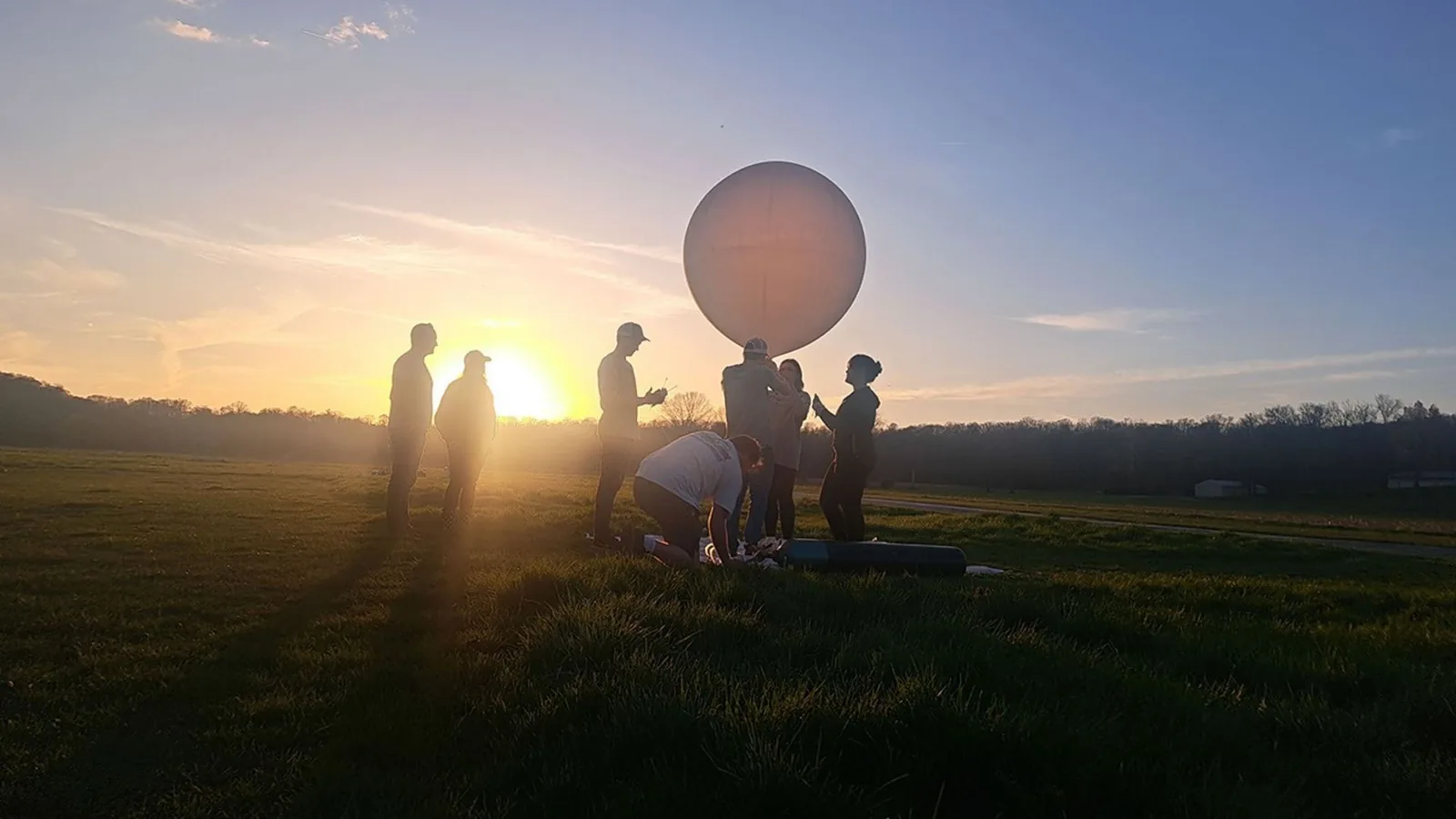
A specially equipped WB-57 research jet will embark on a mission to follow the path of the moon's shadow across the Earth's surface. This airborne observatory will extend the duration of data collection during the eclipse. Concurrently, the NASA-supported Nationwide Eclipse Ballooning Project will coordinate student-led teams across the globe to launch balloons. These balloons are designed to monitor atmospheric conditions, including ozone levels and the Earth's boundary layer, as they react to the sudden daytime darkness.
"From our unique perspective on Earth during a total solar eclipse, scientists can study the sun's corona in a way we can't from anywhere else in the solar system," explained Kelly Korreck, eclipse program manager at NASA Headquarters in Washington. "The sun impacts our daily life, satellites, and astronauts in space, and we can take advantage of this moment to advance our understanding of that influence."
Observing Solar Winds and Atmospheric Dynamics
Mounted within the nose cone of the WB-57 jet will be four sophisticated cameras, tasked with capturing detailed images of the corona's intricate structures, its dynamic outflows, and any observed changes. The data gathered from these observations is anticipated to enhance scientific understanding of the relationship between coronal materials and the generation of solar winds. These fast-moving streams of charged particles constantly emanate from the sun, influencing space weather throughout the solar system.
"The sun is always changing," said Amir Caspi, principal investigator for the study at Southwest Research Institute in Boulder, Colorado. "Every eclipse is different. So we could see things we didn't see before. And we learn from each eclipse how to better observe the next one." Caspi's research group is a key player in analyzing the coronal data.
The Nationwide Eclipse Ballooning Project, under the leadership of Angela Des Jardins at Montana State University, involves students from universities in the U.S., Iceland, and Spain. By deploying balloons strategically prior to the eclipse, researchers aim to gain insights into how atmospheric layers, particularly the boundary layer influenced by temperature and moisture shifts, respond to the sudden absence of direct sunlight. This atmospheric research is crucial for improving weather models and understanding the Earth's climate system.
This multi-faceted approach, combining airborne and balloon-borne observations with ground-based observations, promises a comprehensive study of the August 12th solar eclipse. The data collected will contribute significantly to our understanding of solar physics and Earth's atmospheric behavior during such unique events, advancing scientific knowledge and potentially leading to improved forecasting of space weather events that can impact technology and human spaceflight.