
NASA Telescope Doomed as Rescue Mission Fails
NASA's Swift Observatory is set for a fiery reentry later this year after a private company's ambitious rescue mission failed. Flagstaff-based Katalyst Space Technologies could not stabilize their spacecraft to boost the telescope.

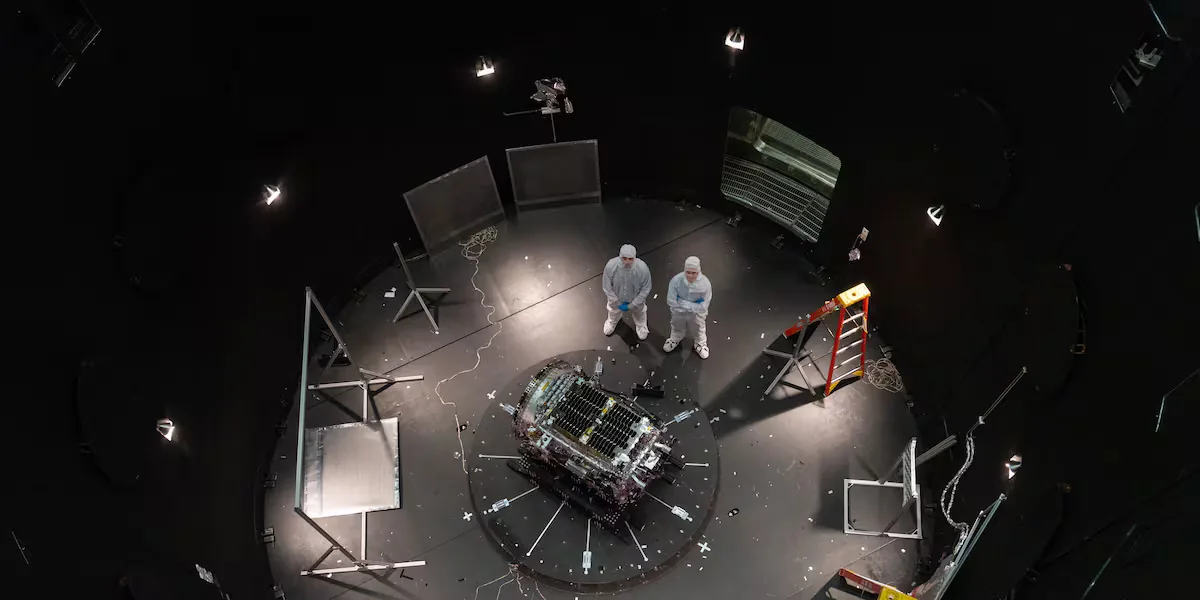
NASA's venerable Swift Observatory is destined for a fiery plunge back to Earth later in 2026 after a groundbreaking rescue attempt by a private company faltered. The mission, spearheaded by Flagstaff, Arizona-based Katalyst Space Technologies, aimed to save the aging space telescope by repositioning it in a higher, more stable orbit. However, technical issues with Katalyst's own spacecraft, named Link, have scuttled the rescue plan, NASA and the company announced Wednesday.
The decision effectively dooms the observatory, which has spent over two decades observing some of the universe's most powerful cosmic events, including gamma-ray bursts and exploding stars. Swift's eventual reentry into Earth's atmosphere is not anticipated before October. NASA had invested $30 million in the pioneering effort to extend the telescope's operational life.
The urgency for the rescue stemmed from intense solar activity, which caused Swift to lose altitude at a rate faster than anticipated. Katalyst's Link spacecraft, launched in early July with the ambitious goal of capturing and repositioning Swift, encountered control problems shortly after reaching orbit. Despite efforts by flight controllers to stabilize the spacecraft, persistent issues with its pointing and positioning systems ultimately rendered the rescue impossible.
Future Operations and Lessons Learned
NASA Administrator Jared Isaacman acknowledged the disappointing outcome but emphasized the value of the attempt. "This is not the outcome we were working toward, but it does not change why this mission was worth attempting," Isaacman stated. As a silver lining, Katalyst will continue to operate the Link spacecraft in proximity to the doomed observatory, aiming to demonstrate capabilities for future space rescue and servicing operations. This could pave the way for future missions to service other aging satellites.
Ghonhee Lee, CEO of Katalyst Space Technologies, described the mission as a high-risk, high-reward challenge undertaken on an aggressive timeline, with the entire project assembled in less than a year. "We took on this high-risk, high-reward challenge and are proud of the milestones we reached along the way," Lee said. "We have already learned a tremendous amount." The company's work, despite its ultimate failure, provides invaluable data for the burgeoning field of in-orbit servicing and debris mitigation.
Launched in 2004, the Swift Observatory's science instruments were powered down earlier this year to conserve energy and marginally slow its descent. As of Wednesday, the telescope was orbiting at an altitude of approximately 214 miles (345 kilometers). Katalyst's original objective was to elevate Swift back to its operational orbit of 373 miles (600 kilometers), potentially granting it many more years of valuable cosmic observation.
The potential failure of the Swift rescue mission also casts a shadow over another iconic NASA asset: the Hubble Space Telescope. The 36-year-old Hubble, also experiencing orbital decay due to recent solar outbursts, was next in line for a potential orbital boost attempt, contingent on the success of the Swift mission. It remains uncertain whether the Hubble mission will proceed as planned, highlighting the growing challenge of maintaining aging space infrastructure in the face of evolving environmental threats.