
Americas to Witness Near Total Lunar Eclipse Thursday Night
Millions in North and South America can witness a rare near total lunar eclipse on Thursday night. The event will darken 96% of the moon, creating a 'blood moon' effect.

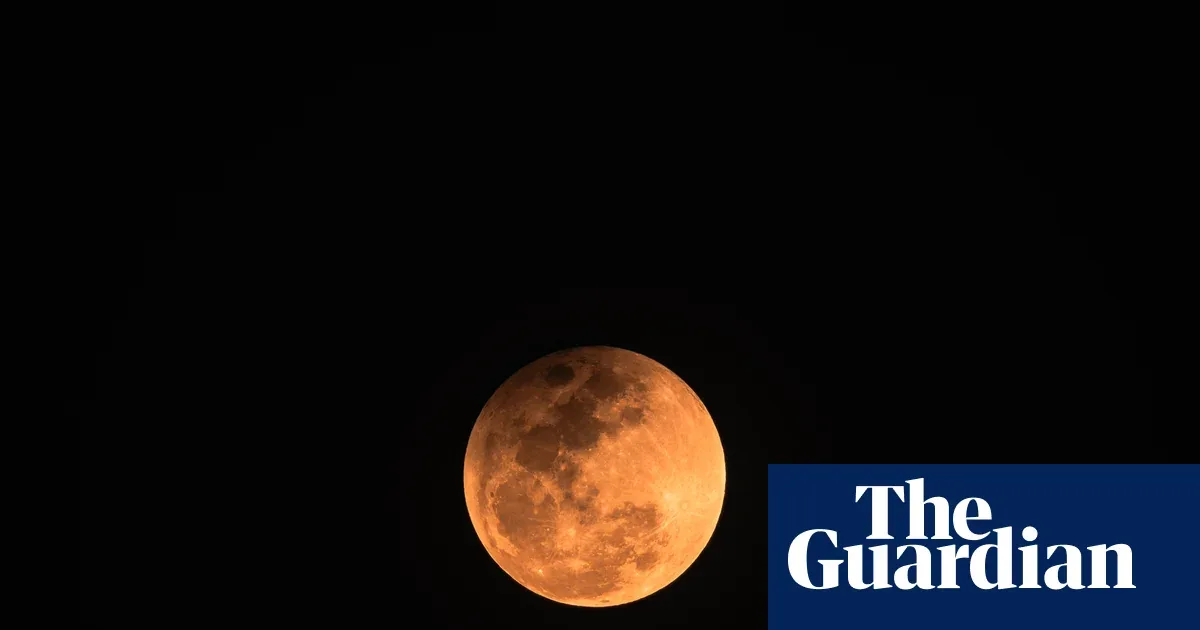
Millions across North and South America are poised to witness a spectacular celestial event on Thursday night as a near total lunar eclipse unfolds. This astronomical phenomenon occurs when the Earth positions itself directly between the sun and the moon, casting its shadow upon the lunar surface. At its peak, the eclipse will shroud 96% of the moon in darkness, offering a dramatic spectacle for skygazers.
The event is being dubbed a "blood moon" due to the distinctive reddish hue the moon will take on. This coloration arises from the way Earth's atmosphere scatters sunlight, allowing only certain wavelengths to reach the moon and reflect back. While the Americas will have the prime viewing seats, observers in some parts of Europe and Africa may also catch a glimpse of this rare occurrence.
Celestial Spectacle Timing
The lunar eclipse is slated to commence around 9:23 PM Eastern Standard Time (EST), with the most dramatic phase, the peak of the eclipse, expected at approximately 10:33 PM EST. This timing is crucial for those planning to observe the event, with the period around the peak offering the most profound visual experience. The duration of the full shadow coverage will provide ample opportunity for viewing, weather permitting.
Lunar eclipses are captivating because they offer a direct, observable consequence of orbital mechanics and atmospheric physics. The Earth's shadow, known as the umbra, completely blocks direct sunlight from reaching the moon during totality. The subtle variations in color and brightness during an eclipse are a testament to the complex interactions of light passing through our planet's atmosphere. For astronomers and amateur stargazers alike, these events are opportunities for both education and wonder.
This particular eclipse is significant as it approaches a total obscuration, with 96% coverage. Such events provide valuable data for scientists studying Earth's atmosphere and its effects on light. Furthermore, lunar eclipses have historically played roles in culture and mythology, often viewed with awe and sometimes trepidation. The "blood moon" moniker, while dramatic, is a scientific description of the light scattering phenomenon.
Preparations for viewing are simple, requiring only clear skies and, ideally, a location away from city light pollution. While binoculars or telescopes can enhance the view, the event is expected to be visible to the naked eye. Skywatchers are advised to check local weather forecasts to ensure optimal viewing conditions on Thursday night. The Americas, spanning from the northern reaches of Canada to the southern tip of Argentina, will have extensive visibility.