
Northern Lights Visible Tonight in 9 US States, NOAA Predicts
Residents in nine U.S. states may have a chance to witness the aurora borealis tonight, according to the latest forecast from the National Oceanic and Atmospheric Administration (NOAA). The agency also indicates potential viewing opportunities throughout the weekend.

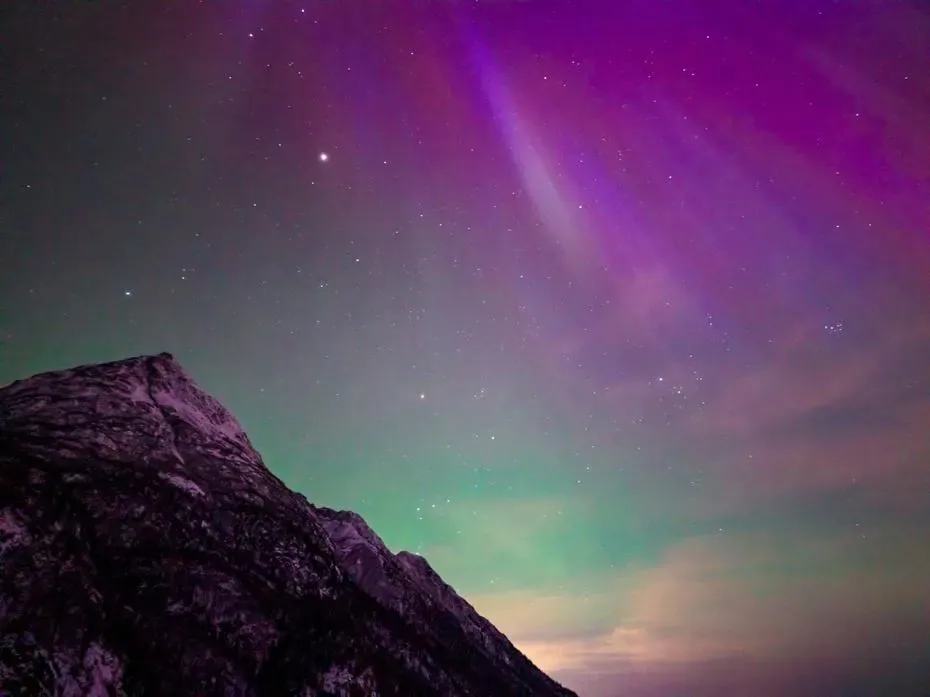
A captivating celestial display, the aurora borealis, may grace the skies over nine U.S. states tonight, offering a chance for viewers to witness the famed Northern Lights. The National Oceanic and Atmospheric Administration (NOAA) issued a forecast predicting visibility across several northern regions, with potential viewing continuing into the weekend.
For those in Alaska, the likelihood of spotting the aurora borealis remains the highest, with much of the state projected to have a strong chance of experiencing the phenomenon. Beyond Alaska, other states with a possibility of seeing the lights include Montana and North Dakota, particularly their northern regions. Residents in the northern half of Minnesota are also anticipating a decent chance to observe the spectacle. Smaller probabilities extend to the northernmost areas of Washington, Idaho, Michigan, South Dakota, and Wisconsin.
Tips for Optimal Viewing and Photography
To maximize the chances of seeing the aurora, NOAA advises waiting until after dark, with the prime viewing window typically falling between 10 p.m. and 2 a.m. local time. Seeking locations as far north as possible and finding a vantage point with minimal light pollution is also recommended. For photographers hoping to capture the ethereal beauty of the aurora borealis, travel photographers suggest using a tripod for stability, employing a wide-angle lens, and utilizing a lower shutter speed. Smartphone users, particularly those with iPhones, can enhance their shots by enabling night mode, disabling flash, and shooting in RAW format for greater editing flexibility.
The recent period between 2024 and 2025 saw frequent auroral displays across the United States, coinciding with the sun's "maximum" phase of its solar cycle. This phase typically brings a surge in solar events like geomagnetic storms, which drive the aurora. The intensity of solar activity during this period reportedly exceeded scientific expectations, with NASA noting that the northern lights reached a 500-year peak in 2024. As the sun gradually exits this maximum period, auroral activity is anticipated to decrease throughout the remainder of the decade.