
ISS Astronauts Complete Major Solar Array Upgrade
Astronauts aboard the International Space Station have begun the final stage of a multi-year project to upgrade its power systems. This involves deploying new roll-out solar arrays to enhance energy generation.

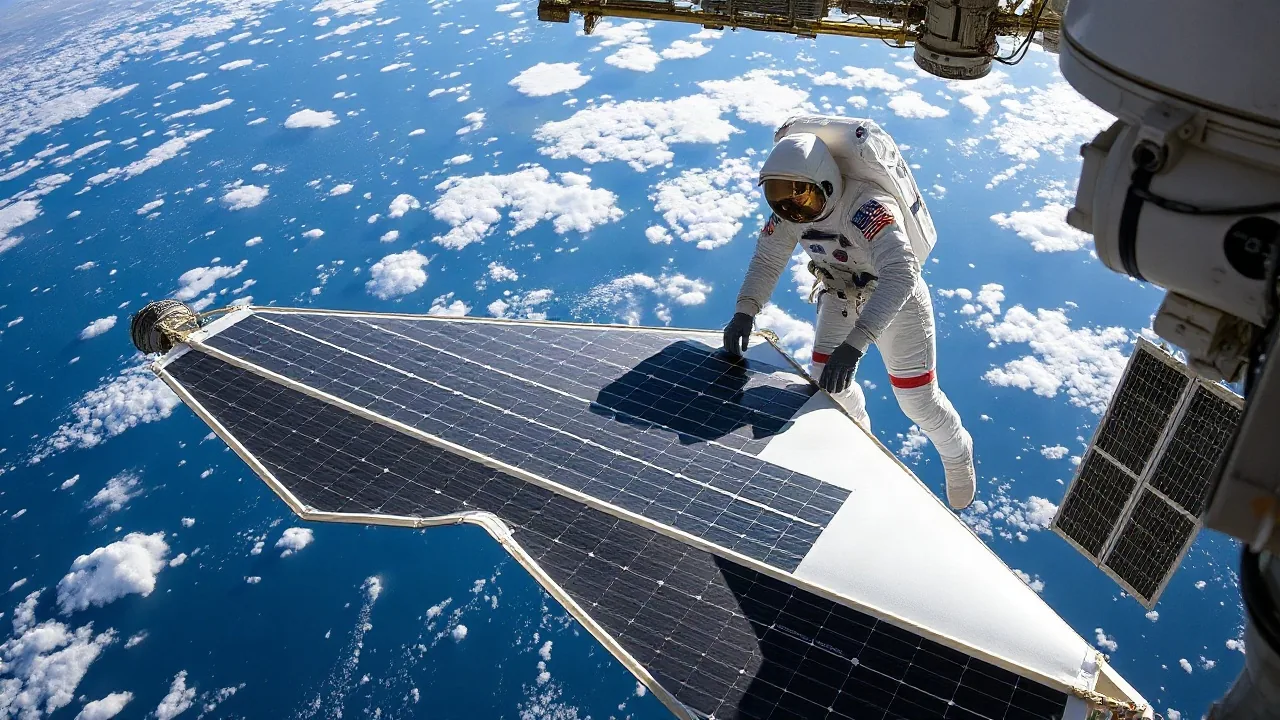
Two astronauts aboard the International Space Station (ISS) have commenced the final phase of a comprehensive, multi-year initiative to modernize the orbiting laboratory's power infrastructure. The spacewalk, which began on October 29, 2026, marks a significant milestone in extending the station's operational lifespan and capabilities. This operation is part of a series of complex extravehicular activities (EVAs) designed to install next-generation solar arrays.
The primary objective of this latest spacewalk is the deployment of new roll-out solar arrays, which are more compact and efficient than previous models. These advanced arrays are crucial for maintaining and increasing the power available to the station's numerous scientific experiments and life support systems. The upgrade project, initiated in 2021, has systematically replaced aging solar arrays with these modern alternatives, ensuring a robust energy supply for years to come.
ISS Power System Upgrade Nears Completion
This ambitious upgrade project has been ongoing for several years, requiring numerous EVAs and meticulous planning by NASA and its international partners. The International Space Station relies heavily on solar power, with its massive solar arrays continuously tracking the sun to generate electricity. However, the original arrays, some of which have been in operation since the station's construction began in 1998, were nearing the end of their expected service life.
The new arrays, known as the International Space Station Solar Array (ISSA), are designed to provide significantly more power. Each new array can generate up to 12.5 kilowatts of electricity, with the goal of increasing the station's total power generation capacity by over 30%. This enhanced power is vital for supporting an increasing number of experiments, upgrading equipment, and potentially accommodating future expansion of the station. The successful integration of these new power sources is a testament to the engineering prowess and international cooperation inherent in the ISS program.
During the spacewalk, astronauts meticulously unrolled the new solar arrays, tethering them securely to the station's structure. They also performed crucial diagnostic checks to ensure optimal performance and integration with the existing power grid. The complexity of these operations requires extensive training and coordination, with ground control teams monitoring every step. This final phase is critical, as it integrates the last of the new arrays into the station's power distribution network.
The successful completion of this power system upgrade is essential for the continued scientific research conducted aboard the ISS. The station serves as a unique platform for studying the effects of microgravity on the human body, testing new technologies for future space exploration, and observing Earth and the universe. Without sufficient power, the station's scientific output would be significantly hampered. The NASA-led initiative underscores the commitment to maintaining the ISS as a premier research facility well into the 2030s, pending future decisions on its deorbit timeline.
The deployment of the new solar arrays is not just about power; it's about ensuring the long-term viability of the ISS as a hub for space exploration and scientific discovery. This project highlights the ongoing evolution of space technology and the dedication of the astronauts and ground crews who work tirelessly to maintain and enhance this marvel of engineering in orbit. Future missions, including those planned by commercial entities and national space agencies, will benefit from the upgraded power capabilities.