
Comets Likely Didn't Seed Earth Life, New Simulations Show
New research involving 100,000 simulations suggests that the harsh impact of comets striking Earth likely destroyed organic molecules necessary for life's origin, challenging a long-held scientific theory.

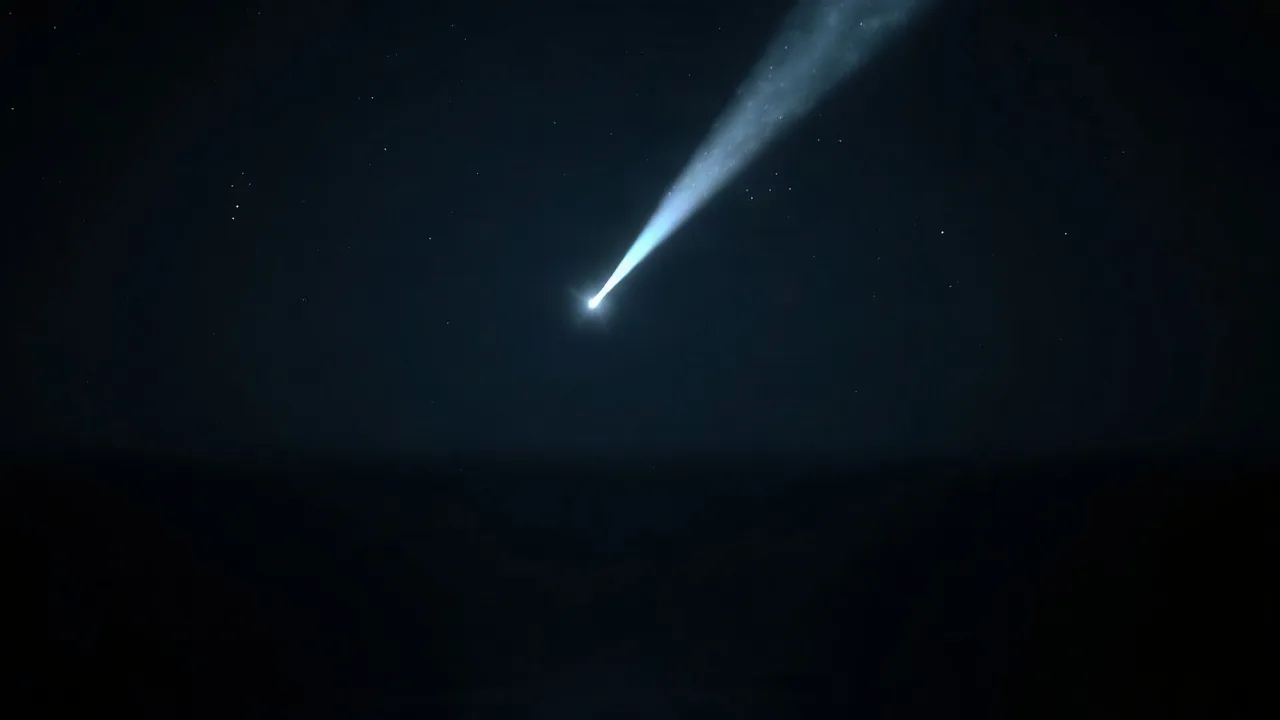
Scientists have conducted a massive computational experiment, running 100,000 simulations to investigate the likelihood of comets delivering the building blocks of life to early Earth. The findings, published recently in the journal *Nature Communications*, indicate that the extreme conditions of impact likely rendered these organic compounds inert. This challenges a prominent hypothesis suggesting that comets and asteroids played a crucial role in seeding our planet with the necessary ingredients for life to emerge.
The research team, led by Dr. Qian Yuan from the University of Cambridge, focused on the survival of nucleobases – the fundamental components of DNA and RNA. These molecules are considered essential for the development of life as we know it. Previous theories proposed that icy comets, originating from the outer solar system, could have transported these vital organic compounds to Earth during its formative years, billions of years ago.
Impact Dynamics and Molecular Survival
However, the new simulations modeled the turbulent journey and violent impact of comets with Earth's atmosphere and surface. The results revealed that the immense pressures and temperatures generated upon impact would have degraded most, if not all, of the complex organic molecules. Even when accounting for a variety of impact speeds and angles, the survival rate of nucleobases was consistently negligible. "We found that the survival rate of nucleobases during impact is very low," stated Dr. Yuan in a press release. "This suggests that comets may not have been as significant a source of life's building blocks for Earth as previously thought."
This study is particularly significant because it offers a quantitative assessment of a long-standing theory. For decades, scientists have debated the origins of life on Earth, with extraterrestrial delivery via celestial bodies being a leading contender. While the current findings cast doubt on the role of comets, they do not rule out other extraterrestrial sources or terrestrial origins entirely. The research highlights the extreme challenges faced by organic molecules in surviving the interplanetary journey and the subsequent catastrophic impacts.
The implications of this research extend beyond just understanding Earth's origins. It provides valuable data for astrobiologists searching for life on other planets. By understanding which conditions allow for the preservation of organic molecules, scientists can better target exoplanets and moons for future exploration. The study underscores the need for specific conditions—perhaps more gentle delivery mechanisms or less destructive impact events—for extraterrestrial organic matter to successfully contribute to the emergence of life elsewhere in the universe. Further research may focus on other types of celestial bodies, such as asteroids, which may have different compositions and impact trajectories, or investigate alternative prebiotic chemical pathways that could have occurred on Earth itself.