
October 2026 Skywatching: See Saturn at Its Brightest
NASA offers tips for October 2026 skywatchers, highlighting Saturn's opposition on October 3-4. This annual event makes the ringed planet appear at its brightest and largest in the night sky.

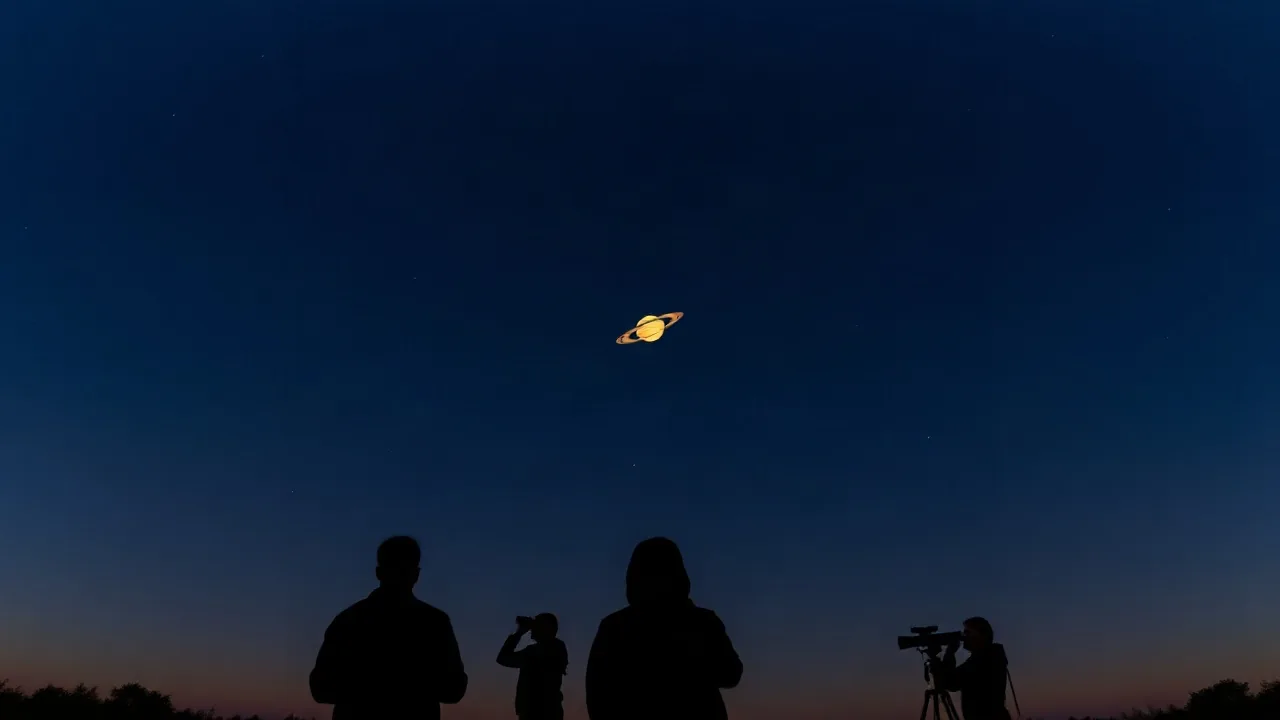
Stargazers can look forward to a spectacular celestial display in October 2026 as Saturn reaches its opposition, a yearly event where the ringed planet appears at its brightest and largest in Earth's night sky. According to NASA's latest skywatching tips, the prime viewing window for this astronomical treat is between October 3 and 4, 2026. During opposition, Earth passes directly between the Sun and Saturn, illuminating the planet fully from our perspective and making it easily observable.
This alignment is ideal for observing Saturn's iconic rings, which will be particularly stunning. While Saturn is a year-round resident of our night sky, its appearance changes with its orbital position relative to Earth. Opposition marks the peak of its visibility for the year. Amateur astronomers with even modest telescopes should be able to resolve Saturn's rings and perhaps even some of its larger moons, like Titan.
Navigating the October Night Sky
Beyond the dazzling presence of Saturn, October 2026 offers several other celestial points of interest. The Orionid meteor shower, originating from debris left by Halley's Comet, typically peaks in mid-October, offering a chance to see shooting stars. While not as prolific as some other meteor showers, the Orionids can produce bright, swift meteors. Early risers might also catch glimpses of the planets Mars and Jupiter low on the eastern horizon before dawn, though their visibility can be challenging depending on atmospheric conditions and light pollution.
The changing seasons in the Northern Hemisphere bring longer nights, which are advantageous for deep-sky observation. As autumn progresses, constellations like Ursa Major (the Big Dipper) and Cassiopeia become prominent in the northern sky. For those in the Southern Hemisphere, spring brings warmer evenings and different constellations into view, with the galaxy M31, the Andromeda Galaxy, becoming more accessible as the months progress.
Contextually, these annual celestial events serve as a reminder of our solar system's dynamic nature and humanity's long-standing fascination with the cosmos. From ancient civilizations charting planetary movements to modern space missions exploring distant worlds, observing the night sky connects us to a broader cosmic narrative. Events like Saturn's opposition are accessible opportunities for people of all ages to engage with astronomy, fostering curiosity and scientific interest without requiring advanced equipment or specialized knowledge.
NASA emphasizes the importance of finding a location away from city lights for the best viewing experience. Dark skies are crucial for spotting fainter objects like meteors and for appreciating the full splendor of planets and galaxies. While Saturn will be the undisputed star of the October 2026 sky, checking local weather forecasts and moon phases can further enhance the skywatching experience.