
Perseid Meteor Shower Dazzles: Top 2026 Stargazing Photos
The annual Perseid meteor shower reached its peak on August 12-13, 2026, treating stargazers worldwide to a spectacular display of shooting stars. Photographers captured breathtaking images of the celestial event.

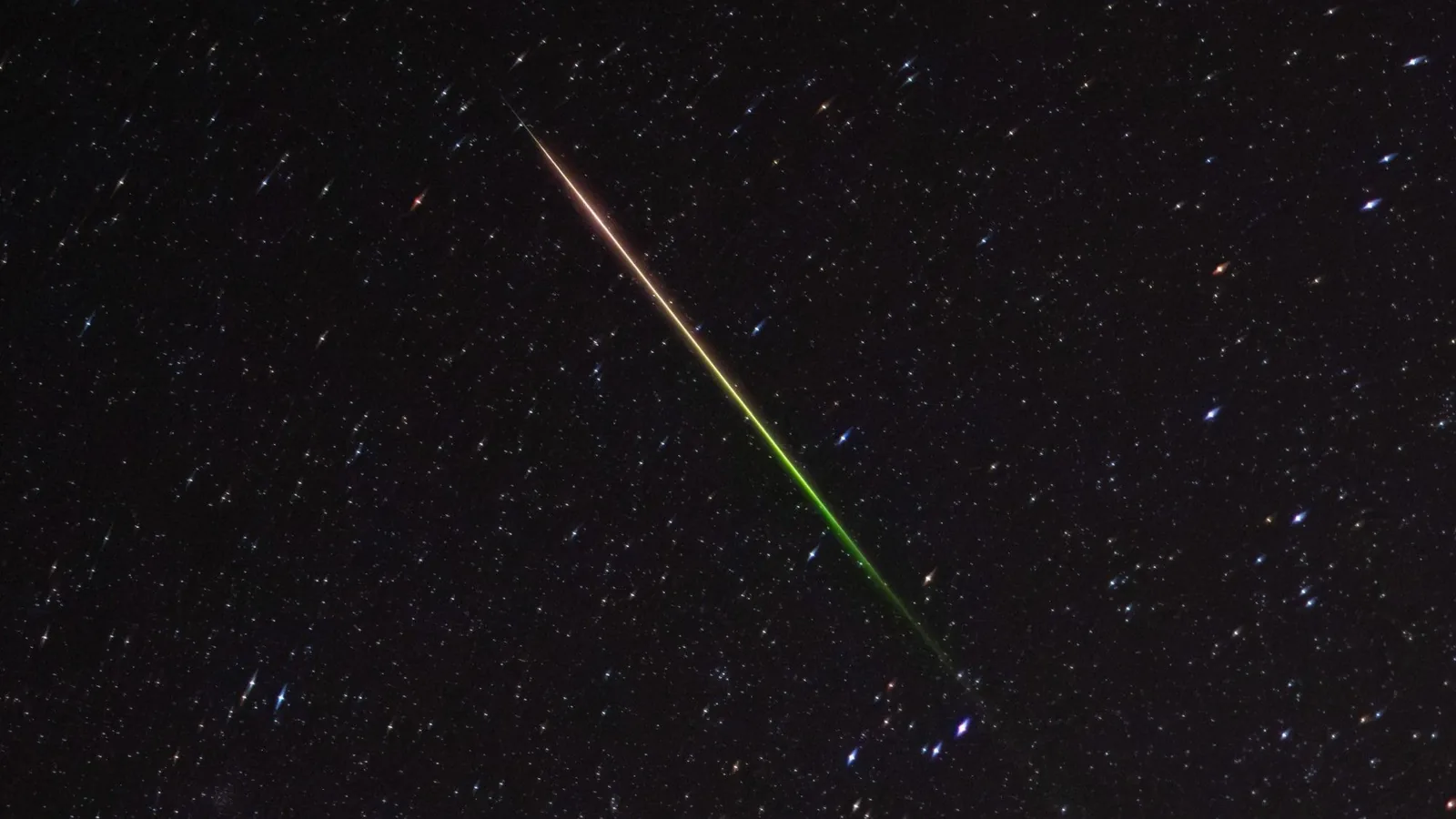
The 2026 Perseid meteor shower delivered a breathtaking spectacle for skywatchers on August 12 and 13, with Earth passing through the densest part of the debris trail left by Comet 109P/Swift-Tuttle. This annual event, known for its brilliant streaks of light, saw countless shooting stars blaze across the night sky, captivating audiences globally.
These meteors, often no larger than a grain of sand, produce their dramatic visual effect due to their immense speed upon entering Earth's atmosphere, averaging 37 miles per second. The collisions generate fiery trails easily visible to the naked eye, turning the night sky into a canvas of fleeting light. Photographers around the world were poised to document this year's show, with many capturing stunning images of the Perseids against backdrops ranging from ancient ruins to national parks.
One particularly striking image was captured by Dimitar Birachoski in Ohrid, Macedonia. Using a Nikon Z6iii camera, Birachoski photographed several Perseid meteor shower streaks over Galicica National Park on August 12, 2026. His shot also featured the Pleiades star cluster, the Andromeda galaxy, and the Milky Way. "I've got the Pleiades, Andromeda galaxy and Milky Way with the Perseids," Birachoski shared.
Global Perspectives on the Celestial Event
The Perseids' brilliance was observed in diverse locations. In Iran, Morteza Nikoubazl documented a meteor streaking near the famous Pleiades cluster. Meanwhile, the Negev Desert in southern Israel provided a dramatic setting, with a Perseid meteor visible against the evening sky on August 11, 2026. The Milky Way Galaxy was also prominently featured in shots from the same region on the following night.
Further afield, the unique geological formations of Pedernales Falls State Park in Johnson City, Texas, served as the foreground for a long meteor streak photographed on August 12, 2026. In Spain, a meteor's bright flash illuminated the sky near San Asensio just hours after a total solar eclipse was visible on August 12, 2026. The celestial show extended to Turkiye, where Ismail Aslandag captured a green meteor above Ucayak Church on August 12, 2026. Additional long-exposure photographs from China, specifically in Guangdong and Anhui provinces, showcased meteor trails against the backdrop of Earth's rotation and the serene village landscapes.
This year’s display was particularly anticipated, especially following a total solar eclipse that occurred earlier in the week over Greenland, Iceland, and Spain. While the peak activity has passed, the Comet 109P/Swift-Tuttle debris trail remains in Earth's path until August 24. Viewers can still catch glimpses of Perseids, though the hourly rate will be significantly lower than during the peak nights.