
Physicists Recreate Black Hole Energy Extraction in Lab
CUNY researchers have devised a novel lab experiment simulating black hole energy extraction using synthetic rotation, bypassing physical spinning to study extreme physics.

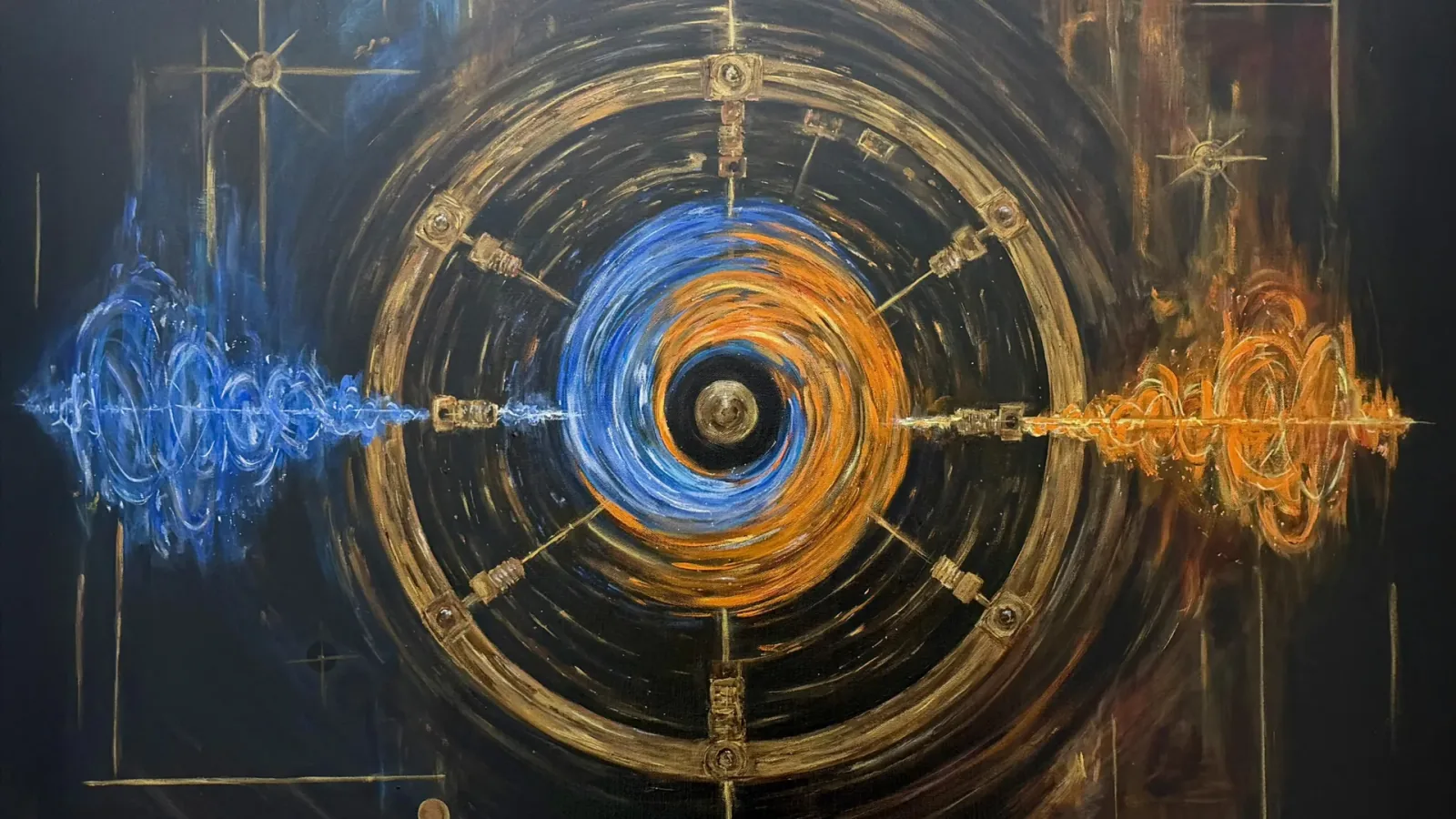
In a breakthrough achievement, physicists at the Advanced Science Research Center at the CUNY Graduate Center (CUNY ASRC) have successfully demonstrated an experimental method to replicate the energy extraction process theorized for rotating black holes. Published in the journal Nature, the team's innovative approach utilizes a specially designed radio frequency device to simulate extreme rotation, achieving wave amplification without any actual physical spinning.
This groundbreaking experiment overcomes a significant hurdle in studying extreme rotational physics by replacing conventional mechanical spinning with a process of "synthetic rotation." The researchers engineered a radio frequency device capable of rapidly altering its properties across both space and time. This artificial manipulation creates the effect of ultrafast rotation, enabling the simulation of speeds far exceeding those possible with traditional mechanical systems. The technique offers a novel pathway for wave-matter interactions, where carefully selected rotational properties of waves can extract energy from this synthetic, time-engineered rotation, leading to a form of selective amplification.
Synthetic Rotation Opens New Avenues for Physics Research
Principal investigator Andrea Alù, a Distinguished Professor and Einstein Professor of Physics at the CUNY Graduate Center, explained the significance of the method. "Our approach facilitates a new method of wave-matter interaction in which waves with selected rotational properties extract energy from synthetic time-engineered rotation, producing a form of broadband selective amplification," Alù stated. Lead author Hadiseh Nasari, a post-doctoral researcher at the CUNY ASRC, highlighted how the experiment translates a long-standing theoretical concept into a tangible research tool. "This successful experiment moves ideas about extreme rotational dynamics from theory to practice and creates a versatile experimental platform for exploring a broad range of phenomena at the intersection of astrophysics, wave physics, and quantum science," Nasari remarked. The implications of this work extend to fundamental science as well as practical advancements in communications, optics, and photonics.
The core question the researchers sought to answer was whether electromagnetic waves interacting with a stationary device could mimic the behavior of encountering an object spinning at immense speeds, thereby drawing energy from this simulated motion. To achieve this, they constructed a ring composed of electronic resonators. The properties of these resonators were systematically and rapidly adjusted in a precisely synchronized sequence. Although the physical components remained static, these time-dependent changes generated a traveling pattern around the ring. Consequently, the electromagnetic waves experienced the system as if it were rotating at extraordinary velocities.
"Waves with the appropriate rotational characteristics extracted energy from the system and became amplified, reproducing the essential physics of the Penrose-Zel'dovich process," said co-lead author Hady Moussa, a former PhD student with the CUNY ASRC Photonics Initiative. "Our approach relies on engineered metamaterials that are designed to control how waves propagate." This ability to mimic phenomena like the Penrose-Zel'dovich process, which describes how energy can be extracted from a rotating black hole's ergosphere, is a significant leap in experimental physics.
The utility of synthetic rotation extends beyond mimicking black hole physics. Because it can imitate motion far exceeding the speed of light, researchers now possess a controlled laboratory environment for studying physical regimes that were previously inaccessible. This opens new avenues for investigating extreme physics and holds promise for future innovations in wireless communications, optics, photonics, and quantum technologies. While further research is necessary to develop practical applications, the team believes these principles are adaptable to photonic and quantum systems, potentially revolutionizing how we control light, process information, and understand wave behavior inspired by the universe's most extreme environments.