
Rare T. Rex Fossil 'Gus' Fetches Up to $30 Million at Auction
A remarkably complete T. rex fossil, nicknamed 'Gus,' is hitting the auction block at Sotheby's, with an estimated sale price between $20 and $30 million. The discovery marks another significant moment in the high-stakes market for dinosaur remains.

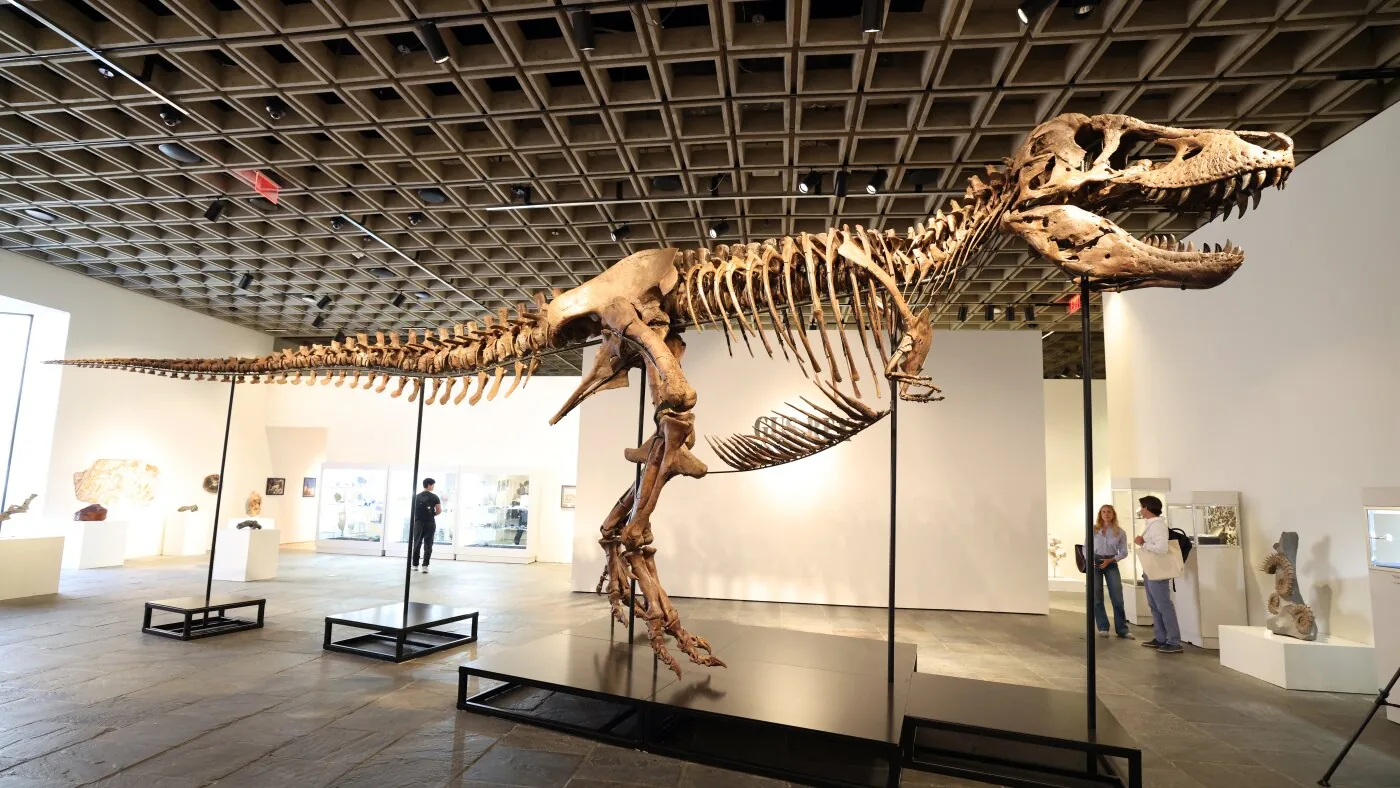
A nearly complete Tyrannosaurus rex skeleton, affectionately known as "Gus," is being offered for auction by Sotheby's in New York City, with bidding expected to reach as high as $30 million. The fossil, unearthed in Harding County, South Dakota, in 2021, represents a significant find for collectors and institutions interested in prehistoric natural history.
The T. rex specimen measures an imposing 38 feet in length and stands 12.5 feet tall, dating back approximately 67 million years to the late Cretaceous period. Sotheby's description highlights that "Gus" belonged to a large, mature individual, based on its skeletal structure and bone development. The excavation, led by Theropoda Expeditions, involved the collection of nearly a thousand fossilized pieces over a period spanning into 2023.
The creature is named in honor of Gary "Gus" Licking, the ranch owner on whose 6,500-acre property the fossil was discovered. Licking passed away before the full skeleton could be assembled, according to Cassandra Hatton, a representative for Sotheby's. Hatton noted in a Sotheby's video that Licking had long suspected important fossils lay beneath his land, having found T. rex teeth and fragments over the years.
A Growing Market for Prehistoric Giants
The auction of "Gus" continues a trend of high-value sales for significant dinosaur fossils. In 1997, a T. rex named "Sue" sold for $8.4 million to the Field Museum in Chicago. More recently, in 2024, a Stegosaurus named Apex commanded a record $44.6 million when purchased by billionaire investor Ken Griffin, who subsequently loaned it to the American Natural History Museum. These figures underscore a burgeoning market driven by demand from wealthy individuals and institutions.
Paleontologist Scott Persons, curator of natural history at the South Carolina State Museum, commented on the escalating prices, describing them as reflecting an "increase in market demand." He expressed concern that the substantial sums spent at auction could be better allocated to scientific research. "A sum like that could endow a research program at a public museum of your choosing," Persons stated, suggesting such funding could support extensive fieldwork, the discovery of new species, and public exhibitions. The debate continues regarding the ethical and scientific implications of private ownership versus public access and research funding for these invaluable dinosaur fossils.
The Tyrannosaurus rex, often referred to as a "king of the dinosaurs," remains one of the most recognizable and sought-after prehistoric creatures. Finds like "Gus," particularly those that are exceptionally complete, generate immense interest and command premium prices in the global auction market. The provenance and completeness of such specimens are key factors influencing their market value. Experts anticipate that Sotheby's auction will set a new benchmark for T. rex sales in 2026.