
Bright Planets Venus, Jupiter Align With Moon This June
Look to the western sky after sunset in early June to witness a spectacular alignment of Venus, Jupiter, and Mercury. The crescent Moon joins the celestial show on June 16th.

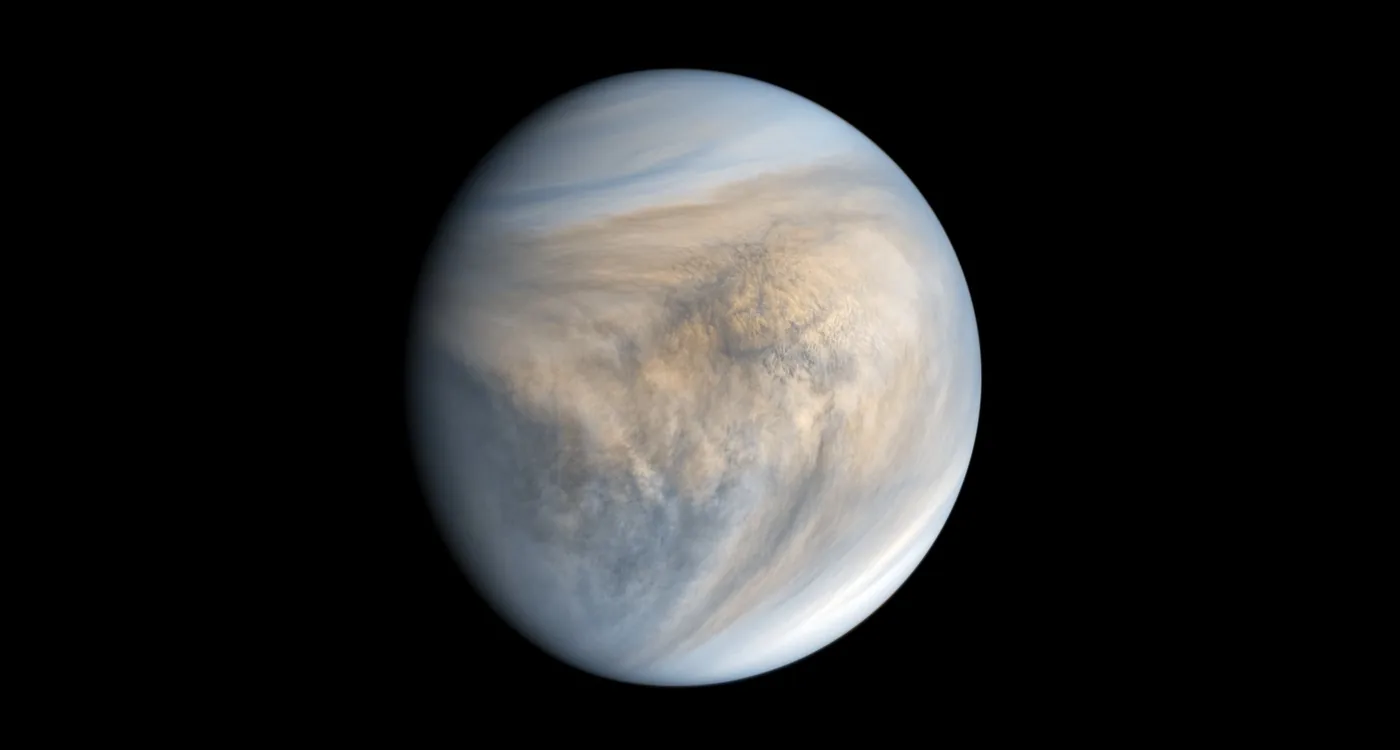
Stargazers in early June 2026 will have a unique opportunity to witness a stunning celestial event as three bright planets—Venus, Jupiter, and Mercury—align in the western sky shortly after sunset. This planetary parade will be further enhanced by the Moon's appearance on June 16th, creating a beautiful triple alignment.
The event prominently features Venus and Jupiter, the two brightest planets visible from Earth. Venus, appearing dazzlingly bright due to its proximity and reflective atmosphere, will be seen relatively close to the distant, yet massive, Jupiter. Mercury, often elusive due to its closeness to the Sun, will also be part of this planetary lineup, situated near the horizon.
The alignment begins on June 7th, when Venus and Jupiter will appear close together in the sky when viewed from the northwest to southeast direction. Over the subsequent nights, Venus will gradually shift northwestward. By June 10th, the two planets will appear to be almost touching. Venus will continue its trajectory, moving past Jupiter until June 16th. On this date, Venus, Jupiter, and Mercury will form an almost perfect straight line.
The celestial spectacle doesn't end there. On the evening of June 16th, a waxing crescent Moon will join the planetary trio, positioning itself between Jupiter and Mercury about 35 minutes after sunset. The following night, June 17th, the Moon will appear just above and to the left of Venus, forming an even more refined line with Venus, Jupiter, and Mercury. This close grouping offers a fantastic chance to observe these solar system neighbors in a striking configuration.
A Celestial Spectacle for All Hemispheres
Interestingly, observers in the Southern Hemisphere will experience a similar event, with the planetary line drawn from northeast to southwest, essentially a mirrored view of the Northern Hemisphere's perspective. This astronomical display serves as an excellent introduction for those new to observing planets and offers a wonderful excuse to enjoy the mild late-spring evening air, perhaps accompanied by the sounds of nocturnal wildlife.
This alignment is more than just a beautiful sight; it's a dynamic demonstration of planetary motion within our solar system. The apparent closeness of these planets is a visual trick of perspective from Earth. In reality, Venus is the second planet from the Sun, Jupiter is the fifth, and Mercury is the first. Their orbits are on different planes and at vastly different distances, yet periodically, they appear to converge in our night sky.
The positioning of these planets is a result of Earth's vantage point as it orbits the Sun. As Venus, which orbits closer to the Sun than Earth, overtakes our planet and moves towards the other side of the Sun, it appears to move across the sky relative to more distant planets like Jupiter. Mercury, with its rapid orbit, also participates in these alignments, though its proximity to the Sun often makes it harder to spot.
Astronomers and amateur astronomers alike look forward to such events as opportunities to engage the public with the wonders of space. These alignments are not just visually appealing but also serve as educational moments, highlighting the predictable and elegant mechanics of celestial bodies. The ease of viewing this particular event, occurring after sunset and involving bright celestial objects, makes it accessible to a broad audience, encouraging interest in astronomy and the night sky.