
Potatoes Grown in Simulated Lunar Soil Could Fuel Future Moon Base
Scientists have successfully cultivated potatoes in simulated lunar soil using vermicompost, highlighting potential food sources for future lunar bases.

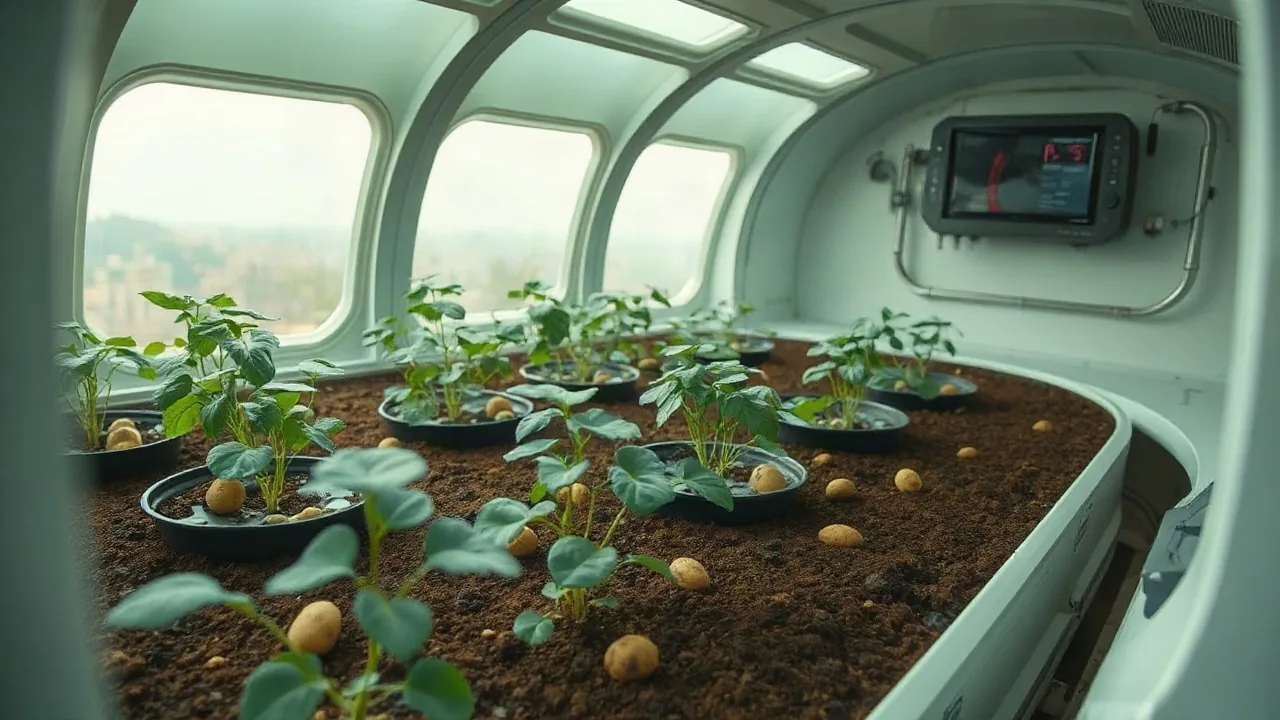
A new scientific report details how potatoes were successfully cultivated in simulated lunar soil, pointing to the crop as a potential key to sustaining human life on the moon during prolonged exploration. Researchers backed by Nasa concluded that potatoes are an ideal candidate for farming on the moon after managing to grow them in engineered materials replicating moon dust and soil. The study, titled “Growth and molecular responses of potato to lunar regolith simulants”, was published in the journal npj Microgravity.
“Potatoes provide more calories per land area than many other crops,” said Oregon State University plant biologist Aymeric Goyer, who led the study. “They are nutritious – they provide more potassium than a banana, are rich in vitamin C, have good proteins – and they have a high satiety index.” The research envisions future lunar greenhouses and emphasizes ensuring that the food produced is safe and edible.
To conduct the experiments, the research team used lunar regolith simulants combined with varying levels of vermicompost, an organic soil amendment created when composting worms such as red wigglers break down food scraps and organic waste. The study utilized the modoc potato, an early-maturing cultivar featuring reddish skin and white flesh. Because raw lunar regolith lacks nitrogen and contains heavy metal content that can become toxic to plants without organic matter, the addition of vermicompost proved crucial.
Sustaining Long-Term Lunar Exploration and Future Bases
The findings arrive as both the US and China advance plans to establish permanent or long-term bases near the lunar south pole. Nasa targets returning astronauts to the moon’s surface in 2028, while China aims for a similar milestone before 2030. Sustaining these bases will require local food production since resupplying entirely from Earth presents significant logistical challenges.
Goyer explained that lunar regolith “does not contain any nitrogen, so no crop would grow without supplementing it”. While potatoes planted in pure lunar material produced virtually no roots or tubers, crops grown with 5% vermicompost showed limited growth, and a 30% mixture yielded results identical to standard Earth soil. Researchers working with larger pots successfully harvested potatoes of standard store-bought size. Beyond potatoes, scientists are also studying chickpeas, tomatoes, lettuce, and legumes like alfalfa.
David Handy, an Oregon State space biologist and study co-author, noted that space agriculture technologies could ultimately benefit Earth. “The technologies that are invented as a result can be used to produce food in regions of low agricultural output that are reliant on shipments, such as inner cities and desert communities,” Handy said.