
San Andreas Fault Slipping Faster, New Research Suggests
New research from San Jose State University indicates the San Andreas Fault is slipping at a faster rate than previously understood. This finding has implications for future earthquake frequency in California.

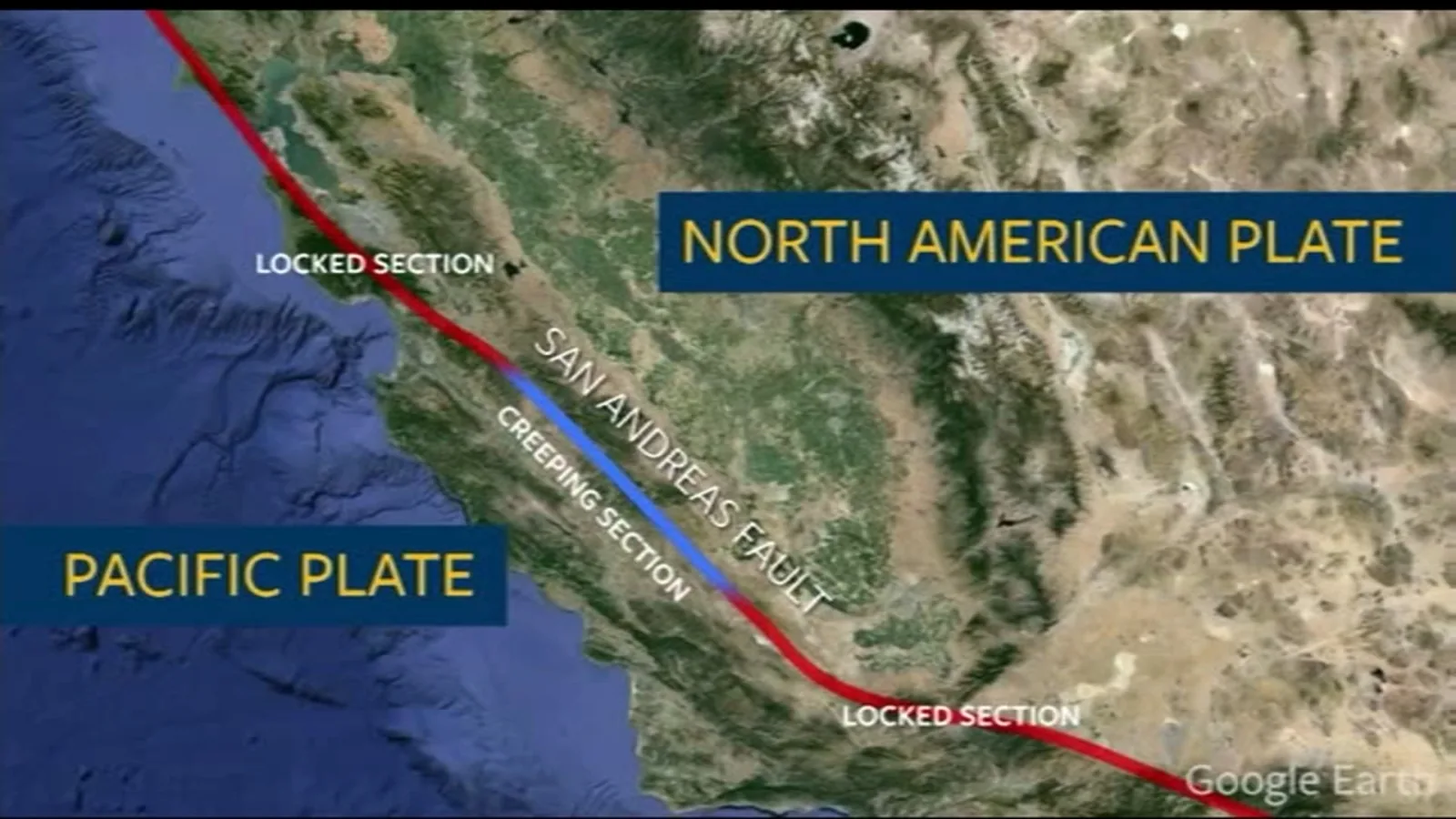
New findings from researchers at San Jose State University reveal that the San Andreas Fault, a major geological feature running through California, is slipping at a quicker pace than scientists had previously estimated. The study, conducted at Sanborn County Park, analyzed geological evidence to determine the rate of movement along this critical fault line.
Professor Kim Blisniuk of San Jose State University explained the significance of the research, stating that the landforms preserve records of past earthquakes, allowing for an estimation of fault slip rates. "The rate is similar to the rate that we get for the San Andreas Fault to the north in the north coast section," Blisniuk said. "But prior to the work that my colleagues and I did at Sanborn County Park, the rate appears to not decrease along the San Andreas Fault, but it appears to be constant over this 10,000-year window that we were able to document."
Faults that exhibit faster slip rates generally have the potential to produce more frequent seismic activity. This new data suggests a potentially heightened risk for earthquakes along the San Andreas Fault, a zone responsible for some of California's most devastating seismic events, including the 1906 San Francisco earthquake and the 1989 Loma Prieta earthquake.
Understanding Fault Slip Rates and Preparedness
The constant slip rate discovered over a 10,000-year period provides a clearer picture of the fault's behavior. "We know that we live on a plate boundary, and we are always surprised when we hear, 'Oh my gosh, an earthquake occurred in Japan or Colombia,' but we are going to have an earthquake in California, and we should be prepared," Blisniuk emphasized. While the idea of a constant slip rate may not surprise many geologists, the availability of this specific data is a significant advancement.
The research, which has not yet undergone peer review, serves as a crucial reminder for Californians to maintain earthquake preparedness. Blisniuk drew a parallel to purchasing insurance, stating, "We always want auto insurance. We buy auto insurance, home insurance. We never want to use it, but it's there for us." Similarly, having an earthquake preparedness kit is vital for mitigating the impact of seismic events and managing the emotional toll they can inflict.
This discovery comes shortly after a 3.9 magnitude earthquake rattled the nearby Hayward Fault. While this latest research focuses on the San Andreas, it underscores the dynamic geological nature of the region. The San Andreas Fault is a transform fault that separates the Pacific Plate from the North American Plate, and its constant, albeit sometimes slow, movement shapes the landscape and poses an ongoing seismic threat.
Geological studies like this are essential for refining earthquake prediction models and informing public safety initiatives. The ongoing monitoring and analysis of fault lines, particularly major ones like the San Andreas Fault, are critical for understanding and preparing for future geological events. The scientific community continues to investigate the complexities of plate tectonics and seismic activity in the region.