
San Andreas Fault Slip Rate Increases, California Earthquake Risk Grows
New research from San Jose State University reveals the San Andreas Fault is slipping faster than previously understood. This acceleration suggests a heightened potential for more frequent seismic activity in California.

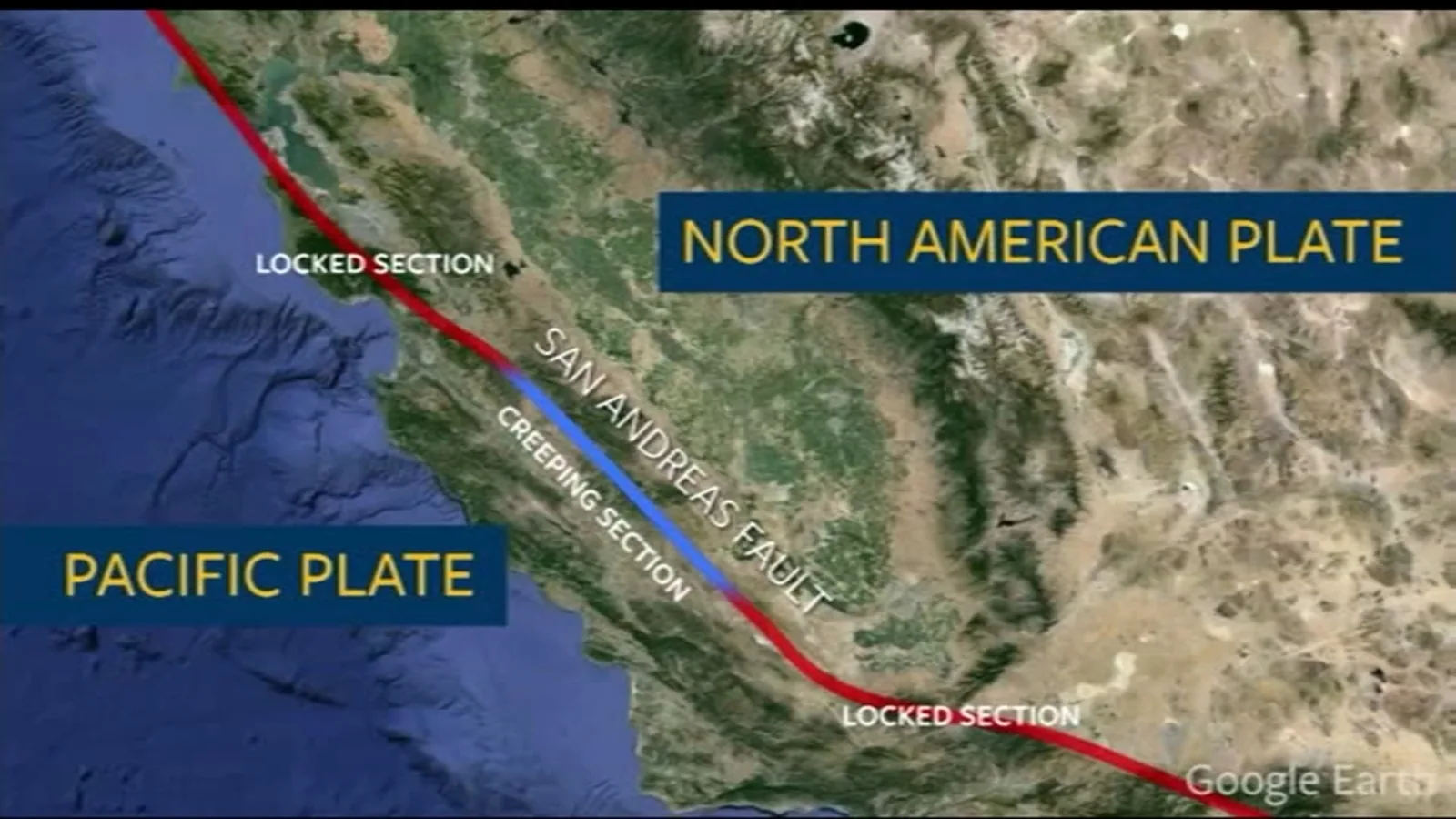
New findings by researchers at San Jose State University indicate that the San Andreas Fault, a major geological feature responsible for numerous California earthquakes, is experiencing a faster rate of slippage than scientists had previously determined. The study, focusing on data from Sanborn County Park, suggests this rate has remained constant over at least the last 10,000 years, a finding that has significant implications for seismic risk assessment in the state.
Professor Kim Blisniuk of SJSU discussed the research, emphasizing that the consistency of the slip rate is a key aspect of the findings. "The rate is similar to the rate that we get for the San Andreas Fault to the north in the north coast section," Blisniuk explained. "But prior to the work that my colleagues and I did at Sanborn County Park, the rate appears to not decrease along the San Andreas Fault, but it appears to be constant over this 10,000-year window that we were able to document." This constant, accelerated movement suggests that geological pressures are continuously building along the fault.
California's Seismic Reality
The implications of a faster-slipping fault are direct: faults that move more rapidly generally have a higher potential to produce earthquakes more frequently. This discovery comes at a time when California residents are keenly aware of seismic threats, especially following a recent moderate earthquake on the Hayward Fault. "We know that we live on a plate boundary, and we are always surprised when we hear, 'Oh my gosh, an earthquake occurred in Japan or Colombia,' but we are going to have an earthquake in California, and we should be prepared," Blisniuk stated, underscoring the inevitability of seismic events in the region.
While the accelerated slip rate might not be a complete surprise to seismologists given the nature of plate boundaries, the specific data confirming its constancy along this section of the San Andreas Fault provides crucial new information. "I don't think the idea that the slip rates are and constant along the San Andreas Fault, where we have studied, it is a big surprise to a lot of people. We just didn't have that data before," the professor noted.
Historically, the San Andreas Fault zone has been the source of some of California's most destructive earthquakes, including the devastating 1989 Loma Prieta earthquake and the catastrophic 1906 San Francisco earthquake. These past events serve as stark reminders of the fault's destructive power. "So we do have historical earthquakes along this fault, and we will have them in the future," Blisniuk confirmed. The ongoing research underscores the importance of understanding the precise mechanics and rates of fault movement to better predict and prepare for future seismic activity.
Although the research has not yet undergone the full peer-review process, its findings serve as a critical public service announcement about preparedness. Blisniuk drew an analogy to insurance: "We always want auto insurance. We buy auto insurance, home insurance. We never want to use it, but it's there for us," she said. "And so, having an earthquake preparedness kit to prepare us for a potential disaster when an earthquake occurs will really help us deal with the trauma of having an earthquake." Residents are encouraged to consult resources for earthquake preparedness tips to ensure they are ready for the inevitable seismic events that characterize life in California.