
SpaceX Completes 50th Starlink Mission of 2026 from California
SpaceX successfully launched its 50th Starlink mission of 2026 from Vandenberg Space Force Base. The Falcon 9 rocket deployed 24 new broadband internet satellites.

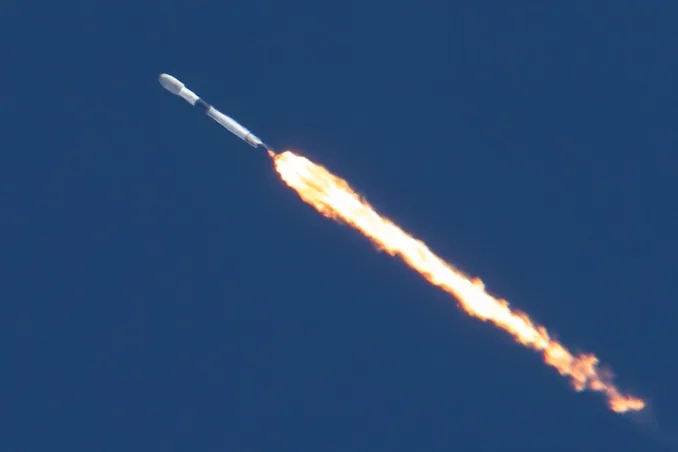
SpaceX launched its 50th dedicated Starlink mission of 2026 on Saturday morning from Vandenberg Space Force Base in California, adding another 24 satellites to its rapidly expanding low Earth orbit constellation. The successful liftoff occurred at 8:25 a.m. PDT (11:25 a.m. EDT) from Space Launch Complex 4 East.
The mission, designated Starlink 17-41, contributes to the company's ambitious goal of providing global broadband internet access. The Starlink constellation now comprises over 10,000 spacecraft, a testament to SpaceX's consistent launch cadence. This particular launch utilized a Falcon 9 first stage booster, B1082, which marked its 22nd flight. Previously, this booster supported significant missions including USSF-62, NROL-145, and OneWeb Launch 20.
Following its ascent and the deployment of the Starlink satellites approximately eight minutes after liftoff, the B1082 booster executed a precise landing on the drone ship 'Of Course I Still Love You.' This landing represented the 199th successful touchdown on that particular vessel and the 617th booster landing overall for SpaceX. The company's ability to rapidly reuse its boosters is a key factor in its cost-effective approach to satellite deployment.
Continued Expansion of Satellite Internet
The continuous addition of satellites to the Starlink network is crucial for enhancing its broadband internet services, particularly in underserved and remote regions. SpaceX aims to create a robust network capable of delivering high-speed, low-latency internet worldwide. The company has faced competition and regulatory scrutiny as it expands its constellation, highlighting the growing importance and complexity of the low Earth orbit environment.
This 50th Starlink launch of 2026 underscores SpaceX's operational tempo and its commitment to its satellite internet project. The company, founded by Elon Musk, has consistently pushed the boundaries of spaceflight with its reusable rocket technology and ambitious constellation deployment strategy. The Starlink service has been rolled out in numerous countries, with ongoing efforts to expand coverage and improve service quality.
The Falcon 9 rocket's trajectory for this mission was south-southwesterly after departing the launch pad. The successful deployment and booster recovery demonstrate the maturity of SpaceX's launch systems and its ability to maintain a high frequency of operations. The internet satellite industry is rapidly evolving, with multiple companies vying for positions in orbit to offer global connectivity solutions.
SpaceX confirmed the successful deployment of all 24 satellites. The company's ability to conduct such frequent launches is critical for maintaining the Starlink constellation and upgrading its capabilities with newer generations of satellites. The ongoing development and deployment of these networks are shaping the future of global broadband access.