
SpaceX Falcon 9: The Reusable Rocket Transforming Spaceflight
SpaceX's Falcon 9 has become the most-flown orbital rocket in history, cutting launch costs by 90% and enabling a commercial spaceflight revolution that continues reshaping the industry in 2026.

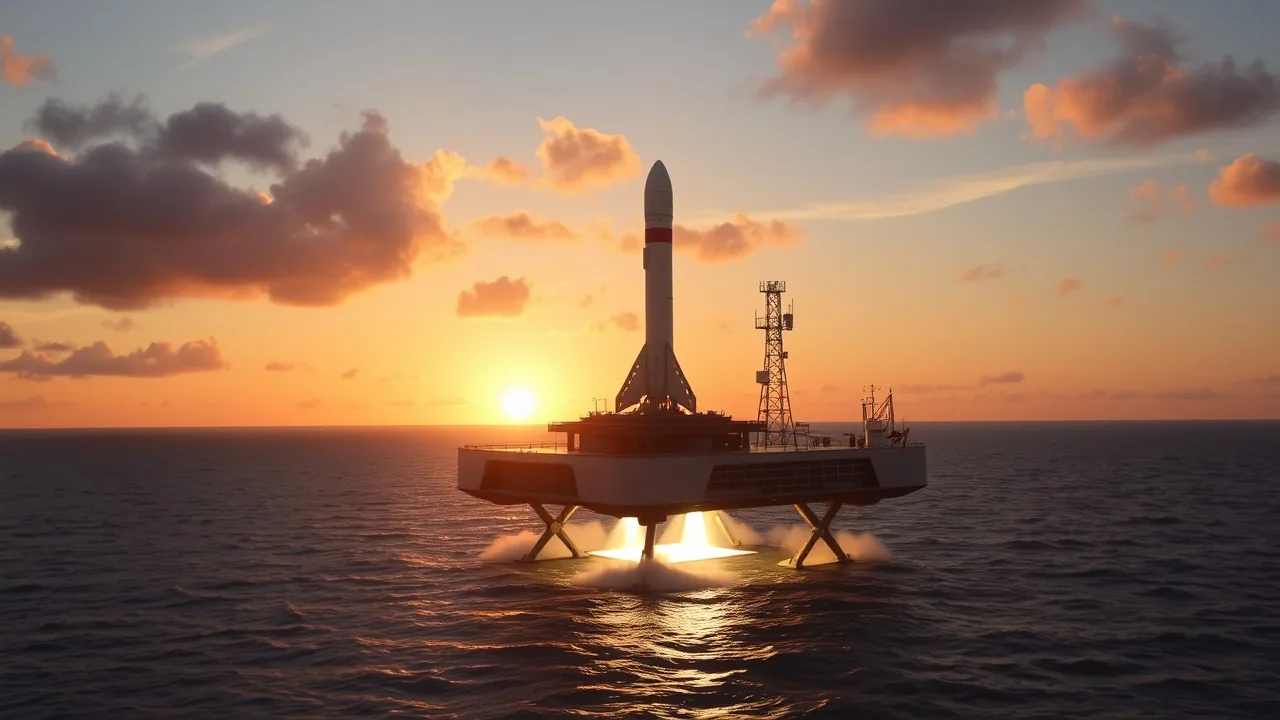
On May 10, 2026, SpaceX launched its 349th Falcon 9 mission from Cape Canaveral, deploying a batch of Starlink satellites into low-earth orbit. The booster landed on a drone ship in the Atlantic, marking yet another routine recovery for a rocket that has fundamentally altered how the world reaches space. What was once considered an engineering fantasy has become the workhorse of the spaceflight industry.
The Falcon 9 stands 229 feet tall and can lift 63,800 pounds to low-earth orbit on a single flight. Its twin Merlin engines, built entirely in-house at SpaceX, produce 1.7 million pounds of thrust. The rocket's first orbital launch occurred on September 28, 2008, when it deployed a dummy payload into orbit from Omelek Island in the Marshall Islands. At that moment, SpaceX proved it could build a functional orbital vehicle without decades of government contracts or military backing.
The true breakthrough came years later. Before the Falcon 9, launching anything to orbit cost between $65,000 and $75,000 per kilogram. Today, SpaceX achieves similar payloads for roughly $7,000 per kilogram, a 90% reduction driven almost entirely by reusable rocket technology. This cost advantage has forced competitors to rethink their entire business model or face obsolescence.
Reusability: The Game-Changing Innovation
The first successful booster landing occurred on December 21, 2015, when a Falcon 9 first stage touched down at Landing Zone 1 near Cape Canaveral. The video of that moment circulated globally. SpaceX founder Elon Musk posted a single word on Twitter: "Rockets."
That landing proved commercial spaceflight operators could recover, refurbish, and refly orbital hardware. The company has since flown individual boosters up to 19 times. In May 2026, several first-stage boosters have logged more than 15 reflights each, each mission validating the reusability concept further.
According to SpaceX's 2026 technical briefing, the average turnaround time between flights has dropped to 39 days for boosters operating in high-cadence missions. Maintenance costs per booster have declined by 60% since 2020, as engineers identified and addressed wear patterns. The second stage, which remains expendable, is the chief target for future cost reduction. A fully reusable second stage, expected in the next generation of rocket technology, could drive costs even lower.
"We're now at a point where the economics of reusable rockets are undeniable," said Dr. Tim Dodd, a former aerospace engineer and spaceflight analyst, in an interview this month. "The Falcon 9 has proven that you don't need to throw away your most expensive hardware. Once you accept that principle, everything else follows."
Market Dominance and Industry Impact
In 2025, SpaceX conducted 70 Falcon 9 launches, more than any other rocket provider combined. By mid-2026, the launch pace remains aggressive. The Falcon 9 has become the primary vehicle for four distinct mission types:
- Starlink satellite deployment (the largest payload by volume)
- Government and military national security payloads
- Commercial satellite operator missions
- International crew and cargo resupply to the ISS
This diversification insulates SpaceX from market downturns in any single sector. If satellite operator demand fluctuates, the company pivots to government contracts or international customers. The U.S. Space Force relies on Falcon 9 for National Security Launch missions under a multi-billion-dollar contract signed in 2022.
Competitors including Arianespace, United Launch Alliance, and Blue Origin have not achieved comparable reusability rates. Arianespace's Ariane 6, debuting in 2024, uses partially reusable boosters. United Launch Alliance's Vulcan, first flown in 2024, incorporates one reusable booster engine. Blue Origin's New Glenn, scheduled for 2027, will employ engine reusability. None match Falcon 9's flight-proven economy.
The gap has triggered geopolitical concerns. The U.S. government has accelerated several programs to ensure domestic launch capacity independence. The Space Force's Space Launch Delta 45 at Cape Canaveral now schedules Falcon 9 missions alongside Atlas V and Delta IV Heavy flights, diversifying risk. Nonetheless, Falcon 9 capability remains central to American space strategy.
International agencies have also felt the shift. The European Space Agency acknowledged in January 2026 that Falcon 9's cost advantage poses an existential challenge to European launch providers. Several ESA members proposed subsidy programs to keep Ariane 6 competitive, though debate continues over whether such measures can narrow the gap.
The Falcon 9 Fleet and Future Variants
SpaceX currently operates a fleet of more than 30 Falcon 9 first stages, with additional boosters in production. The oldest active booster, B1011, first flew in October 2013 and has been reflown more than a dozen times since. Newer boosters, built with lessons learned, require less refurbishment between flights.
The company maintains two primary first-stage variants for different customer needs. The standard configuration lifts the heaviest payloads. A lighter variant reserves extra fuel margin for demanding orbital mechanics. Both employ identical engines and core structure, simplifying operations and inventory management.
Looking ahead, SpaceX's Falcon Heavy, which debuted in February 2018, is being phased down in favor of the larger Starship vehicle, currently in development. Starship is intended to be fully reusable at both stages and will carry much heavier payloads. However, Falcon 9 will likely remain in service for decades. The space launch industry rarely abandons proven workhorses.
Launch insurance premiums for Falcon 9 missions have fallen consistently since 2018, reflecting improved reliability. Current premiums average 2.5% of mission value, down from 5% in 2015. Underwriters cite SpaceX's comprehensive flight history and booster refurbishment data as primary factors in the reduction.
The Falcon 9's evolution from an ambitious startup rocket to the dominant orbital launch platform represents the most significant shift in space access since the Space Shuttle program. Unlike the Shuttle, which required enormous government subsidies and could not reduce launch costs below $54,500 per kilogram, the Falcon 9 proved that commercial economics and space exploration could align. That lesson is now reshaping how governments, private companies, and international partners approach launch procurement.