
SpaceX IPO Date Speculation Heats Up Among Aerospace Investors
SpaceX has not announced an IPO date, but investor appetite for space stocks remains strong in 2026. Market analysts weigh the company's valuation and Elon Musk's timeline.

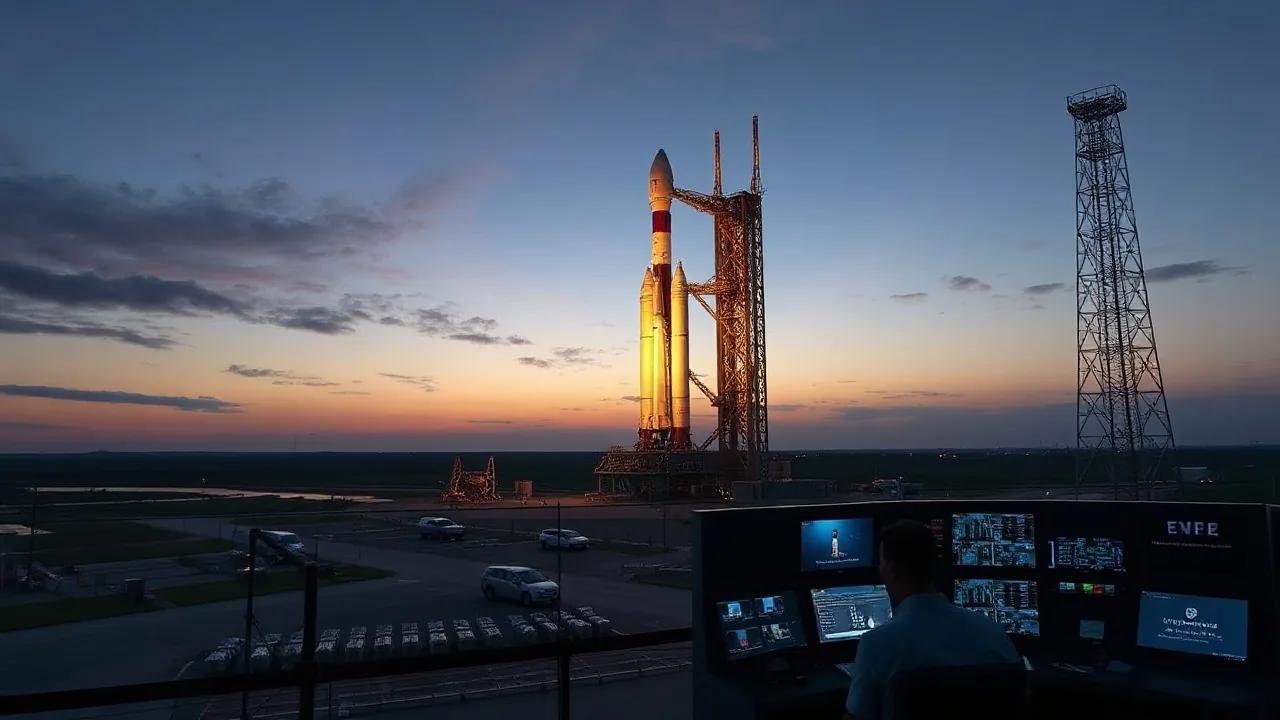
SpaceX has not filed for an initial public offering as of June 2026, yet speculation about a potential IPO date dominates investment conversations across Wall Street and tech forums. The privately held rocket manufacturer, valued at approximately $210 billion in its last funding round, represents the largest unfloated asset in the commercial space sector, fueling persistent rumors about when founder Elon Musk might take the company public.
Musk has historically resisted taking SpaceX public, citing the company's focus on long-term missions to Mars and operational autonomy. However, recent shifts in the aerospace investment landscape, including renewed government contracts and private capital inflows into the space economy, have prompted analysts to reconsider whether an IPO could happen within the next two to three years.
"The demand for exposure to commercial space infrastructure is at an all-time high," says Morgan Stanley aerospace and defense analyst Adam Jonas in a June 2026 research note. "If SpaceX were to come public, the company could command a valuation north of $250 billion based on comparable multiples in the defense and satellite communication sectors."
Market Drivers and Valuation Reality
The broader space stock market has expanded significantly since 2021. Companies like Axiom Space, Relativity Space, and Rocket Lab have accessed public capital through SPAC mergers or traditional IPOs, demonstrating investor hunger for commercial space exposure. That appetite has made the absence of a SpaceX listing conspicuous to portfolio managers.
SpaceX's financial position strengthens the company's hand in any future IPO discussion. The firm generated approximately $5.7 billion in revenue during 2025, driven by Starlink satellite broadband subscriptions, national security launches for the U.S. Space Force, and commercial rideshare missions. Operating margins remain closely guarded, but industry estimates suggest the company operates profitably on core launch services.
Valuation estimates for a potential SpaceX IPO vary widely across investment banks. Goldman Sachs analysts project a $180 billion to $220 billion range based on revenue multiples, while UBS suggests valuations could reach $300 billion if Starlink's consumer broadband subscriber base reaches 8 million users by 2028. These figures would position SpaceX as a top-20 publicly traded technology or industrial company at the outset.
The aerospace investment climate in 2026 differs markedly from 2021. Government spending on national security space capabilities has grown, with the Department of Defense awarding SpaceX multiple contracts for national security launches and the nascent U.S. Space Force Space Command increasing procurement budgets. Simultaneously, commercial demand for satellite communications, remote sensing, and on-orbit servicing has diversified revenue streams beyond launch services.
Elon Musk's Control and Strategic Timing
Musk's stated ambitions remain the primary constraint on an IPO timeline. The CEO has emphasized Mars colonization and Starship development as company priorities, framing traditional public markets as ill-suited to long-term moonshots. In March 2026, Musk reiterated in a podcast interview that he prefers SpaceX to remain private "until Mars is self-sustaining," a threshold he estimates could be 10 to 15 years away.
Yet practical considerations may override philosophical preferences. SpaceX's Starlink division, which represents an increasingly material portion of company value, generates strong unit economics but requires continuous capital deployment to expand satellite constellations and build ground infrastructure. A public offering could provide a currency for acquisitions, fund expansion of manufacturing capacity, and unlock liquidity for early employees and investors who have held stakes for over a decade.
The Elon Musk factor cuts both ways in public markets. His visibility attracts retail investor enthusiasm but introduces volatility tied to his public statements and attention span. During SpaceX's 2021 funding round, his willingness to discuss Mars missions and point-to-point Earth transportation (via Starship) in interviews appeared to elevate investor sentiment and valuations. A public SpaceX under Musk ownership would likely experience similar dynamics, with stock moves responding to mission successes, Starship test results, and Musk's announcements on social media platforms.
Private Space Momentum and Competitive Pressure
Competition from other commercial launch providers adds pressure to the IPO timeline discussion. Blue Origin, owned by Amazon founder Jeff Bezos, has accelerated New Glenn heavy-lift rocket development and booked significant national security launch contracts. Relativity Space, a 3D-printed rocket manufacturer backed by Fidelity and Salesforce Ventures, completed its first orbital flight in late 2024 and has filed for an IPO in 2026. Axiom Space, which builds commercial space stations, went public via SPAC merger in 2023.
The entrance of competing private space companies into public markets creates a benchmark for investors evaluating SpaceX's worth. If Relativity or Blue Origin (should Bezos choose to take it public) demonstrates stronger margins or customer growth, SpaceX's valuation assumptions could be questioned. This competitive dynamic may subtly push SpaceX toward an IPO sooner rather than later to establish market leadership and investor mindshare.
Institutional investors have made their appetite clear. Over the past 18 months, major pension funds and sovereign wealth funds have increased allocations to space-focused investment funds and direct stakes in commercial providers. Abu Dhabi's ADQ and Saudi Arabia's PIF have both signaled interest in space infrastructure investing, creating potential demand for SpaceX shares if they become available.
SpaceX valuation discussions in investment circles have settled around $200 billion to $250 billion as a baseline for an IPO scenario, with upside to $300 billion if Starlink reaches critical scale or new revenue streams materialize. No official timeline has been announced by SpaceX, and Musk has given no indication that an IPO is imminent. However, the convergence of capital demand, competitive pressure, and maturing revenue models suggests that a SpaceX public listing within the 2027 to 2028 window remains plausible, despite Musk's past reluctance to submit to public market discipline.