
SpaceX IPO: Timeline, Valuation, and What Investors Need to Know
SpaceX has not filed for an IPO as of May 2026, but Elon Musk has hinted at a potential public offering tied to the company's Mars ambitions. Here's what a space investment of this scale could mean for the aerospace sector.

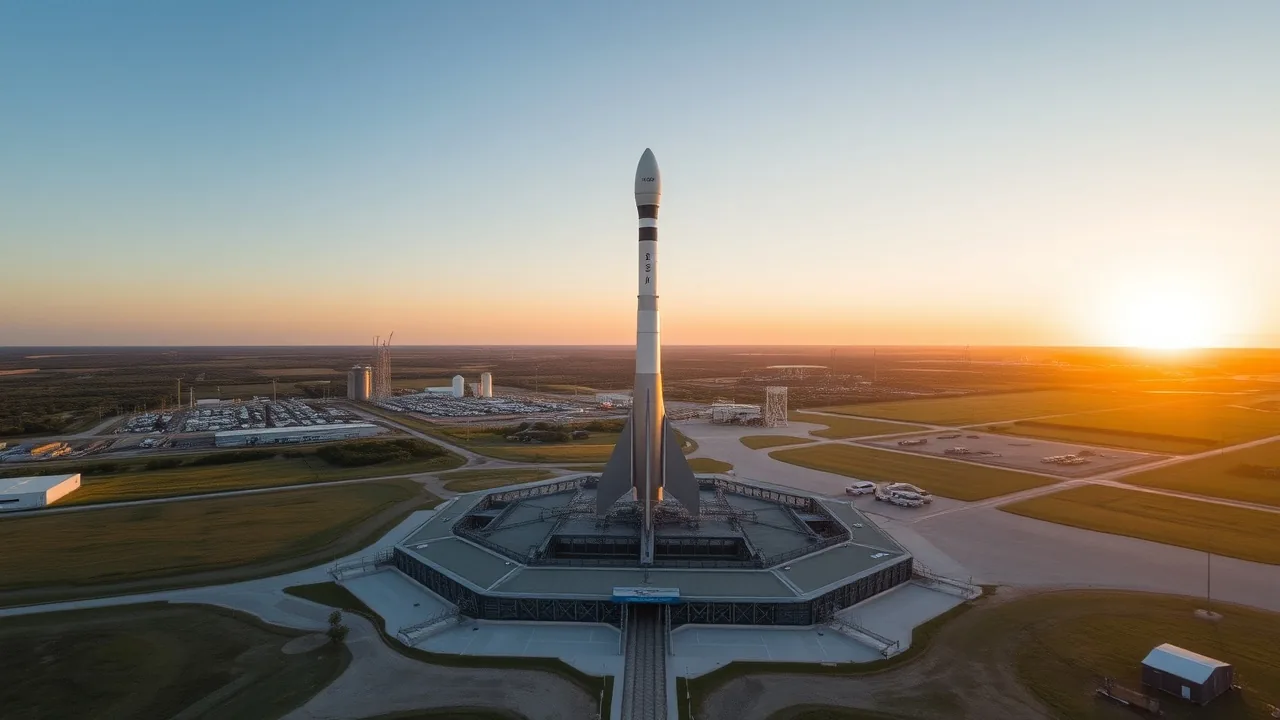
Elon Musk has repeatedly suggested that SpaceX might go public, though no formal filing has occurred as of May 2026. The billionaire entrepreneur has framed a potential SpaceX IPO as a vehicle to fund the company's Starship program and eventual Mars colonization efforts, a statement that has kept Wall Street analysts and aerospace investors watching closely.
SpaceX remains the world's most valuable privately held aerospace company, with a valuation exceeding $180 billion based on recent secondary market transactions in early 2026. The company controls roughly 60 percent of the global commercial launch market, operates the International Space Station resupply contract, and holds lucrative defense contracts with the U.S. Space Force and National Reconnaissance Office.
"An IPO would fundamentally reshape how capital flows into the space industry," said Dr. James Chen, senior analyst at Orbital Insights, a space economics research firm. "SpaceX's public offering could unlock trillions in institutional investment that has sat on the sidelines, waiting for a credible entry point into commercial spaceflight."
Why SpaceX Might Go Public Now
The case for a SpaceX public offering has strengthened considerably since 2024. Starship, the fully reusable super-heavy launch system, conducted its fifth integrated flight test in February 2026 and achieved booster catch for the third consecutive time. That technical milestone reduced perceived risk around the vehicle's commercial viability.
SpaceX requires an estimated $50 billion to $100 billion in capital to establish a self-sustaining Mars base by the 2030s, according to Musk's public statements and internal company documents leaked to media outlets in 2025. Private funding sources, including existing investors and debt markets, may not provide sufficient capital for that ambition at the scale needed.
The broader space investment landscape has matured considerably. Public space companies including Axiom Space, Relativity Space, and Rocket Lab have demonstrated that Wall Street will back commercial spaceflight ventures with sustained capital. Relativity Space raised $650 million in Series C funding in late 2025, valuing the 3D-printed rocket manufacturer at $5.5 billion.
Competition for launch services has also intensified. Amazon's Project Kuiper, which requires approximately 3,000 satellites for global broadband coverage, has created demand for dedicated launch capacity. Blue Origin, founded by Jeff Bezos, began offering New Glenn orbital services in early 2026. A public SpaceX would have direct access to capital markets to accelerate Starship production and compete for mega-constellation contracts.
Challenges and Regulatory Hurdles
A SpaceX public offering would face unprecedented regulatory complexity. The company holds classified contracts with the National Security Agency, Defense Intelligence Agency, and Space Force. U.S. regulations restrict foreign investment in defense contractors and mandate American ownership and control of space launch infrastructure.
Musk's ownership structure complicates matters further. His tenure as Twitter CEO from October 2022 through mid-2024, followed by ongoing involvement with the company, raised questions among securities regulators about potential conflicts of interest. A SpaceX IPO filing would trigger SEC scrutiny of Musk's dual roles across multiple billion-dollar companies.
The Federal Communications Commission and Federal Aviation Administration also hold veto power over Starship operations. Any prospectus would need to disclose regulatory risks, including potential delays to launch cadence due to environmental reviews or licensing disputes. SpaceX's five Starship booster explosions during early flight tests, though expected by the company as part of rapid iteration methodology, could raise investor concerns about operational safety and insurance costs.
Environmental groups have sued to halt Starship launches at Starbase in Boca Chica, Texas, citing concerns about wildlife habitat and water contamination. Those lawsuits, ongoing as of May 2026, would require detailed disclosure in any public offering registration statement.
What a Public SpaceX Could Mean for the Aerospace Sector
A SpaceX IPO would likely become one of the largest in aerospace history. Morgan Stanley analysts estimated in a January 2026 report that the offering could value the company at $250 billion to $300 billion on the public market, substantially higher than its current private valuation. That would make SpaceX worth more than traditional defense contractors like Lockheed Martin and nearly equivalent to Boeing.
Such a valuation would validate commercial spaceflight as an institutional asset class. Pension funds, mutual funds, and sovereign wealth funds currently hold zero SpaceX equity due to its private status. Public listing would unlock an estimated $2 trillion in potential capital.
Competitors would face immediate pressure. Blue Origin, also privately held, might accelerate its own public offering timeline. Relativity Space and Axiom Space could see valuations spike as investors rush to build exposure to the commercial space sector. Traditional aerospace suppliers, including Northrop Grumman and Raytheon Technologies, would likely increase M&A activity to acquire aerospace startups before prices climb further.
For going public, SpaceX would need to separate its Starlink satellite broadband division from its launch and deep-space exploration business, according to multiple Wall Street sources. That restructuring alone could take 12 to 18 months and would require regulatory approval from the FCC and foreign governments where Starlink operates.
Musk has not announced a timeline, and company insiders have indicated that an IPO remains a conditional plan rather than an imminent event. Technical milestones with Starship, cash flow generation from launch operations, and political shifts in Washington will likely determine whether SpaceX files in 2026 or defers the offering further into the decade.