
SpaceX Launch Schedule: October 2026 Missions and Objectives
SpaceX is ramping up launch operations in October 2026 with multiple Falcon 9 and Starship missions. Here's what to expect from the company's latest payload deployments and test flights.

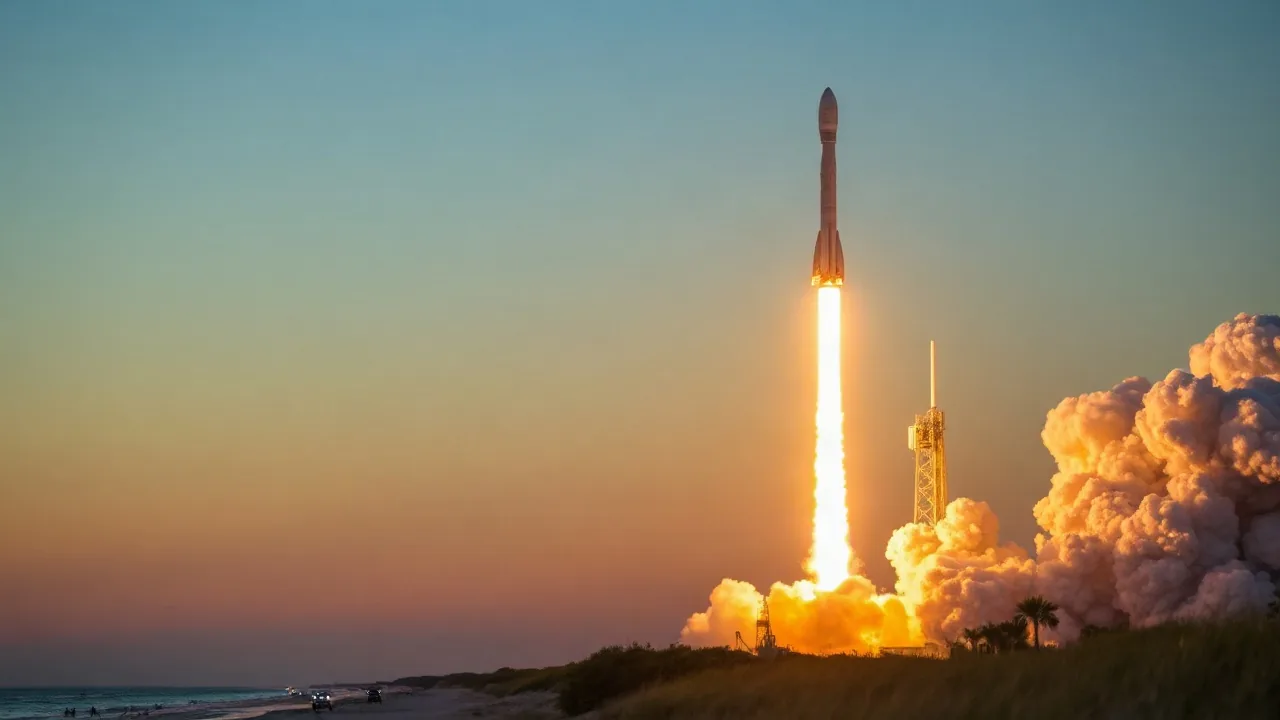
SpaceX has scheduled five launches across October 2026, pushing forward with its ambitious portfolio of satellite deployments, station resupply missions, and Starship development flights. The launch window opened on October 3rd with a Falcon 9 booster carrying Starlink internet satellites, marking the 14th dedicated internet constellation mission this year.
The Hawthorne, California-based company is maintaining a pace of roughly one launch every three to four days, leveraging a fleet of reusable boosters that have significantly reduced operational costs. "We're seeing SpaceX's reusable rocket architecture mature to a point where launch cadence is no longer constrained by hardware availability," said Morgan Stanley aerospace analyst Adam Jonas during an October 1st investment call.
Each Falcon 9 mission carries between 50 and 60 Starlink satellites to low Earth orbit, expanding global broadband coverage to underserved regions. The constellation has grown to over 6,200 active satellites as of October 2026, delivering internet service to 60 countries and territories across six continents.
Starship Test Flight Progress
Beyond Falcon 9 operations, SpaceX is preparing a major Starship integrated flight test slated for mid-October. This mission represents the eighth integrated test of the fully stacked Super Heavy booster and Starship upper stage, building on lessons learned from the July 2026 flight that achieved booster catch for the first time.
The upcoming test aims to complete several critical objectives that advance toward lunar missions planned for 2027. Starship development targets include controlled reentry of the upper stage with heat shield validation, precision landing algorithms, and upgraded raptor engine performance monitoring during powered descent.
Previous flight data showed the Super Heavy booster's 33 Raptor 3 engines firing with 99.2% efficiency during ascent. Engineers have incorporated propellant management refinements and grid fin control adjustments to improve stability during the booster's return to the launch site.
SpaceX's Starbase facility in Boca Chica, Texas, has been cleared for continued testing through December 2026. The Federal Aviation Administration granted an updated license on September 28th authorizing up to 25 launches and test flights, with provisions for rapid turnaround between missions.
Rocket Technology and Commercial Demand
The intensity of SpaceX's launch cadence reflects surging commercial demand for rocket technology services. National Aeronautics and Space Administration contracts for crew resupply missions to the International Space Station account for at least two flights per year, while the U.S. Space Force utilizes SpaceX for national security payloads.
Private customers are also driving launch volume. Fleet operators including OneWeb, Amazon's Project Kuiper, and various Earth observation companies have booked slots on Falcon 9 for constellation expansion. Amazon alone has ordered multiple missions starting in Q1 2027 for its Kuiper satellite network.
The commercial launch market is increasingly competitive. Blue Origin is expected to begin New Glenn orbital operations in late 2026, while Rocket Lab has expanded capacity at its New Zealand launch facility. Despite this competition, SpaceX maintains approximately 60% market share for commercial orbital launches.
Pricing for Falcon 9 missions has stabilized at approximately $62 million per flight, with guaranteed launch windows and high reliability driving customer loyalty. The reusable booster strategy has enabled SpaceX to reduce launch costs by roughly 30% compared to single-use alternatives, according to industry analyst firm Spaceworks.
Future Space Endeavors and Lunar Timeline
SpaceX's long-term vision extends beyond Earth orbit. Space X missions include lunar lander development for NASA's Artemis program, with a Human Landing System variant of Starship scheduled for crewed missions to the Moon in 2027-2028. The company is also advancing refueling technologies critical for deep space exploration.
In-space propellant transfer has become a focal point for aerospace innovation. SpaceX's Starship design incorporates multiple fuel tank configurations and transfer mechanisms to enable multi-mission architectures. A successful tanker mission is planned for November 2026 to demonstrate orbital refueling procedures.
The company is simultaneously developing capabilities for Mars missions, with CEO Elon Musk reaffirming plans for uncrewed Mars landings by 2029 and crewed missions by 2031. Starship's payload capacity of 100 metric tons to low Earth orbit makes it suitable for cargo missions supporting initial Mars outpost establishment.
October 2026 represents a critical inflection point for SpaceX operations. With Falcon 9 launching on a predictable cadence while Starship approaches full operational capability, the company is positioning itself as the dominant provider of heavy-lift launch services for the next decade. Success in this period will directly influence the timeline for lunar return missions and establish the foundation for crewed Mars exploration.
Launch viewers in the continental United States can track Falcon 9 missions via SpaceX's official channels, which provide real-time updates and webcast access beginning 15 minutes before each scheduled liftoff. The company's transparency regarding launch operations has made public engagement with spaceflight more accessible than ever before.