
SpaceX Rocket Creates New Moon Crater After Lunar Impact
NASA has released new images revealing a fresh crater on the Moon's surface following the impact of a SpaceX rocket's upper stage. The debris from the 2015 Falcon 9 mission collided with the lunar surface on August 5.

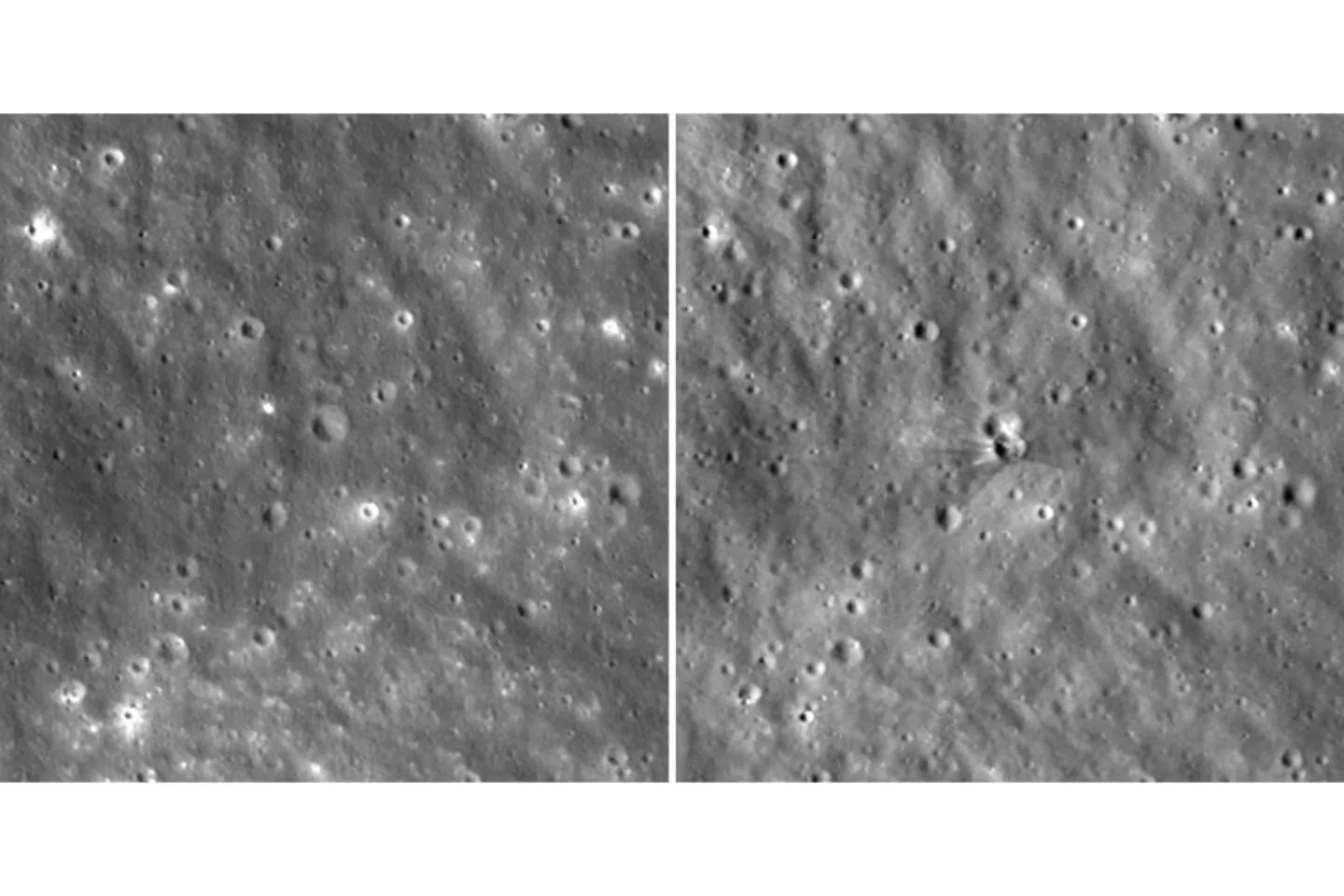
NASA has released striking before-and-after images documenting the impact site of a SpaceX rocket stage that crashed into the Moon earlier this month. The upper stage of a Falcon 9 rocket, which had been in orbit for over seven years, collided with the lunar surface on August 5, 2026, at an estimated speed of 5,400 miles per hour. The event created a new crater, providing scientists with a unique opportunity to study lunar surface changes.
The images, captured by NASA's Lunar Reconnaissance Orbiter (LRO), clearly show the newly formed impact site and the resulting ejecta. The rocket stage, part of the 2015 launch for the Deep Space Climate Observatory, had been drifting in space since its mission concluded. Its uncontrolled trajectory eventually led it to collide with the Moon, a common fate for defunct spacecraft. This particular impact is noteworthy due to the specific composition of the rocket stage and the data it can provide about lunar geology.
Studying Lunar Surface Dynamics
The deliberate or accidental impact of objects on the Moon has long been of scientific interest. Each impact, whether from natural meteoroids or man-made debris, contributes to our understanding of the Moon's surface evolution. The crater created by the SpaceX rocket is expected to offer insights into how the lunar regolith, the loose layer of dust and rock covering the Moon, reacts to impacts of this scale. Scientists are particularly interested in analyzing the ejecta patterns and the depth of the crater.
Dr. Noah Petro, an LRO project scientist at NASA's Goddard Space Flight Center, commented on the significance of the event. “We are observing a significant geological event on another world, even if it's a small one. The data we gather from this impact will help us understand the Moon's environment and how it's constantly changing,” Petro stated. The LRO has been instrumental in mapping the Moon's surface and identifying potential resources since its launch in 2009. Its ability to revisit specific locations allows for precise before-and-after comparisons, making it ideal for documenting such events.
The incident also raises questions about the growing amount of space debris in Earth's orbit and beyond. While this particular rocket stage was operating beyond Earth's immediate vicinity, its uncontrolled descent highlights the challenges of managing space assets. SpaceX, under the leadership of Elon Musk, has been at the forefront of reusable rocket technology, aiming to reduce the cost of space access. However, as more missions are launched, the issue of spent stages and other debris requires careful consideration to ensure the long-term sustainability of space exploration.
The Moon has become an increasingly important target for both scientific research and future human exploration. Understanding the effects of impacts is crucial for planning any lunar bases or activities. The fresh crater serves as a stark reminder of the dynamic nature of the lunar environment and the ongoing interactions between Earth's space activities and our nearest celestial neighbor. This event underscores the importance of continued monitoring of the lunar environment and the potential consequences of human activity in space.