
SpaceX Rocket Slated for Moon Collision, Creating New Crater
A defunct SpaceX rocket's upper stage is on a collision course with the moon, set to impact Wednesday and create a new crater. The event offers scientists a rare chance to study the effects of debris.

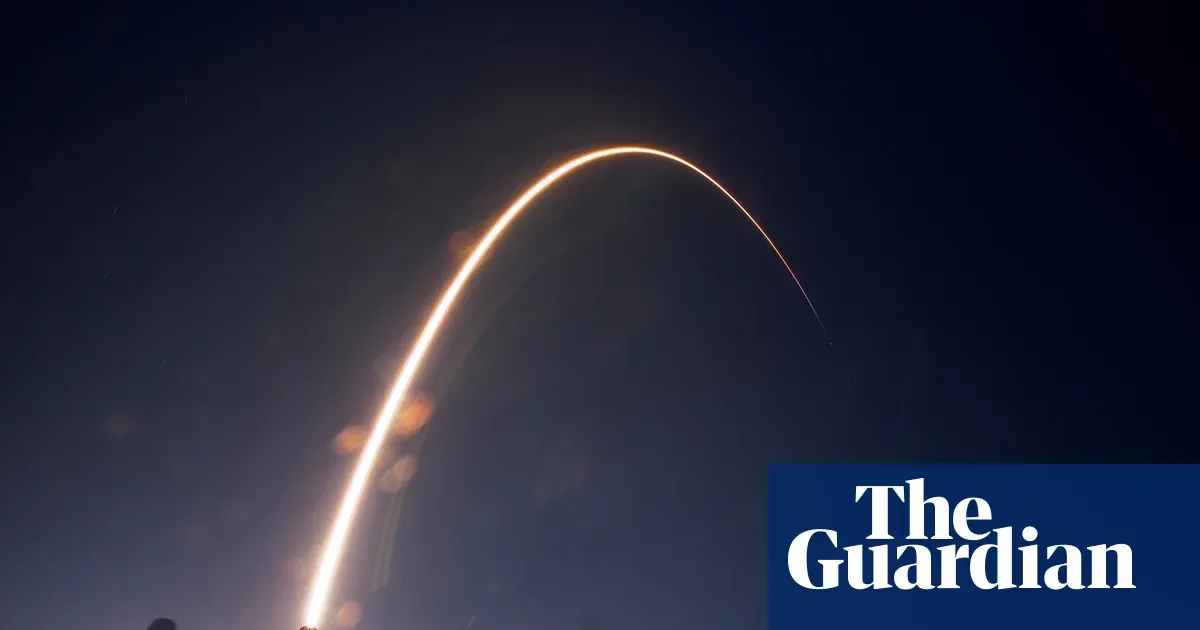
A defunct SpaceX rocket's upper stage, launched over a year ago to deploy lunar landers, is unexpectedly on a collision course with the moon. The booster is predicted to slam into the lunar surface on Wednesday, creating a new crater and kicking up a plume of dust and debris that astronomers are keen to observe. Space tracking specialist Bill Gray projects the impact will occur at approximately 5,400 mph (8,700 km/h), seven times the speed of sound, near the Einstein Crater on the moon's visible western hemisphere.
The celestial event is expected to be most visible from the eastern United States and Canada, as well as much of South America, during the early morning hours. While scientists generally express minimal concern about this specific piece of space junk, the incident underscores a growing issue of orbital congestion and potential hazards from discarded rocket stages and other defunct spacecraft.
"Things are getting crowded up there," stated Gray, who plans to monitor the aftermath from New Brunswick, Canada. He noted that the SpaceX Falcon 9 upper stage was never intended to impact the moon. Experts suggest the trajectory could have been altered to place the rocket into solar orbit, thus avoiding the lunar collision.
Orbital Debris Poses Growing Concern
This planned impact marks the second known instance of a rocket accidentally crashing into the moon. In 2022, a segment of a Chinese Long March rocket created a pair of craters on the far side of the moon. The upcoming crash, however, will occur on the near side and will carry the equivalent energy of approximately three tons of TNT explosives. The resulting impact flash, lasting less than a second, is anticipated to be too faint to be observed directly from Earth.
However, the stream of ejected material could extend for several miles into space and remain detectable by telescopes for a significant period. "Gravity on the moon is low and there is no wind to blow the dust away," explained Benjamin Fernando of the Los Alamos National Laboratory. Fernando is encouraging both professional and amateur astronomers to observe the event. "Part of the reason for our interest in this event is to figure out how much of a hazard debris impacts pose to future astronauts," he added via email. He anticipates the resulting crater will measure nearly 90 feet across and 16 feet deep (27 meters by 5 meters), a size too small to be seen from Earth but potentially detectable by lunar orbiting spacecraft.
The observation of such impacts is crucial for understanding the long-term implications of increasing space debris. As more missions are launched to the moon and beyond, the risk of accidental collisions with defunct hardware grows. Scientists hope that studying the ejecta from this SpaceX rocket impact will provide valuable data on the mechanics of crater formation and the dispersal of lunar regolith under high-velocity impact conditions. This knowledge is vital for planning future crewed missions and ensuring the safety of astronauts and equipment operating on or near the lunar surface. The SpaceX rocket, a remnant of a 2022 mission, has been drifting in space for over a year, its orbital path eventually leading it towards the moon. The absence of atmospheric drag on the moon means that such debris can remain in orbit or on a collision course for extended periods. This event serves as a stark reminder of the need for better space traffic management and more sustainable practices in space exploration to mitigate the growing problem of orbital debris. Future missions, including NASA's Artemis program, will need to account for these potential hazards as they establish a more sustained human presence on the moon. The data gathered from this unplanned moon collision will contribute to the growing body of knowledge on lunar geology and the environmental challenges of off-world operations.