
SpaceX Launches Satellite Repair Drone with Robot Arms
SpaceX is launching a trailblazing satellite servicing mission today, July 21, featuring a robotic vehicle designed to extend the life of satellites in Earth orbit. The mission utilizes a Falcon 9 rocket lifting off from Florida.

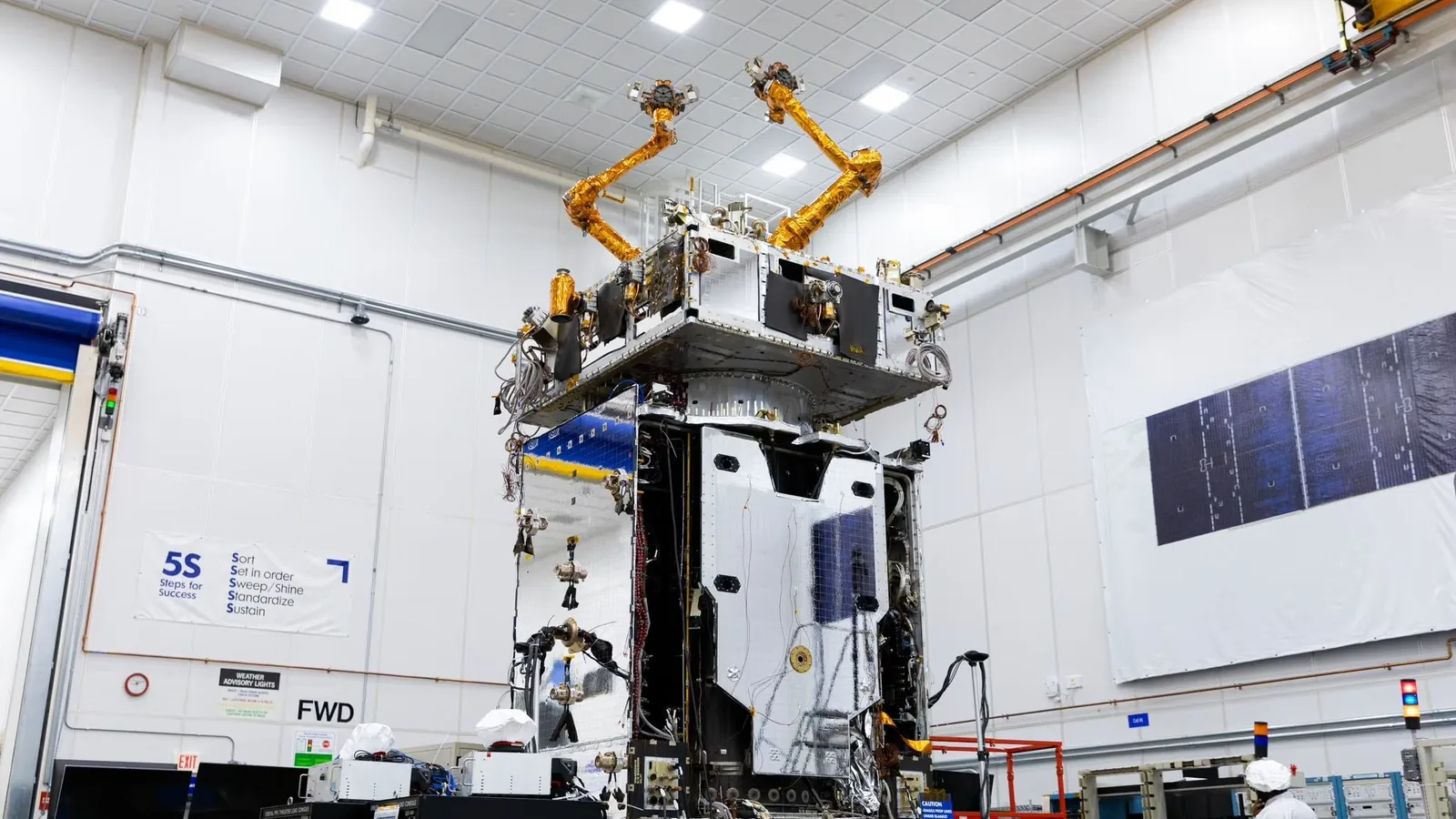
SpaceX is set to launch a groundbreaking satellite-servicing mission on July 21, marking a significant step in orbital infrastructure. A Falcon 9 rocket is scheduled to depart from Cape Canaveral Space Force Station in Florida within a window that opens at 5:15 p.m. EDT (2115 GMT). Live coverage of the launch will be available via SpaceX's broadcast, beginning approximately 15 minutes prior to liftoff.
The mission, dubbed MRV-MEV, will deploy a Mission Robotic Vehicle (MRV) alongside three Mission Extension Pods (MEPs). These advanced spacecraft are operated by SpaceLogistics, a subsidiary of aerospace giant Northrop Grumman. The MRV is destined for geostationary orbit (GEO), an altitude of 22,236 miles (35,786 kilometers) above Earth. At this height, satellites maintain a consistent position relative to the ground, making GEO a crucial location for critical assets like spy, communication, and weather satellites.
The primary objective of this new endeavor is to significantly extend the operational lifespan of existing satellites. The MRV is equipped with two sophisticated 10-foot-long robotic arms, engineered by the U.S. Naval Research Laboratory. These robotic manipulators will be instrumental in attaching the MEPs—the first of their kind to be launched—to three separate satellites currently operating in GEO. Once affixed, the MEP will utilize electric propulsion to manage orbit and momentum for the client satellite. According to a fact sheet from Northrop Grumman, each MEP is controlled by the customer and can provide up to eight years of extended service for a typical 2,000 kg satellite in GEO.
Extending the Life of Space Assets
Orbital debris and the high cost of launching new satellites have made life extension services increasingly vital. The MRV and MEPs represent a new class of orbital infrastructure designed to address these challenges. Among the clients for these first three MEPs are Australian satellite operator Optus, which booked one pod, and Intelsat, which secured the remaining two. The MRV and MEPs will travel to GEO independently before the robotic vehicle rendezvous with and attaches each pod.
Upon completing the installation of the third MEP, the MRV will remain in GEO. Northrop Grumman's website highlights the MRV's broader capabilities, stating it can "relocate, inspect, repair and upgrade spacecraft while in orbit." The vehicle also incorporates a Northrop Grumman-developed Passive Refueling Module (PRM), the first refueling interface standard approved by the U.S. Space Force. This allows the MRV to be refueled in orbit, further enhancing its utility and longevity.
"With advanced robotics technology and Northrop Grumman's proven experience in satellite servicing, the mission delivers an unprecedented capability and new class of system that can continuously evolve to support novel or increasingly advanced missions for our nation, making assets in space more resilient," the company stated. This capability builds upon Northrop Grumman's previous successful satellite servicing missions. The Mission Extension Vehicle-1 (MEV-1), launched in October 2019, was the first commercial satellite-servicing spacecraft. It successfully docked with the Intelsat 901 communications satellite in GEO four months later. MEV-2 followed in August 2020, docking with Intelsat 10-02 in April 2021. Unlike the current mission, these earlier vehicles did not utilize extension pods but performed life-extension duties independently.
Following liftoff, the Falcon 9's upper stage is expected to deploy the MRV approximately 35.5 minutes after launch, with the three MEPs released at 10-minute intervals thereafter. In a notable departure from many Falcon 9 missions, the first stage booster supporting this flight will not attempt a landing. SpaceX indicated that "due to the additional performance needed to launch these payloads to geosynchronous transfer orbit, this will be the 32nd and final flight for the Falcon 9 first stage booster supporting this mission."