
SpaceX Sets New Record with 38-Minute Rocket Launch Doubleheader
SpaceX achieved a new milestone by launching two Falcon 9 rockets just 38 minutes apart on Saturday, August 15. The missions carried satellites for Globalstar and the U.S. Space Force.

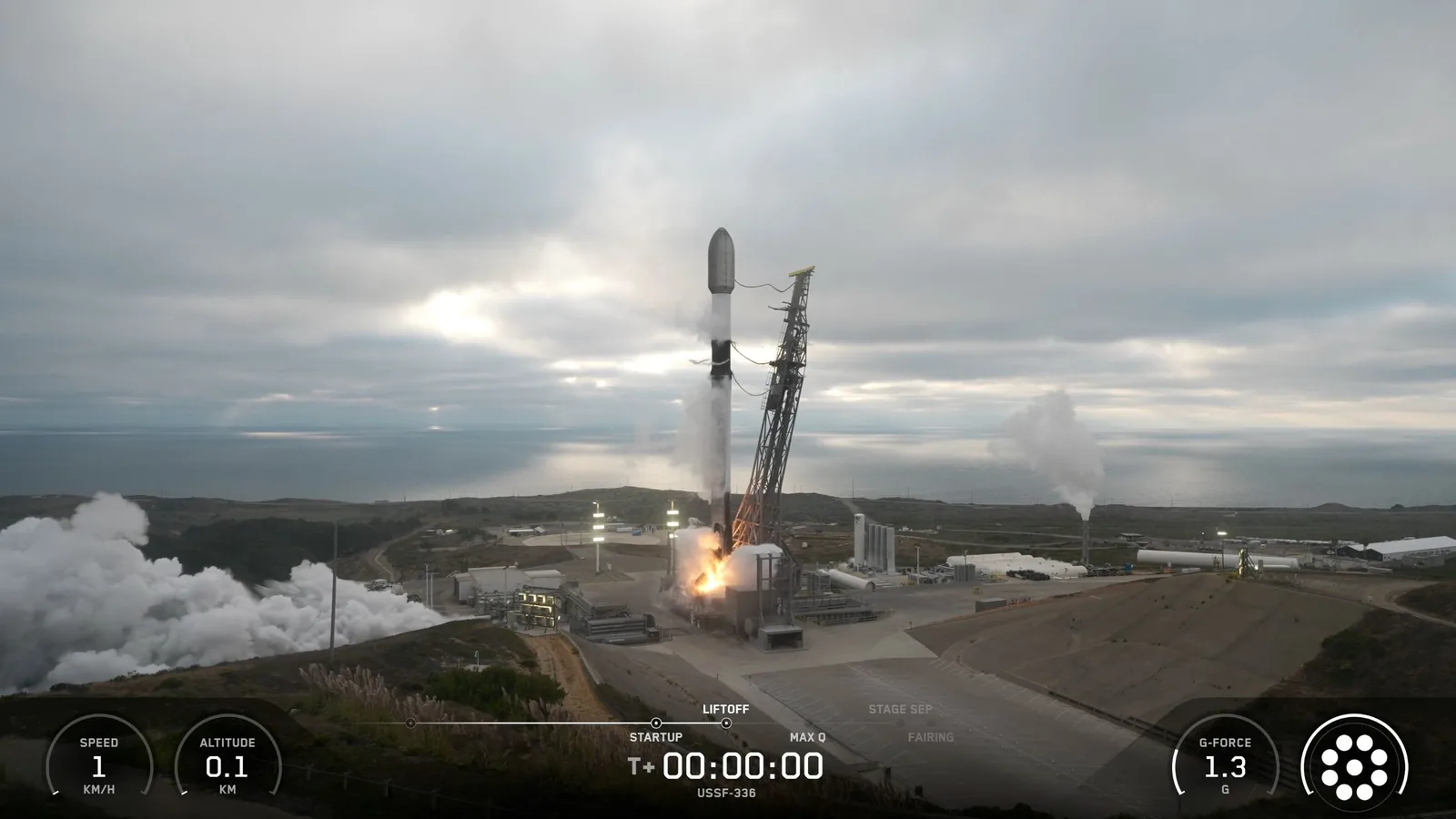
SpaceX shattered its own record for rapid rocket launches on Saturday evening, August 15, successfully deploying two Falcon 9 rockets into orbit a mere 38 minutes apart. This remarkable feat, accomplished from two different launch sites, bested the company's previous record by 27 minutes, showcasing its unparalleled launch cadence in the current spaceflight era.
The first launch occurred at 9:12 p.m. EDT from Cape Canaveral Space Force Station in Florida. This mission carried eight satellites for the Louisiana-based telecommunications company Globalstar. All eight spacecraft were successfully deployed into low Earth orbit (LEO) approximately 56.5 minutes after liftoff.
While the first Falcon 9 was en route to its orbit, a second rocket lifted off from Vandenberg Space Force Base in California at 9:50 p.m. EDT. This launch, designated USSF-366, was for the U.S. Space Force. Details surrounding the USSF-366 payload are classified, a common characteristic for national security missions. However, industry observers suggest the payload may consist of classified LEO satellites utilizing SpaceX's Starshield satellite bus, based on the precise drop zones for the rocket stages matching those of previous Starlink Group 15 launches.
Context: The Evolution of Launch Capabilities
SpaceX's ability to conduct such rapid, successive launches highlights a significant advancement in reusable rocket technology and operational efficiency. The company's Starlink constellation, now comprising nearly 11,000 satellites, necessitates a high launch frequency. This record-setting doubleheader not only serves commercial and governmental clients but also underscores SpaceX's dominance in the commercial launch market. The company aims to increase accessibility to space through frequent, reliable, and cost-effective launch services, fundamentally reshaping the space industry.
Both of Saturday's missions concluded with successful rocket landings, a cornerstone of SpaceX's cost-saving reusability strategy. The first-stage booster from the Globalstar mission returned to a landing at Cape Canaveral approximately eight minutes after its launch, marking its 14th flight. The booster from the USSF-366 mission landed on the droneship "Of Course I Still Love You" in the Pacific Ocean about 8.5 minutes after liftoff, having now completed 18 missions.
These dual launches bring the total number of Falcon 9 flights in 2026 to 96. The majority of these missions, approximately 75%, are dedicated to deploying satellites for SpaceX's own Starlink internet service, demonstrating the company's ongoing commitment to expanding its global broadband network.