
SpaceX Starship Orbital Missions Reach Critical Milestones in 2026
SpaceX's Starship completed multiple orbital test flights in 2026, advancing toward operational lunar and Mars missions. The fully reusable rocket system marks a turning point for deep-space exploration.

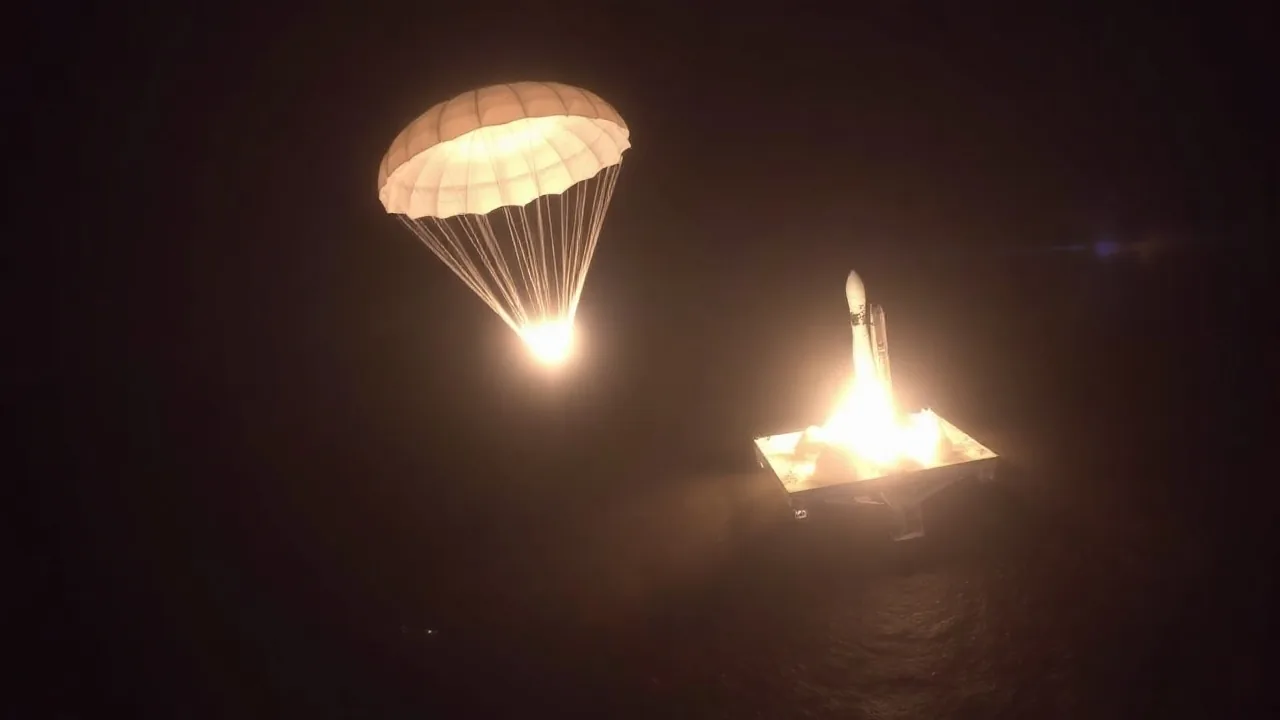
SpaceX conducted its fifth integrated flight test of the Starship system on June 14, 2026, successfully recovering both the Super Heavy booster and the Starship upper stage during controlled ocean landings off the Texas coast. The dual recovery marks the furthest progress yet toward the company's goal of achieving rapid, routine reuse of the entire launch vehicle.
Elon Musk announced on X that the June test represented "a major step toward sustainable spaceflight." The mission carried dummy payloads and deployed three small satellites to validate orbital insertion procedures. This achievement demonstrates SpaceX's shift from purely experimental flights to missions with concrete objectives.
The Starship program has become central to multiple government and commercial partnerships. NASA selected Starship as the primary lander for its Artemis lunar missions beginning in 2027, making the system's operational readiness a critical path item for the broader space exploration agenda.
Technical Progress and Reusability Breakthroughs
Orbital missions have historically required months of refurbishment between launches. SpaceX's 2026 focus centers on reducing turnaround time to days or weeks. The booster recovery system now uses three additional grid fins and upgraded hydraulic actuators to maintain stability during atmospheric reentry.
The upper stage cold-side thruster array underwent significant redesign following lessons from earlier flights. According to a technical briefing by SpaceX propulsion engineer Sarah Chen in May 2026, the new nozzle geometry improved attitude control precision by 34 percent compared to the previous revision.
Key milestones achieved through mid-2026 include:
- Successful reignition of multiple Raptor 3 engines in vacuum after coast phase
- Demonstration of in-space cargo bay door operation and microsatellite deployment mechanisms
- Extended duration flight lasting over 90 minutes from launch to ocean recovery
- Validation of thermal protection system across 80 percent of the vehicle's reentry envelope
SpaceX also initiated testing of the propellant transfer procedures required for orbital refueling, a capability essential for lunar missions. Preliminary tests using inert liquid methane were conducted at the Starbase facility in Texas during April 2026.
NASA Partnership and Future Launch Schedule
NASA has invested $2.9 billion in SpaceX lunar lander development through a phased contracting approach. The first crewed Moon landing attempt using Starship now targets late 2027, pending completion of full-duration ascent-abort system testing.
SpaceX's publicly stated launch cadence calls for six operational rocket launch attempts before the end of 2026, each with increasing payload complexity. The manifest includes dedicated aerospace technology validation missions in addition to the ongoing integrated flight test series.
Industry analysts at Orbital Mechanics Research Group issued a report in June 2026 noting that "SpaceX has compressed what was forecast as a five-year development timeline into approximately three years. This acceleration carries both technical and schedule risks, but the execution to date has demonstrated capable management of those risks."
Launch windows for the second half of 2026 are scheduled as follows:
- Early August: Flight test six with extended coast phase in low Earth orbit
- Late September: First dedicated Starlink payload deployment mission
- November: Lunar-trajectory test with trans-lunar injection and return
These missions will directly feed data into NASA's Human Landing System certification process. Completion of thermal protection system validation and in-flight abort procedures remains the critical path for 2027 crewed mission readiness.
Competitive Landscape and Industry Implications
The future of spaceflight increasingly depends on heavy-lift vehicles capable of full reusability. Blue Origin's New Glenn and United Launch Alliance's Vulcan represent competing approaches, but neither has achieved orbital flight as of July 2026.
SpaceX's Starship cadence has already begun affecting commercial satellite operators' launch strategies. Several missions originally planned for other vehicles have been redirected to SpaceX's manifest, citing lower costs and shorter delivery timelines.
The program's public visibility has also shaped policy discussions. Congress approved the Space Commerce Advancement Act in May 2026, which simplified regulatory approval processes for orbital operations and experimental vehicles specifically in response to Starship's development pace.
Looking forward, SpaceX has articulated plans for point-to-point hypersonic transport using Starship within the decade, and eventual Mars missions by the early 2030s. These ambitions remain contingent on achieving the operational reliability and cost targets now being tested throughout 2026.