
NASA Images Reveal SpaceX Rocket's New Lunar Crater
NASA's Lunar Reconnaissance Orbiter has captured images of a new crater on the moon, formed by the uncontrolled crash of a SpaceX rocket stage. The crater offers a rare glimpse of human-made debris impacting the lunar surface.

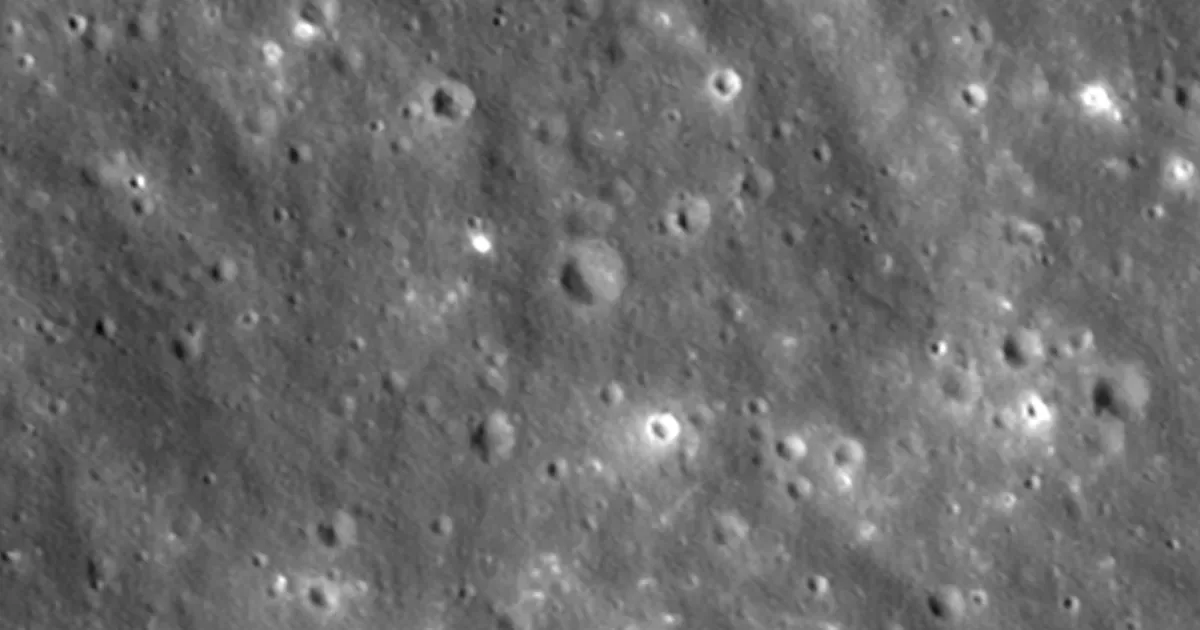
NASA spacecraft orbiting the moon have documented the aftermath of a SpaceX rocket's uncontrolled descent, revealing a newly formed impact crater on the lunar surface. The defunct upper stage of a Falcon 9 rocket, weighing approximately 10,800 pounds, crashed into the moon on August 5, 2026, at an estimated speed of 5,400 miles per hour. This booster had been in orbit since launching lunar landers in January 2025 and remained adrift until its final, unguided trajectory led it to collide with the moon.
New images released by NASA on August 19, 2026, show the precise location of the crash, captured by the agency's Lunar Reconnaissance Orbiter (LRO) on August 11 and 12. These before-and-after views clearly show a bright, distinct crater disrupting the moon's heavily cratered terrain. Although the actual impact was not directly observed, scientists were able to forecast the rocket's path and pinpoint the expected location along the western edge of the moon's sunlit hemisphere.
The LRO, which orbits the moon every two hours from pole to pole, required careful timing to photograph the specific site. It took six days for the orbiter to align its orbit with the SpaceX rocket's impact zone. Engineers adjusted the spacecraft's orientation to direct its cameras toward the crater as it passed approximately 60 miles above the lunar surface at a speed of one mile per second.
Crater Details and Ejected Material
The recently formed crater measures about 60 feet in diameter. NASA scientists estimate its depth to be less than 10 feet, based on the length of the shadow cast by the crater's rim. The images also highlight bright and dark streaks radiating from the impact site. The darker streaks are composed of surface dust and rocks displaced by the collision from an estimated depth of 1.5 feet. Conversely, the brighter streaks closer to the crater's edge appear to be fresher material excavated from deeper beneath the lunar surface.
The center of the new crater is located at an elevation of roughly 1,700 feet. Shortly after the collision, a telescope situated in Chile detected a plume of debris resulting from the impact. Additionally, the Korea Pathfinder Lunar Orbiter, launched in 2022 as South Korea's inaugural moon mission, later flew over the site and captured its own photographs of the crater and surrounding ejected material.
This incident marks the second documented instance of a rocket making uncontrolled contact with the lunar surface. While the moon has endured countless impacts from asteroids and other celestial bodies throughout its history, human-made objects colliding with its surface are exceedingly rare. In 2022, what was believed to be the upper stage of a Chinese rocket, part of a mission in 2014, struck the far side of the moon, creating a distinctive double crater observed later by the LRO. China has contested its involvement in that event.
The SpaceX rocket crash has reignited discussions regarding space debris and sustainability, particularly amid the escalating lunar ambitions of nations like the United States and China. In a statement released on August 5, SpaceX emphasized its commitment to responsible hardware management post-mission. The company noted that objects in such orbits can be influenced by solar activity and gravity, potentially leading to lunar impacts. They also stated they collaborated with NASA to determine an optimal disposal strategy for the rocket stage.