
1998 KY26 Space Object Puzzles Researchers With Strange Acceleration
Scientists are debating the true nature of 1998 KY26, a fast-moving space boulder whose acceleration cannot be explained by gravity alone.

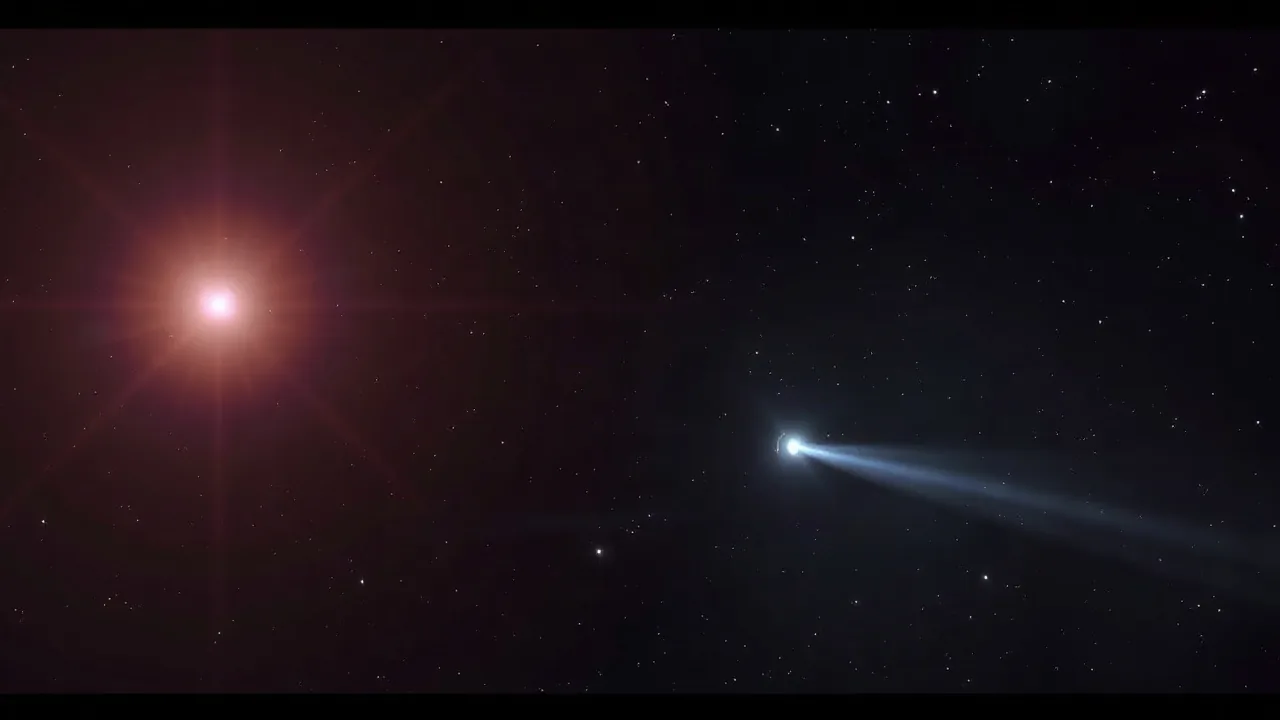
Astronomers and researchers are currently puzzled by a small, fast-moving space boulder known as 1998 KY26, which orbits the sun and measures about 36 feet across. The object is moving in a manner that cannot be explained by gravity alone, sparking an ongoing debate over whether it is an asteroid, a comet, or something else entirely. While theories regarding an alien spaceship or a lost Soviet spacecraft have been dismissed, its true classification remains undetermined.
Originally discovered in 1998 by University of Arizona astronomer Tom Gehrels, the object initially appeared to be a standard asteroid. However, its idiosyncratic accelerations cause it to stray from the neat orbit suggested by Johannes Kepler’s laws of planetary motion. Although these deviations are tiny, researchers consider them deeply meaningful for understanding near-Earth objects.
The Dark Comet Theory and Recent Temperature Findings
One leading hypothesis suggested that 1998 KY26 was a dark comet lacking the signature dust tail typically formed when the sun causes buried ice to vaporize. This sublimation process can mimic the acceleration observed in the object. However, a new paper published in the scientific journal Icarus has complicated that explanation by determining that the average temperature of the object is a balmy minus 53 degrees Fahrenheit, which is far above the threshold for ice.
“If something has ice, then it’s a comet,” said Darryl Z. Seligman, an assistant professor of physics and astronomy at Michigan State University who previously championed the dark comet hypothesis. With no ice detected, the theory lost ground.
“The surface of KY26 is too warm,” Dr. Seligman said in an interview, noting that near-Earth objects present a unique scientific challenge due to a lack of extensive data. “There’s not tons of data on very near-Earth objects. They’re super small and faint,” he added.