
SpaceX Aims for New Heights with Next-Gen Starship Rocket Test
SpaceX is set to launch its significantly redesigned Starship V3, the tallest and most powerful rocket ever built, on May 19. This crucial test flight aims to validate upgrades for future lunar and Martian missions.

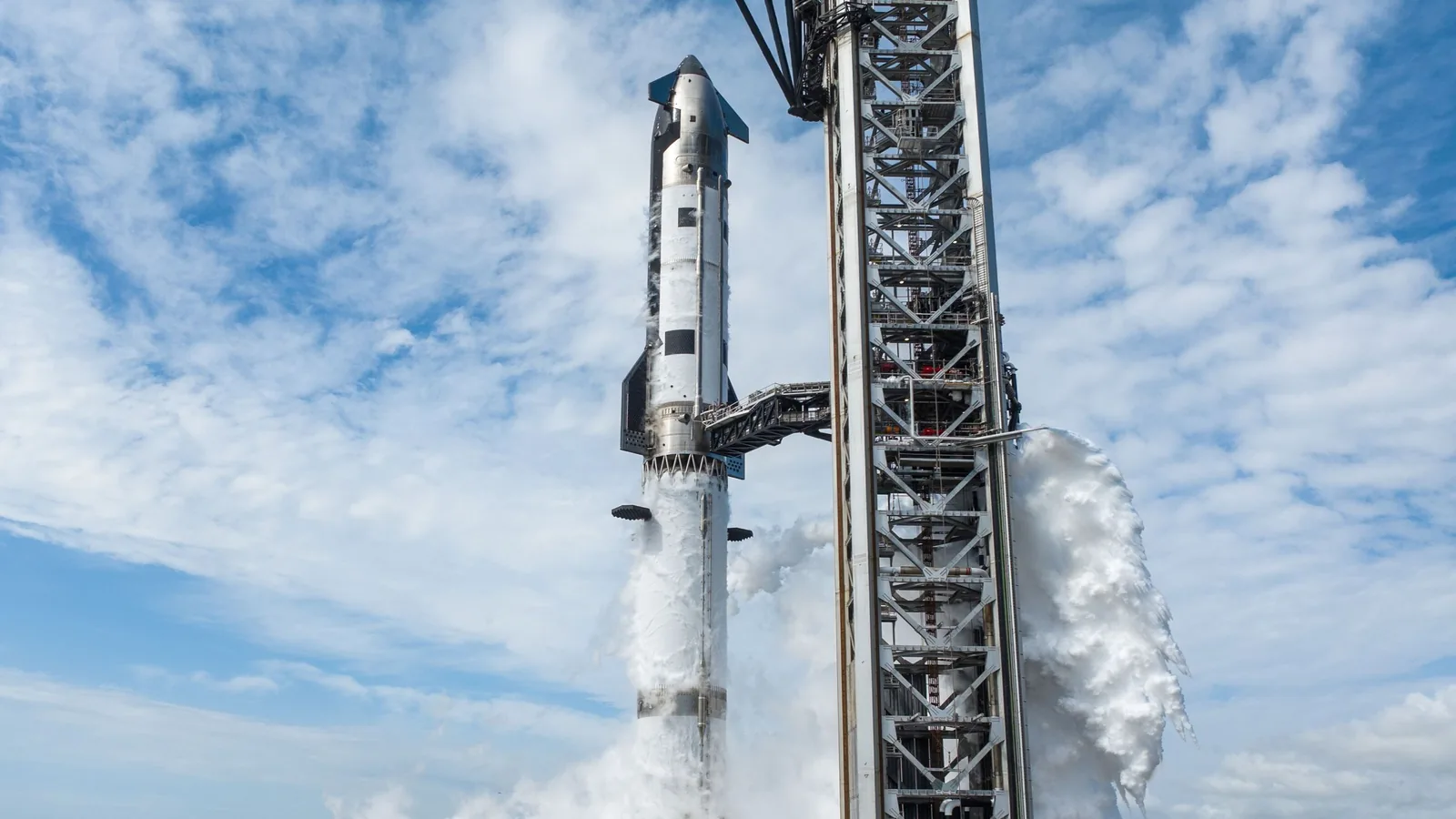
SpaceX is preparing for a pivotal test flight of its next-generation Starship, the tallest and most powerful rocket ever constructed, with the launch window opening Tuesday, May 19. This 12th flight test from Starbase in southern Texas is a critical step for the company as it pursues ambitious goals, including landing humans on the moon for NASA in 2028 and eventually facilitating missions to Mars. The company is eager to avoid the spectacular failures that have marked some previous Starship endeavors.
The launch countdown, scheduled to begin at 6:30 p.m. EDT, emphasizes "excitement guaranteed" rather than a definitive liftoff time, reflecting the experimental nature of these flights. SpaceX has faced significant challenges with Starship development, including fiery debris incidents in its seventh and eighth test flights last year, a ninth flight that fell short of its objectives, and a prior explosion on the launchpad. However, the company achieved a successful 10th flight in August 2025, followed by a clean 11th flight in October.
The latest iteration, Starship V3, comprises a Starship spacecraft atop a Super Heavy rocket, reaching an imposing height of 407 feet (124 meters). This surpasses the NASA Space Launch System, which carried the Artemis II mission, by approximately 85 feet (26 meters). Key upgrades include new Raptor 3 engines and a redesigned launchpad. According to SpaceX, these enhancements are designed to enable full and rapid reuse of the vehicle, in-space propellant transfer, deployment of Starlink satellites, and orbital data centers, alongside supporting human and cargo transport to the Moon and Mars.
Starship V3 Flight Objectives and Innovations
If the test flight proceeds as planned, the mission is expected to last just over an hour, following a suborbital trajectory. The Super Heavy booster will detach from the Starship spacecraft and initiate a return sequence for a water landing in the Gulf of Mexico. While SpaceX typically aims for land landings, this flight marks the debut of a "significantly redesigned vehicle," and the company will not attempt its usual landing site catch. Following booster separation, the Starship spacecraft is slated to deploy 22 Starlink simulator satellites, which mimic the next generation of Starlink satellites. Two of these simulators will specifically monitor the performance of the Starship's heat shield. A SpaceX spokesperson stated, "For Starship entry, a single heat shield tile has been intentionally removed to measure the aerodynamic load differences on adjacent tiles when there is a tile missing." This experimental approach aims to gather crucial data on heat shield integrity during re-entry.
A successful test flight will also involve the spacecraft practicing a relighting of one of its Raptor engines while in space, before executing a controlled splashdown in the ocean. Details on the specific splashdown location were not provided.
The third version of the Super Heavy booster incorporates several novel features, such as new grid fins for enhanced stability during landing. A completely redesigned fuel transfer tube will allow all 33 of the new engines to ignite simultaneously. The Raptor 3 engines are engineered to produce greater thrust compared to their predecessors. Starship V3's spacecraft also features a revamped propulsion system enabling a new engine startup method, increased fuel tank capacity, and an improved reaction control system for precise steering.
Modifications to the Starship launchpad include expanded propellant storage and more efficient pumps for faster fueling. These comprehensive changes are intended to unlock the vehicle's core capabilities, paving the way for future operational missions.
The success of this SpaceX endeavor is closely watched by NASA, which relies on commercial partners for its ambitious lunar program. NASA intends to utilize a moon-landing variant of Starship for its Artemis IV mission, aiming to transport astronauts to the lunar surface. This role places SpaceX in competition with Blue Origin and its Blue Moon lander. NASA's lunar architecture involves astronauts traveling to lunar orbit via the Orion spacecraft before transferring to a commercial lander for the descent to the surface and subsequent ascent back to Orion for the journey home. Next year, NASA plans to conduct tests docking Orion with potential landers in low Earth orbit. The selection of the commercial lander for the 2028 lunar landing will hinge on the readiness of these vehicles, a timeline that also depends on NASA's own program developments, including the acquisition of suitable spacesuits for lunar surface operations.