
SpaceX Stock: Aerospace Growth Accelerates in 2026
SpaceX's valuation surge reflects surging demand for commercial spaceflight and satellite launches. Investors eye the company's Starship progress and role in reshaping the aerospace sector.

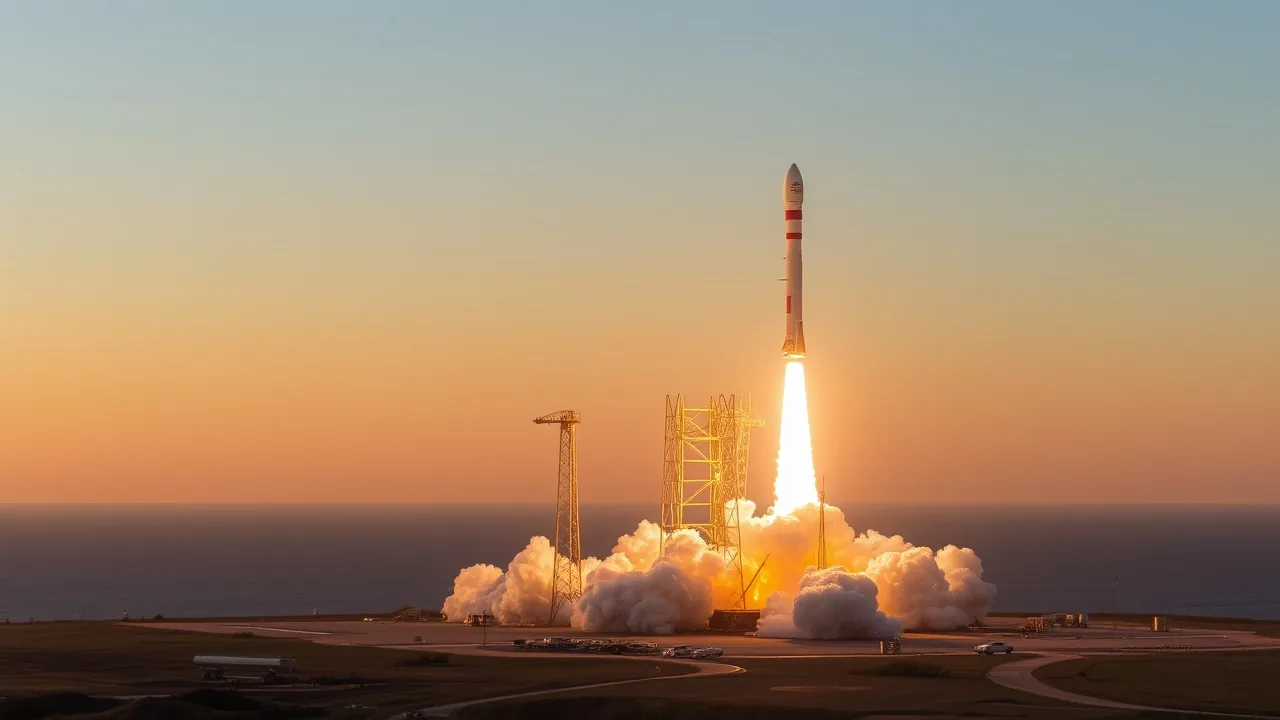
SpaceX's market value crossed new thresholds in mid-2026 as Wall Street reassessed the company's competitive position in commercial spaceflight and satellite deployment. The private aerospace firm, led by Elon Musk, has become the focal point for investors betting on the long-term viability of space-based infrastructure and cargo transport.
Industry demand for launch services shows no signs of slowing. United States military contracts, commercial satellite constellation deployments, and international partnerships have all strengthened SpaceX's revenue pipeline throughout the first half of 2026. The company has maintained its dominant market share in the reusable rocket sector while competitors continue to develop their own launch platforms.
"SpaceX's Falcon 9 cadence and payload capacity have set a new industry standard," said Morgan Stanley aerospace analyst Adam Jonas in July 2026. "The company's ability to drive launch costs down while increasing flight frequency positions it as the backbone of commercial and government space operations for the next decade."
Starship Milestones Shape Investment Thesis
Development of the Starship vehicle, SpaceX's fully reusable super-heavy launch system, has become central to long-term growth projections. The company conducted multiple integrated flight tests in 2026, with each iteration moving closer to operational reliability standards required by NASA and commercial customers.
Successful test flights throughout the spring demonstrated incremental progress on landing precision, heat shield durability, and rapid turnaround procedures. These achievements directly influence investor confidence in SpaceX's ability to support lunar missions under NASA contracts and enable Mars cargo missions later this decade.
Wall Street equity research teams have factored Starship revenue potential into their bull-case scenarios for SpaceX. The vehicle's claimed lift capacity and cost-per-kilogram projections would reshape the economics of space investment if realized at scale. However, regulatory approval timelines and continued technical validation remain key variables for market sentiment.
Broader Aerospace Growth and Market Positioning
SpaceX operates within a rapidly expanding aerospace growth cycle. Demand for satellite internet coverage, Earth observation capabilities, and point-to-point cargo transport has drawn capital from institutional investors across multiple sectors. The global commercial space market reached an estimated $469 billion in 2026, with launch services representing a critical enabler for downstream applications.
Competitors including Blue Origin, Axiom Space, and international providers have increased their pace of development and commercial operations. Yet SpaceX's proven flight record, manufacturing scale, and integrated ecosystem of services give it a structural advantage in securing contracts and repeat customers.
Government spending on space infrastructure remains robust. The U.S. Space Force, Space Development Agency, and NASA collectively budgeted over $28 billion for fiscal year 2026 activities, with a significant portion flowing to commercial partners. SpaceX has secured multiple contracts for national security launch operations, satellite transport, and space plane development.
The company's vertical integration strategy, which includes manufacturing, flight operations, and ground infrastructure, differs markedly from traditional aerospace contractors. This structure allows SpaceX to capture margins across the supply chain and respond quickly to customer needs without external dependency.
Investment Risks and Market Dynamics
Despite bullish sentiment, equity investors face legitimate technical and regulatory uncertainties. Launch vehicle development remains capital-intensive and prone to setbacks. A significant failure or delay in Starship certification could reshape timelines for both commercial and government missions.
Regulatory approval pathways for rapid reusability and orbital refueling remain under review at the Federal Aviation Administration. Environmental impact assessments and frequency caps at launch facilities could constrain growth projections if implemented more restrictively than currently anticipated.
Competition in private spaceflight is intensifying. New entrants backed by well-capitalized investors are advancing medium-lift and small-launch capabilities. While SpaceX's dominance is unlikely to erode quickly, market share compression in specific segments could pressure unit economics over time.
Elon Musk's public profile and statements have occasionally triggered volatility in investor sentiment. His involvement with other ventures and unpredictable communications create a variable risk factor that sophisticated investors monitor closely.
SpaceX's valuation in July 2026 reflects genuine technical progress and strong market fundamentals, but forward projections hinge on successful execution of ambitious technical milestones and sustained government and commercial demand. Investors evaluating the company should distinguish between near-term market analysis driven by current launch activity and long-term bets premised on Starship operational success and future of space infrastructure development. The company's trajectory remains compelling but not risk-free.