
China's Tianwen-2 Arrives at Earth's Unique Asteroid 'Quasi Moon'
China's Tianwen-2 spacecraft reached asteroid 469219 Kamoʻoalewa on July 4, 2026. The mission aims to study the 'quasi moon' and collect samples for return to Earth.

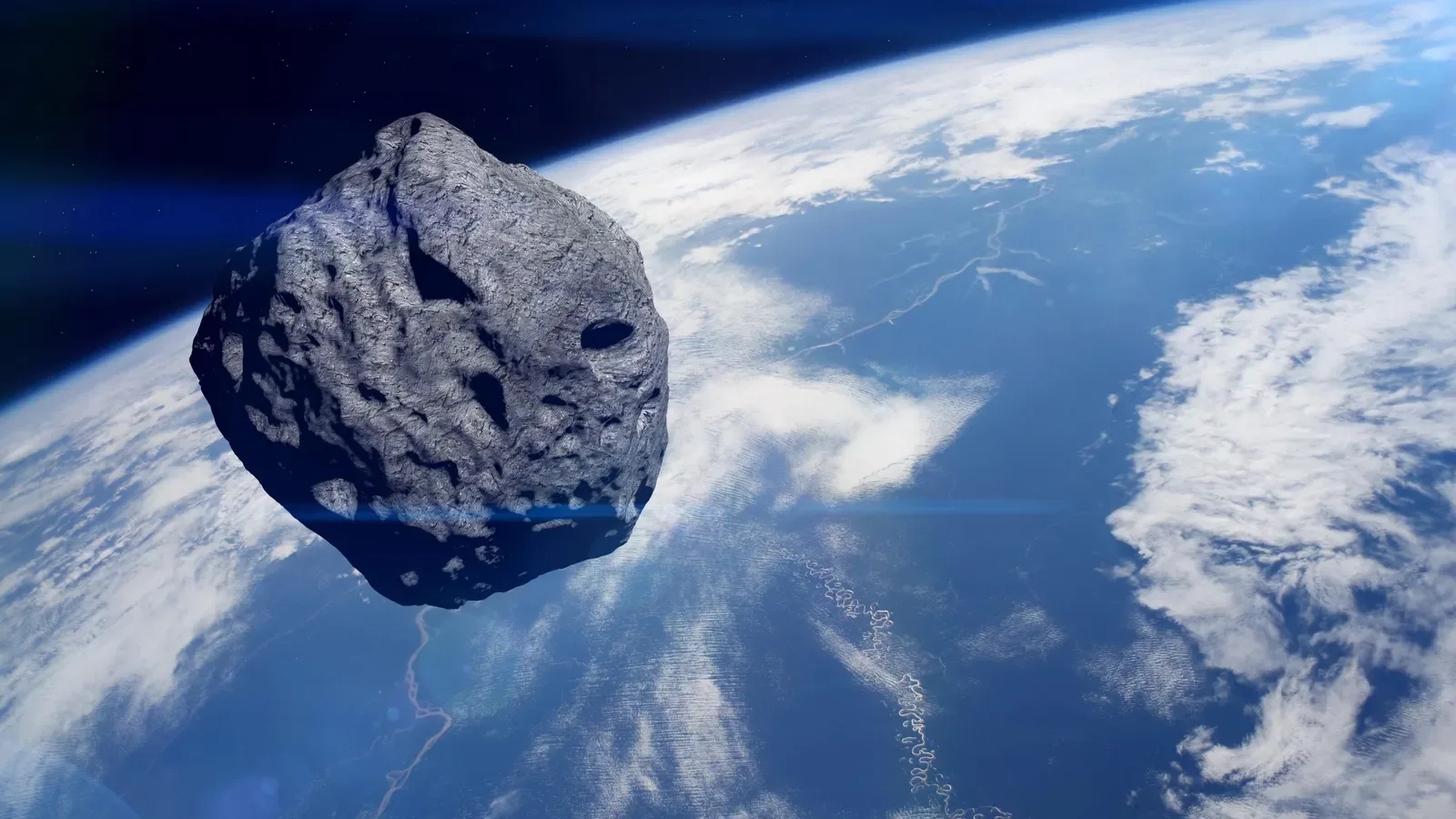
China's Tianwen-2 spacecraft successfully arrived at asteroid 469219 Kamoʻoalewa, a peculiar near-Earth object often referred to as a "mini moon," on July 4, 2026. This milestone comes after a journey of just over 13 months, marking the commencement of the mission's most critical phase. Scientists are now poised to conduct close-up investigations of the asteroid and, if successful, retrieve samples for analysis back on Earth.
The Tianwen-2 probe will now commence its exploration of one of the solar system's smallest and most enigmatic celestial bodies. Its primary objectives include mapping the asteroid's surface and identifying a secure location for sample collection. The spacecraft is equipped with advanced sampling technology, including a touch-and-go system and an anchor-and-attach mechanism featuring drills. The mission's ambitious goal is to collect at least 100 grams of material from Kamoʻoalewa. Following this phase, the spacecraft is scheduled to depart in April 2027, releasing a return capsule that is anticipated to land on Earth in November 2027.
Beyond the Asteroid: Future Missions
The journey of Tianwen-2 does not end with Kamoʻoalewa. After delivering its precious cargo, the spacecraft will embark on a new trajectory, utilizing a gravity-assist maneuver to reach comet 311P/PANSTARRS. Its rendezvous with the comet is projected for January 2035, extending the mission's reach into the outer solar system.
The Tianwen program, whose name translates to "Heavenly Questions," represents the China National Space Administration's (CNSA) dedicated effort in deep space exploration. This initiative has already seen significant achievements, most notably with Tianwen-1, China's successful Mars mission that included an orbiter, lander, and the Zhurong rover, which touched down on the red planet in May 2021. This achievement established China as the second nation in history to successfully land and operate a spacecraft on Mars.
Looking ahead, the CNSA has further ambitious plans. Tianwen-3, slated for 2028, aims to achieve a historic feat: becoming the first mission to collect samples from Mars and deliver them to Earth, with an expected return around 2031. The program's scope continues to expand with Tianwen-4, scheduled for launch in 2030. This mission will dispatch two spacecraft for operational endeavors, one to orbit Jupiter's moon Callisto and another for a flyby mission to Uranus.
The exploration of Kamoʻoalewa is particularly significant because asteroids like it are remnants from the early solar system, holding clues to its formation and evolution. Studying such objects up close can provide invaluable data about the composition and conditions of the primordial solar nebula. Furthermore, the successful collection and return of samples from an asteroid of this size would represent a major advancement in China's space exploration capabilities and contribute valuable scientific knowledge to the global community.