
NASA Scraps Swift Observatory Rescue After Link Satellite Fails
NASA and Katalyst Space Technologies have abandoned plans to rescue the Swift gamma-ray observatory with a robotic satellite. The rescue mission, dubbed Link, faced technical issues preventing it from boosting Swift's orbit.

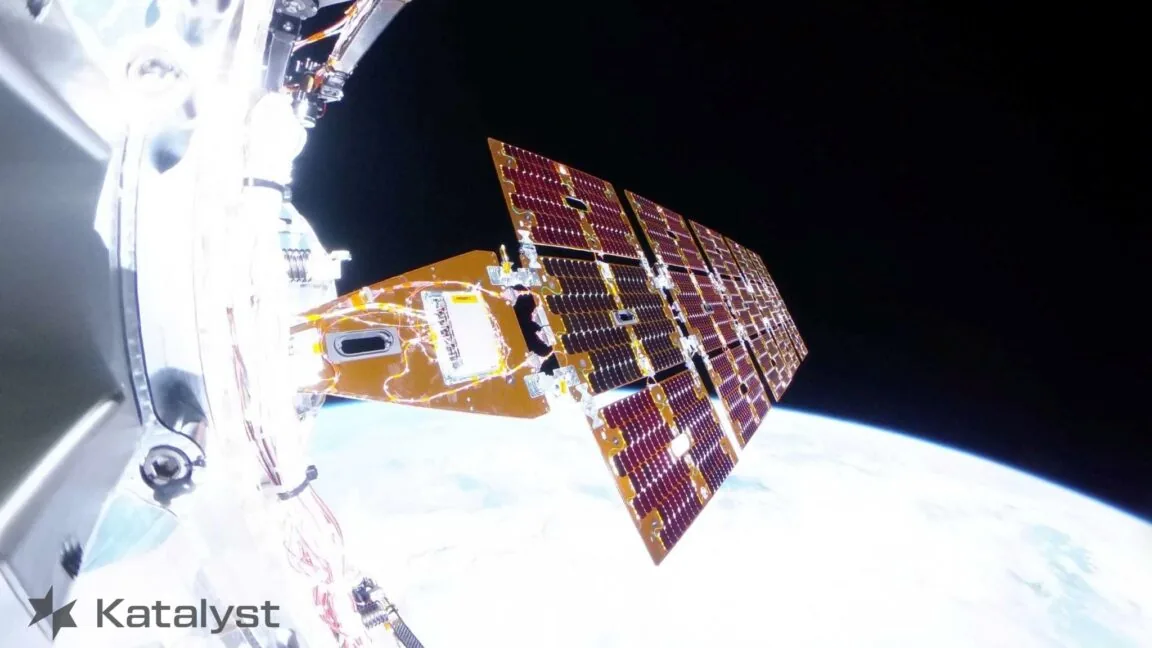
NASA and Katalyst Space Technologies announced Wednesday that they have ceased efforts to rescue the aging Swift gamma-ray observatory from its impending reentry into Earth's atmosphere. The mission, which involved a robotic satellite named Link designed to capture and re-orbit the observatory, was called off due to ongoing attitude control problems with the Link spacecraft. The Swift observatory, launched in 2004, is expected to burn up upon reentering the atmosphere later this year.
The ambitious rescue effort, awarded to startup Katalyst Space Technologies for $30 million less than a year ago, aimed to extend the life of the valuable astrophysics tool. Link, a refrigerator-sized satellite equipped with robotic arms and electric thrusters, was tasked with capturing Swift and maneuvering it into a higher, more stable orbit. However, in late July, the Link satellite experienced significant issues, including the failure of two of its three reaction wheels, which are critical for maintaining its orientation. Problems also arose with its cold gas thrusters, leaving only its low-impulse plasma thrusters to attempt control.
Technical Hurdles Prevent Rescue Attempt
Katalyst CEO Ghonhee Lee stated that while the mission did not achieve its primary objective, the company remains committed to extracting technical and operational value from the Link satellite. "While the mission will not have the ending we originally intended, NASA and Katalyst are assessing what milestones remain ahead," Lee said in a statement. "We will continue working to extract technical and operational value from the spacecraft." The aggressive timeline set by NASA for the mission, requiring a launch within nine months of contract award, forced Katalyst engineers to accept technical risks that might not be acceptable under more typical circumstances. This compressed schedule, however, allowed for rapid development and a timely launch of the experimental Link satellite.
The Swift observatory, officially named the Neil Gehrels Swift Observatory, has been a crucial instrument for astronomers, detecting and studying gamma-ray bursts—the most powerful explosions in the universe—for nearly two decades. Despite exceeding its original two-year design life, Swift continues to be vital for its unique combination of multi-wavelength instruments and agile pointing capabilities, which allow it to pinpoint the location of these transient cosmic events for further study by other observatories. Without its own thrusters to maintain orbit, a mission like Katalyst Space Technologies' Link was the only viable option to prevent its premature demise.
NASA Administrator Jared Isaacman defended the decision to attempt the rescue mission, emphasizing the importance of taking calculated risks for potentially high rewards. "NASA should be willing to move quickly and take smart risks when the potential return is worth it, and that is exactly what we did with this mission," Isaacman said. "This is not the outcome we were working towards, but it does not change why this mission was worth attempting." Shawn Domagal-Goldman, director of NASA’s astrophysics division, echoed this sentiment, noting the extensive learning gained from the endeavor, regardless of the final outcome. "We were all hoping for more science from Swift," Domagal-Goldman stated. "But we knew the takeaways from this mission would be worthwhile either way, and we have gained so much through the series of accomplishments up to this point."
Katalyst is among several U.S. companies developing technologies for in-space servicing, a field that promises future capabilities such as refueling, repairing, and upgrading satellites. The rendezvous sensors and robotic arms developed for the Link mission represent key advancements in this burgeoning sector. "Building, testing, and operating this mission has already strengthened America’s space industry pipeline, advancing in-space servicing capabilities in completely new ways," added Domagal-Goldman. Despite the failure to save Swift, the NASA mission, alongside Katalyst's efforts, is credited with advancing critical technologies for future space infrastructure and satellite servicing operations.